dyton mupawaenda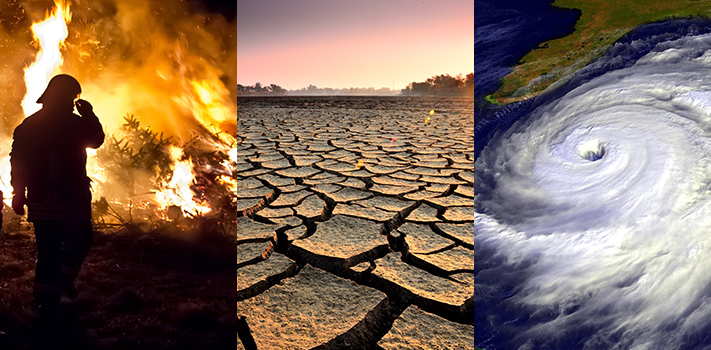
Ivor Ichikowitz
FOR most people, it does not take the recently celebrated World Environment Day to presume that climate change-induced living conditions of many people in Africa from all walks of life are unjustly tough.
However, very few of us realise that conditions are so severe that roughly one-third of African youth struggle to access clean water every day.
In Congo Brazzaville, 70 percent of the youth battle to get clean water, as opposed to 50 percent of the young people in the neighbouring Democratic Republic of Congo.
The figures in Sudan are similar.
The United Nations Children’s Fund (UNICEF) and the World Health Organisation (WHO) estimate that more than 398 million people in Africa do not have reliable access to drinking water.
About 900 million youth further lack access to adequate hygiene and a third of young people in Africa rely on bottled water.
In Nigeria, this particular number almost doubles to six in 10.
Africa already suffers from the effects of climate change.
Half the continent’s population between the ages of 18 and 24 — a key component of the world’s collective marketplace and its largest youth demographic by far — spend up to a quarter of their income every month buying fresh water.
One in six spend more than half their income.
All of this stands in sharp contrast to European countries like the United Kingdom, where the cost of the recommended 50 litres of water per day is only 0,1 percent of the average basic salary.
There are many reasons for this predicament; after all, the people of Africa have been on the receiving end of centuries of exploitation by people from the rest of the world.
But perhaps the greatest and most lasting impact will be indirect: climate change.
The most vulnerable continent in the world
It is one of the most profound ironies that raw materials extracted from Africa and then beneficiated in the northern hemisphere, which rapidly industrialised as a result, will have a disproportionate effect on the continent from which they were taken.
Africa’s emissions account for less than 3 percent of the world’s total, but the continent is the most vulnerable region in the world.
Flash flooding, droughts and other dramatic weather patterns are increasingly wreaking havoc on the African way of life, from the coastlines to the hinterland, disrupting the food and water situation on a continent that is already poverty-stricken in many places.
All of this is exacting a terrible cost every year. The United States medical journal The Lancet reported that pollution resulted in 1,1 million deaths in Africa.
According to WHO, 1,2 million African people had to flee their homes because of extreme weather.
African youth understand the consequences of climate change. Sometimes, if you travel across Africa, you might be forgiven for thinking that the ordinary person on the dusty street thinks little about the impact of climate change or the deeper consequences of foreign influence on their homeland. You would be grievously mistaken if you did.
African youth especially are extremely vexed by the increase — 80 percent, in fact, want their governments to do more about climate change. They want them to pursue policies that will see their countries going carbon neutral.
Four in 10 African youth believe climate change will harm them personally.
Half sincerely believe climate change will negatively affect future generations.
Three-quarters are deeply concerned about the effect of pollution in the air, water and land, and the increasing frequency and severity of extreme weather events.
The same number is very worried about the destruction that is being wreaked upon natural habitats and farmlands, with the associated increase in crop infestation and insect plagues.
Ambitions, hopes and fears of the next generation
Poaching is another problem bedevilling Africa.
In a sea of poverty, the illegal killing of wild animals is both a source of income — and food.
In this regard, our youth are concerned about the impact of poaching on their natural heritage, with 69 percent believing the practice could lead to the extinction of certain species.
At least half further believe poaching has increased.
In countries like Gabon and Ghana, however, there is a very real awareness of the short-term benefits of poaching, which leads to dissonance about how to deal with it.
Generally, 66 percent of youth in Africa believe products from poaching should be banned, which rises to 80 percent in countries like Kenya and Ethiopia, but in Nigeria and Sudan, this drops to 33 percent.
True commitment is clearly there
What we see when we study the survey is that this next generation is neither disempowered nor ignorant of the hazards their countries and their continent face.
On the contrary, these are a highly motivated, highly informed and deeply committed cohort of citizens determined to ensure they have a chance at a life that was perhaps denied to their parents.
What is vital to understand, too, is that their commitment is far more than just lip service but rather rooted in personal commitment and activism.
We see how they will not accept fake news or empty platitudes but will hold their leaders to account — across a wide range of different issues, with the environment being one of the key ones — for the simple reason that they are living with the consequences of decisions and acts made by others well before they were even born.
What is vital to understand, too, is that their commitment is far more than just lip service but rather rooted in personal commitment and activism.
Two-thirds of them are actively supporting, participating in or donating to environmental causes — led by youth in Kenya, Ghana and Rwanda.
The same proportion are actively working to reduce their own carbon footprint.
There is no time to waste
But it is not enough — Africa does not have the time to wait before the youth become leaders in their own right.
Following World Environment Day, this should, instead, be a clarion call to progressive companies wanting to invest in Africa and institutions with a commitment to the continent.
There is a groundswell of support waiting in the wings, ready to be harnessed for the good of all.
As they say in Africa, if you want to go fast, go it alone; if you want to go far, go together.
If Europe and the world are serious about helping Africa, they have to work with the youth — where it will find fertile ground to plant the seeds for change. — euronews.com
* Ivor Ichikowitz is an African industrialist and philanthropist. He chairs the Ichikowitz Family Foundation, which conceptualised and funds the African Youth Survey.
CAPTION: A man carrying water bottles walks along a dusty street in Hamanskraal, Pretoria, South Africa



 Online Reporter