

 Online Reporter
Zvamaida Murwira,
Senior Reporter
Zimbabwe and Botswana have agreed to remove the use of passports for their travelling citizens in favour of national identity documents as the two countries seek to enhance free movement, amid deepening cooperation.
The deal, which is still to be concretised through the requisite legal and technological framework, will be implemented in a phased approach, beginning with local travellers.
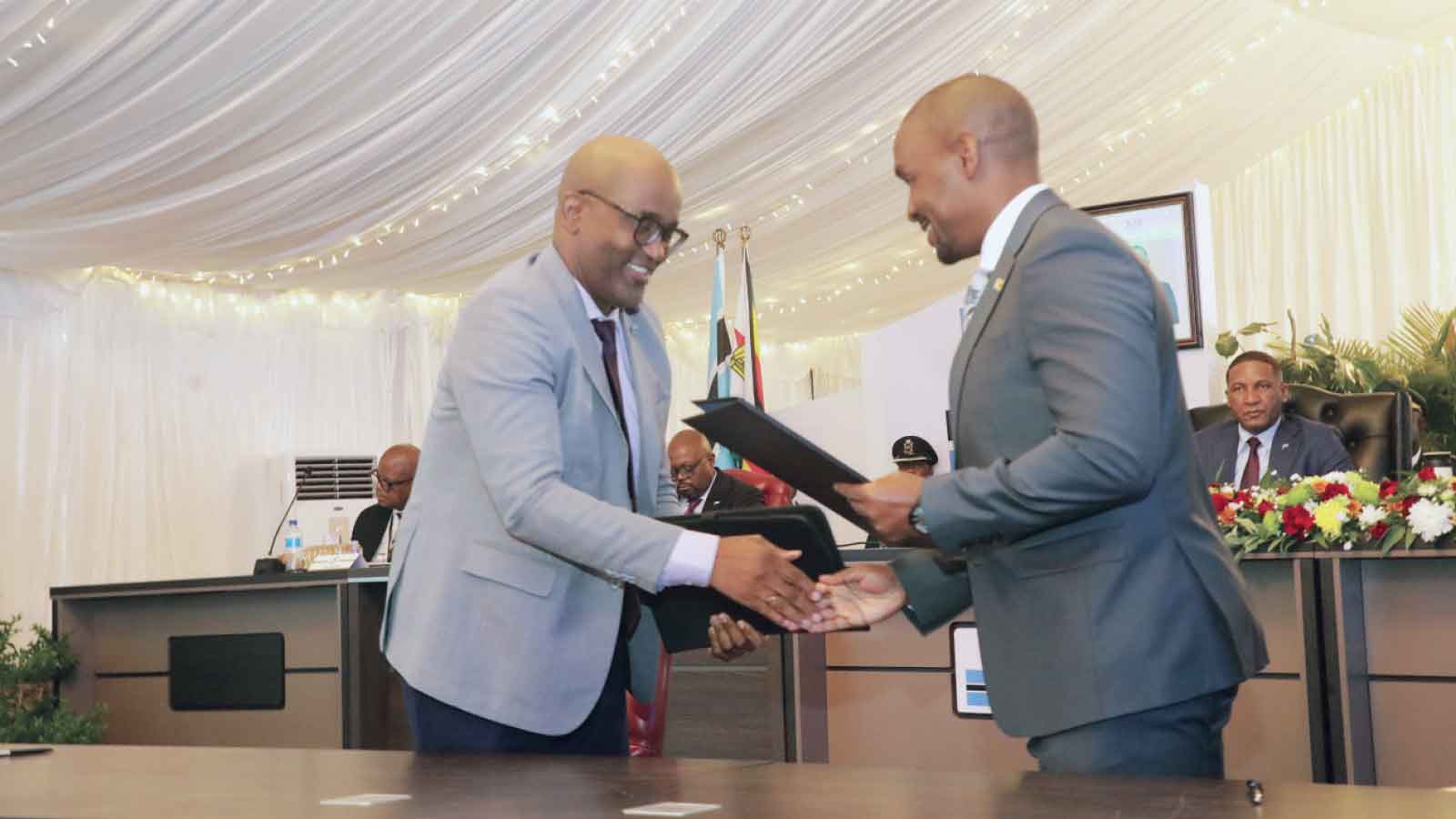
This came out at the two countries’ 5th Bi-National Commission, which was held at State House, presided over by President Mnangagwa and his Botswana counterpart, Advocate Duma Gideon Boko.
In his opening address, President Mnangagwa said he was proposing a phased approach to remove the requirement for passports between citizens of the two countries.
“The people of Zimbabwe and Botswana are one family. Bonds between Zimbabwe and Botswana are not merely diplomatic; they are historical, cultural and deeply rooted in our shared heritage, solidarity, as well as common aspirations for peace, development and prosperity for our countries and peoples. While borders separate jurisdictions, our communities — and even our wildlife — continue to move freely. We are one people,” said President Mnangagwa.

“In this regard, we must move decisively to ease the movement of people, goods and services. I propose a phased framework for the use of national identity documents in place of passports, beginning with border communities and short-term travel. Harmonised immigration systems, One-Stop Border Posts, digital clearance platforms and efficient trader schemes remain priority areas towards accelerating the flow of goods and reducing the cost of doing business.”
Asked to comment on the proposal to use identity cards for travellers from the two countries during a press conference, President Boko said he agreed with the proposition.
“We are looking at the introduction of cryptic graphic national identity cards, which will obviate the need to carry the card around you. You can have the details on your smart phone and whenever you go you can just tap on the go and we are in the process of deploying the requisite technology to achieve this, that is to make it easy for people to move,” said President Boko.
“But when we deploy these technologies we must make sure that even on the other side of the border these technologies are there so that there is no lagging (behind) and we believe that we will achieve that.”
He said people are migrating between and among countries for different reasons, hence the need to create free movement.
“People move from one country to the next and do this for different reasons. Many Zimbabweans go to Botswana and request to settle there. They will emigrate from Zimbabwe to Botswana and others emigrating from Botswana to Zimbabwe because they see opportunities and at any rate we are the same people, so there should not be any difficulty in that regard. These migrations are informed by the skills individuals possess, which they tend to take across the border and deploy there over a period of time, and over time develop a deeper affinity to the place in which they would have temporarily settled. They settled because they brought skills which are needed and they find they want to settle and become citizens and we welcome all this,” said President Boko.
“So migration, where opportunities are abound, tends not to cause problems. Problems arise where others think these people are coming to take their jobs.”
He said it was interesting to note that some of the loudest people complaining that they were losing jobs to foreigners would be jobless and with no skill to offer.
President Boko gave an example of a television clip he once watched of a protester in one Western country, who remonstrated against immigrants, complaining that they were taking their jobs when he was not even employed or possessed any skill.
“So migration has been informed by these exigencies. We have developed skills in mining in Botswana, we believe that these skills, like extraction, are exportable, they can come to Zimbabwe because mining houses have opportunities, so migration in that sense is a very good thing,” he said.
President Boko implored the media to report responsibly and not to denounce their countries and the African continent.
He encouraged the media to speak and report positively on developmental stories in Africa, noting that foreign media had a tendency of describing Africa as an area of starvation and pestilence.
President Boko said it was the responsibility of African media to correct the narrative and depict Africa as a continent on the rise and on a development trajectory.
“You must carry storylines that indicate the positive. You must not pander to the whims and caprices of the foreign media that has a tendency of describing Africa as an area of pity, starvation and pestilence. And yet there are so many epic stories of success in the lives of our people,” said President Boko.
Zimbabwe and Botswana enjoy warm bilateral relations dating back to the liberation struggle.



