Online Reporter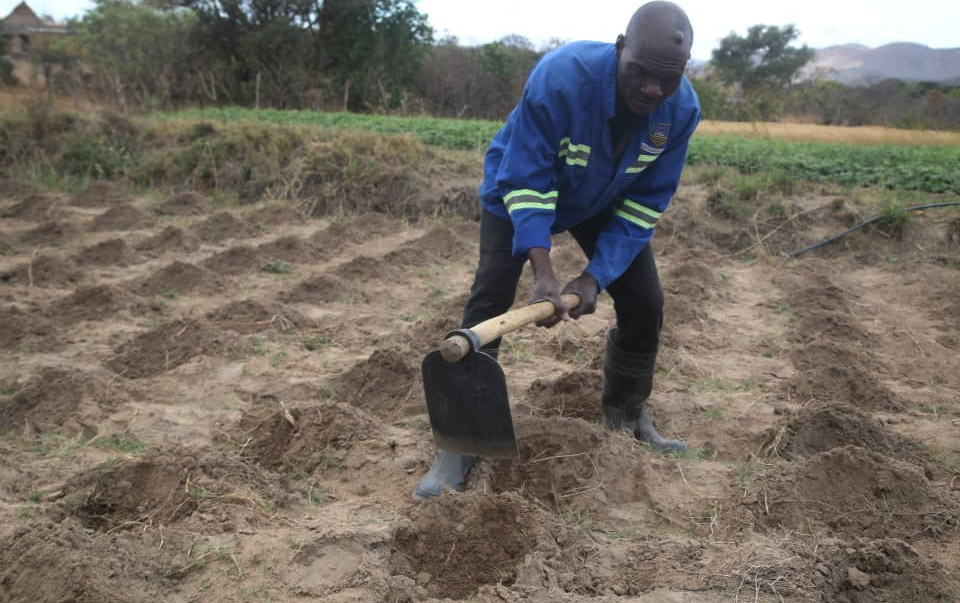
Samuel Kadungure and Lovemore Kadzura
AS the nation transitions into summer, farmers have been warned of a short and sharp rainy season that allows for the cultivation of short-season crop varieties that mature within 90 to 120 days.
The Meteorological Services Department (MSD) forecast indicated a delayed start to the rainy season due to climate change, with rains expected in November; increasing to above normal levels in December and January before tailing off in March.
Already, Manicaland is gearing up for the 2025/26 summer season, focusing on increased cultivation of agro-ecologically tailored crops and enhanced climate-proofing measures at the household level to improve food security.
The province targets to plant 394 800 hectares of maize, sorghum, pearl millet, and finger millet — with a target production of 492 150 metric tonnes.
Last season, 379 141ha were planted, yielding 471 564 metric tonnes.
Specific targets for the season are 265 000 hectares of maize, with a projected yield of 384 250 metric tonnes; 70 000ha of sorghum (63 000 metric tonnes); 50 000ha of pearl millet (63 000 metric tonnes); and 9 800ha of finger millet (4 900 metric tonnes).
The Climate-Proofed Presidential Input Programme (Pfumvudza) is targeting 451 992 beneficiaries, straddling communal, A1, small-scale commercial, and old resettlement farmers.
The 451 992 Pfumvudza beneficiaries have prepared 1 355 976 plots which add up to 84 612 hectares as follows — Buhera (11 630ha),
Chimanimani (6 398ha), Chipinge (15 390ha), Makoni (18 100ha), Mutare (14 121ha), Mutasa (10 050ha), and Nyanga (8 921ha).
The Zunde RaMambo package will include water retention enhancers, herbicides for three plots, and fall armyworm control package. The scheme will provide support for 10 plots for each chief, seven plots for each headman, and five plots for each village head. A total of 34 chiefs, 92 headmen, and 3 256 village heads will benefit from the initiative.
The programme will also distribute two million sweet potato vines, 200 000 fruit trees, and 3,5 million vegetable combos this season. Fruit trees, including mango, papaya, and banana will be made available to farmers to promote fruit production, which has a comparative advantage in the province.
Lands, Agriculture, Fisheries, Water and Rural Development Permanent Secretary, Professor Obert Jiri has warned farmers to plan accordingly, cognisant of the forecast and the specific climate conditions in their regions to maximise yields and make the most of the favourable weather conditions.
“We are transitioning into summer, with a promising forecast indicating a better season than last year. The MSD predicts a delayed start due to climate change, with rains expected in November, increasing above normal in December and January, and tailing off in March. This is a short, sharp season allowing for 90 to 120-days crop production, and farmers should plan for short and medium-season varieties, with only irrigation enabling long-season varieties.
“Government has segregated maize production targets into various programmes, including Pfumvudza, National Enhanced Agricultural Productivity Scheme (NEAPs), Food Crop Contractors Association, self-financed farmers, and ARDA scheme, targeting a total of 1,8 million hectares. Inputs, including fertiliser and seeds, are available under collateral management. Our goal is to make agriculture resilient to climate change by reducing dependence on rainfall. That is why Pfumvudza is our preferred farming approach. However, irrigation is the ultimate solution, as it guarantees uninterrupted production regardless of weather conditions,” said Professor Jiri, adding that the 2025/26 season targeted hectarage of maize should yield at least 2,3 million metric tonnes.
“We still have a low national average yield per hectare, primarily due to the fact that most of our production is rain-fed and located in communal areas. This is an area that requires improvement. However, if we combine the 1,8 million hectares of maize with the 500 000ha allocated for traditional grains, we anticipate a total grain output of at least 3,2 million tonnes. As a country, we require 2,2 million tonnes of grain, comprising 1,8 million tonnes for human consumption and 400 000 tonnes for livestock feed.
Therefore, if we exceed 2,2 million tonnes we will be self-sufficient.
“We achieved self-sufficiency last season, and with the forecasted good weather, we expect to meet our food requirements in the 2025/26 season. Additionally, we have maintained wheat and flour self-sufficiency, which was initiated during the El-Nino period as part of our food security strategy. To be self-sufficient, the country requires 360 000 metric tonnes of wheat and we have consistently exceeded this target, producing 562 000 metric tonnes last season. This season, we aim to produce over 600 000 metric tonnes,” he said.
Professor Jiri also emphasised the need to mechanise and modernise smallholder farmers to revolutionise the agricultural landscape.
“While large-scale commercial farms have received significant attention, including access to large tractors through facilities like Belarus and Bain, the smallholder farming sector now requires similar focus.
“Following the land reform, we have an additional 300 000 small-scale farmers with six-hectare plots, as well as 20 000 A2 farmers with smaller fields. These farmers need appropriate equipment, including tractors and irrigation systems.
To address this, efforts are underway to provide smaller tractors, with 55-horsepower or less, to smaller farmers.
“The goal is to ensure that each of the 35 000 villages in the country has access to a tractor, which will not only provide tillage services for Village Business Units (VBUs), but also for individual farmers, facilitating the transition from subsistence to commercial farming. This initiative targets both A1 model farmers, who are smaller-scale farmers, and communal farmers who aim to produce surplus crops. To achieve this, they require modernisation through access to tractors and smaller-scale irrigation development,” said Professor Jiri.
He also provided an update on the livestock situation,highlighting that the July to October period is typically a lean season for livestock, characterised by a decline in their body condition.
“However, despite the challenging conditions, our efforts have ensured that livestock remain in a fair to good condition. Unlike during droughts, where livestock deaths are common, our interventions have mitigated this risk,” he said, adding that while livestock feed resources have become scarce, and animals must travel longer distances to access water, cattle deaths are unlikely.
“The lean season will still impact livestock body condition, but our measures have prevented catastrophic losses,” he said, adding that to address feed resource constraints, Government has implemented several initiatives.
“We have trained villages and wards in urea treatment of stover, and provided critical wards with access to silage under a Government programme. We have also seen numerous boreholes being drilled in critical areas to ensure reliable water supplies. While the lean period will present challenges, our efforts have ensured that livestock will not die from starvation or thirst. Their condition may deteriorate, but it will be maintained until the rainy season arrives,” said Professor Jiri.