

 dyton mupawaenda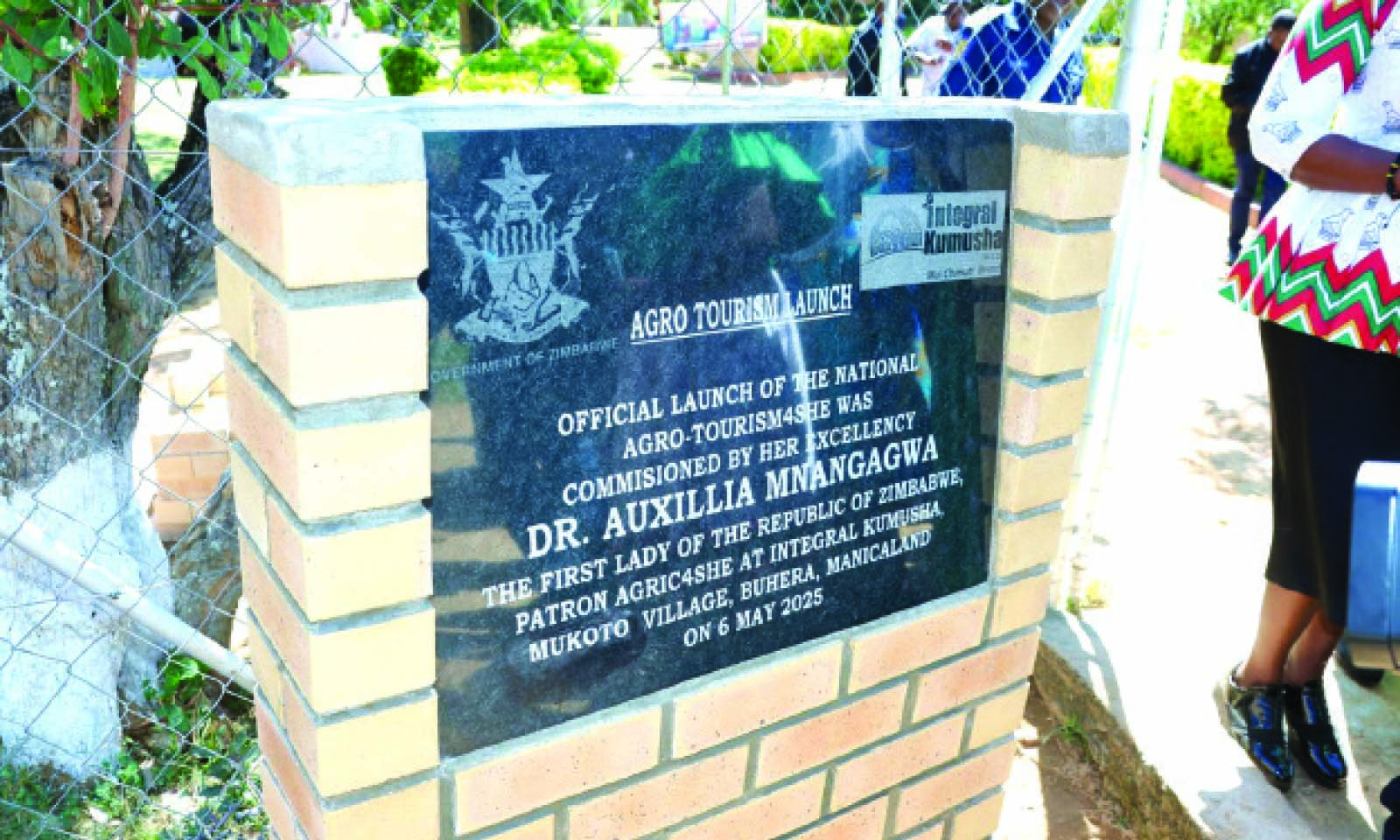
ZIMBABWE’S agricultural landscape is not just about food production — it is fast becoming a vibrant hub for tourism, thanks to the visionary leadership of Her Excellency, the First Lady, Dr Auxillia Mnangagwa.
Agro-tourism, an innovative sub-sector that merges farming with tourism, is gaining momentum, offering a unique opportunity to witness first-hand the dedication and artistry of our farmers, the intricate dance of nature, and the rich heritage embedded in our agricultural practices.
This exciting sub-sector invites one to journey beyond the well-trodden paths and immerse oneself in the authentic rhythm of rural life, connecting directly with the land that sustains us all.
Imagine waking up to the crow of a rooster in a rural setting or farm, the air filled with the scent of freshly turned soil. Picture yourself strolling through verdant fields, learning about sustainable farming techniques, and even participating in the harvest.
Envision savouring a farm-to-table meal, bursting with the flavours of locally grown produce, prepared with passion and tradition.
Agro-tourism in Zimbabwe is more than just a visit; it is an experience that nourishes the soul and broadens the mind.
As a recognised tourism cluster under the Ministry of Tourism and Hospitality, agrotourism plays a vital role in diversifying Zimbabwe’s tourism sector by merging agriculture with tourism-driven economic growth.
This initiative aligns with the Government’s broader vision, ensuring that women are integral to shaping Zimbabwe’s tourism industry while advancing innovation in agricultural sustainability.
With the First Lady’s leadership, Agrotourism4She stands as a beacon of empowerment, fostering inclusive economic participation and bridging gaps between agriculture and tourism, strengthening national development, aligning with the Vision 2030.
Spearheaded by the First Lady of the Republic of Zimbabwe, Dr Mnangagwa, the agrotourism thrust embarks on a slate of ambitious and new initiatives, doing business reforms and attracting investment on the cusp of the Zimbabwe Development Strategy Vision 2030, based on local innovations and efforts.
Her focus on the township and rural economies, through agrotourism, is important because it has the potential to address unemployment, stimulate economic growth, foster entrepreneurship, and empower communities, reduce inequality, and contribute to the overall well-being and inclusive development.
Local governance needs to be responsive to the speed and complexity of change in township and rural communities to accommodate appropriate agrotourism ventures.
As alluded to by the First Lady in Buhera at the national launch of the impactful programme, agrotourism offers a chance for people and communities to:
• Connect with nature, escaping the hustle and bustle of city life and find tranquillity in the serene landscapes of our farms and rural communities.
• Learn and grow, gaining invaluable insights into agricultural processes, from planting and cultivation to animal husbandry, fostering a deeper appreciation for the food on our tables.
• Support local communities, by choosing agro-tourism, we directly contribute to the livelihoods of our farmers and rural communities, empowering them and preserving their way of life.
• Experience authentic culture, immersing ourselves in the warm hospitality and traditions of rural Zimbabwe, discovering the unique stories and heritage that define our nation.
• Savour fresh flavours, indulging in the unparalleled taste of organically grown produce and traditional Zimbabwean cuisine, prepared with love and care.
What is agro-tourism?
Agro-tourism invites travellers to engage with farming activities — whether it’s picking fresh produce, touring dairy farms, learning traditional cooking methods, or staying at scenic farm lodges.
This model not only diversifies incomes for farmers but also educates tourists on sustainable agriculture, preserving Zimbabwe’s cultural and environmental legacy.
Tourism has demonstrated itself as an ally time and time again.
By using a strategic promotion of tourism, local governments have greater authority in revenue streams and the capacity to invigorate local businesses, stimulating a community to thrive. Infusing tourism into rural and local authorities’ strategies’ outcomes with the promise of new revenue sources. Tourists contribute to the local economy as they spend money on accommodation, local goods, and entertainment.
The country boasts an abundance of township and rural tourism resources such as monuments of colonial history, administrative centres, informal sector activities, coexistence of traditional and modern cuisine, art and craft centres, community markets, iconic personalities and buildings, and others. Innovative policies and promotional programmes targeting township and rural tourism can unlock enormous entrepreneurship and job opportunities in tourism value chains.
The First Lady’s Vision
Dr Mnangagwa has been a driving force in promoting agro-tourism, recognising its potential to empower women and youth in rural areas. Through initiatives like community gardens – now Village Business Units, farm-to-table experiences, gastronomy, and other agricultural festivals, she has championed a movement that connects urban Zimbabweans and international tourists with the heartbeat of the nation — its farms and agrepreneurs.
Why the First Lady’s vision of Agro-tourism matters for Zimbabwe
Rural Zimbabwe is mosaic of different landscapes, people, and economic realities. It includes agricultural powerhouses, post-industrial towns, and popular tourism enclaves.
Some rural communities are relatively close to major cities, while others are hundreds of kilometres from the nearest urban hub.
Thriving rural communities play to their region’s strengths, supporting sectors such as agriculture, manufacturing, energy, tourism, and post secondary education.
Rural communities can focus their growth on three interconnected areas: sectors, the workforce, and community and connectivity.
Rural entrepreneurship has the potential to drive innovations that can reduce poverty, increase access to food, and create employment. For this to happen, actors in agri-food value chains need to trust each other.
However, local agri-food value chains are almost always characterised by protectionist behaviour resulting in very high marketing costs and a stalemate, instead of a drive for positive change and development.
Education priorities must connect with economic opportunities.
Spatially marginalised residential areas must connect with business centres.
The great insight by the First Lady needs to be viewed with the importance it deserves for rural communities. Apart from local livelihoods improvement, this noble thrust has a myriad of other broader benefits:
1. Economic growth – By attracting local and international tourists to farms, we create new revenue streams for smallholder farmers and agri-entrepreneurs.
2. Job creation–From tour guides to local artisans, agro-tourism stimulates employment in rural communities.
3. Food security and education–Visitors learn about Zimbabwe’s agricultural processes, fostering appreciation for local food systems.
4. Conservation–Sustainable farming practices showcased in agro-tourism help protect biodiversity and promote eco-friendly techniques.
Experience Zimbabwe’s agro-tourism gems:
Join the movement
Zimbabwe’s agro-tourism sector is ripe for exploration. Whether you are a local tourist or an international visitor, we invite you to support this growing industry by visiting our farms, buying local produce, and spreading the word.
Together, let’s cultivate Zimbabwe’s future — one farm, one visitor at a time.
Article compiled by the Ministry of Lands, Agriculture, Fisheries, Water and Rural Development



 Online Reporter