Dr Evans Sagomba
Everything AI
ARTIFICIAL Intelligence has become the subject of one of the most pressing philosophical and legal debates of our time: can machines ever be granted legal personality, the capacity to hold rights and duties under the law?
This question is not merely technical; it strikes at the heart of how we understand responsibility, agency, and the moral fabric of society.
In Zimbabwe, where conversations about AI are beginning to shape policy and public discourse, the issue deserves careful unpacking.
Legal personality has traditionally been reserved for two categories: natural persons, meaning human beings, and artificial legal persons, such as corporations.
The latter are recognised by law as having rights and liabilities, even though they are not flesh and blood.
This recognition is a legal fiction, a construct designed to facilitate commerce, accountability, and social organisation.
The question then arises: if corporations can be granted legal personality, why not machines?
The answer lies in the philosophical underpinnings of responsibility. Corporations, though abstract, are ultimately composed of humans who can be held accountable.
AI, by contrast, lacks consciousness, intentionality, and moral judgment qualities that are indispensable to bearing responsibility.
Philosophers have long argued that responsibility is inseparable from moral agency.
Aristotle’s notion of voluntary action, Kant’s emphasis on autonomy, and modern theories of moral responsibility all converge on the idea that to be held accountable, one must be capable of intention and moral reflection. AI systems, however, sophisticated, do not possess these attributes.
They process data, execute algorithms, and generate outputs, but they do not “intend” in the human sense.
To punish or reward them will be akin to punishing a hammer for striking a nail. The tool may be powerful, but the responsibility lies with the hand that wields it.
Globally, legal systems have resisted the temptation to extend personhood to AI. The European Parliament flirted with the idea of “electronic personhood” in 2017, particularly for highly autonomous systems, but ultimately rejected it. Lawmakers feared that granting machines legal status would dilute human accountability and create ethical ambiguity.
UNESCO’s 2021 Recommendation on the Ethics of Artificial Intelligence reinforced this position, insisting that liability must always remain with human agents.
India’s NITI Aayog echoed the same sentiment, describing AI as a tool to support humans, not an entity capable of rights or duties. These positions reflect a consensus: machines may act autonomously, but they cannot be moral subjects.
The philosophical debate, however, continues to simmer.
Some scholars argue that as AI systems grow more autonomous, society may need to invent new categories of responsibility. They point to corporations as precedent: once upon a time, only humans were recognised as legal persons, yet the law evolved to accommodate collective entities. Could AI be the next frontier? The counterargument is compelling: corporations are ultimately reducible to human actors, whereas AI is reducible only to code and data. To grant AI personhood would be to confuse simulation with reality, mistaking the appearance of agency for its substance.
In Zimbabwe, this debate intersects with broader questions of governance, accountability, and development. As the country embraces digital transformation, AI systems are being deployed in sectors ranging from agriculture to finance.
Imagine an AI system managing irrigation schedules or credit scoring. If such a system malfunctions and causes harm, who is responsible? The farmer who relied on it? The developer who designed it? The Government that approved its use?
Current legal frameworks will place liability squarely on human shoulders, through doctrines such as strict liability or vicarious liability. This ensures that accountability remains clear, even as technology complicates the chain of causation.
Yet, there is a deeper philosophical question: should machines ever be seen as more than tools?
To grant them rights or duties will be to elevate them into the moral community, a move that risks eroding the distinctiveness of human dignity.
Hannah Arendt warned against confusing fabrication with creation, reminding us that human beings are unique in their capacity for moral judgment and political responsibility.
To treat machines as persons will be to blur the boundary between the human and the artificial, a boundary that safeguards our sense of agency and freedom.
The Zimbabwean context also invites reflection on the cultural dimensions of personhood.
In African philosophy, personhood is often understood relationally, as something achieved through community and moral participation.
Hunhu/ubuntu, the idea that: “I am because we are,” emphasises the social and ethical dimensions of being human.
AI, however, advanced, cannot participate in community, cannot share in moral life, cannot embody Ubuntu.
To grant it personhood will be to misunderstand the very essence of what it means to be human in African thought.
Case law offers useful analogies.
In Salomon v. Salomon & Co. Ltd., the House of Lords established the principle of corporate personality, recognising a company as distinct from its shareholders. This was a pragmatic move, designed to facilitate commerce.
But in United States v. Athlone Industries, the court reaffirmed that only entities recognised as legal persons can be parties to litigation.
AI, not being a legal person, cannot sue or be sued. These cases remind us that legal personality is a construct, granted for practical reasons, but always tethered to human responsibility. Extending it to machines will sever that tether, leaving us adrift in a sea of legal uncertainty.
The debate over AI personhood is not merely academic.
It has practical implications for liability, governance, and ethics.
If Zimbabwe were to consider granting AI legal personality, it will face profound questions: could AI own property, enter contracts, or be punished? Without consciousness or intent, such capacities would be hollow.
Punishment presupposes a guilty mind, mens rea, which AI lacks.
Contracts presuppose intention, which AI cannot form.
Property ownership presupposes agency, which AI does not possess. To grant these capacities would be to engage in a dangerous fiction, one that risks undermining the coherence of the legal system.
The safer path, and the one endorsed by international bodies, is to maintain clear human accountability.
Developers, users, and institutions must bear responsibility for the actions of AI systems.
This ensures that liability remains grounded in human agency, preserving the moral and legal order.
It also aligns with the philosophical conviction that responsibility cannot be divorced from consciousness and moral judgment.
The question of AI legal personality is a mirror reflecting our deepest anxieties about technology, responsibility, and humanity. While machines grow ever more powerful, they remain tools, not moral agents.
To grant them personhood will be to confuse simulation with reality, undermining the very foundations of law and ethics.
Zimbabwe, like the rest of the world, must resist this temptation, insisting that accountability remains human. In doing so, we affirm not only the integrity of our legal system but also the dignity of human beings as the true bearers of rights and duties.
The debate will continue, as all philosophical debates do, but for now the answer is clear: machines cannot be persons, and responsibility must remain ours.
About the Author: Dr Evans Sagomba is a Doctor of Philosophy and Chartered Marketer (CMktr, FCIM) with an MPhil and PhD in Philosophy. He specialises in AI, Ethics, and Policy Research, and is an AI Governance and Policy Consultant. Master’s and PhD supervisor. AI Ethics and Governance Lecturer. [email protected], Social media handles; LinkedIn; @ Dr. Evans Sagomba (MSc Marketing) (FCIM)(MPhil) (PhD), X: @esagomba
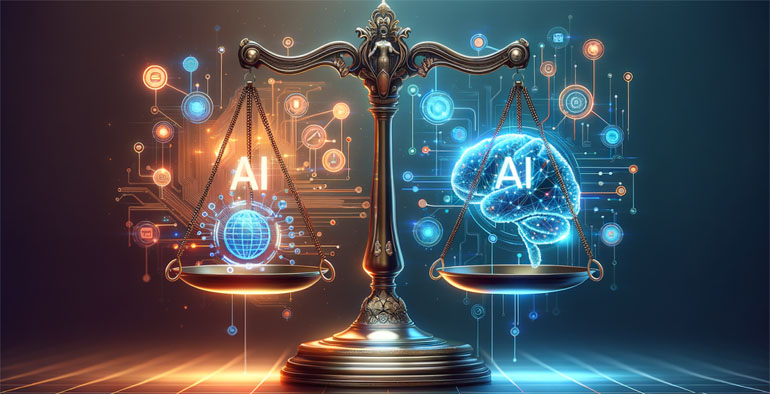
AI and the law: Can AI be granted a legal personality?