Online Reporter
Farirai Machivenyika in VICTORIA FALLS
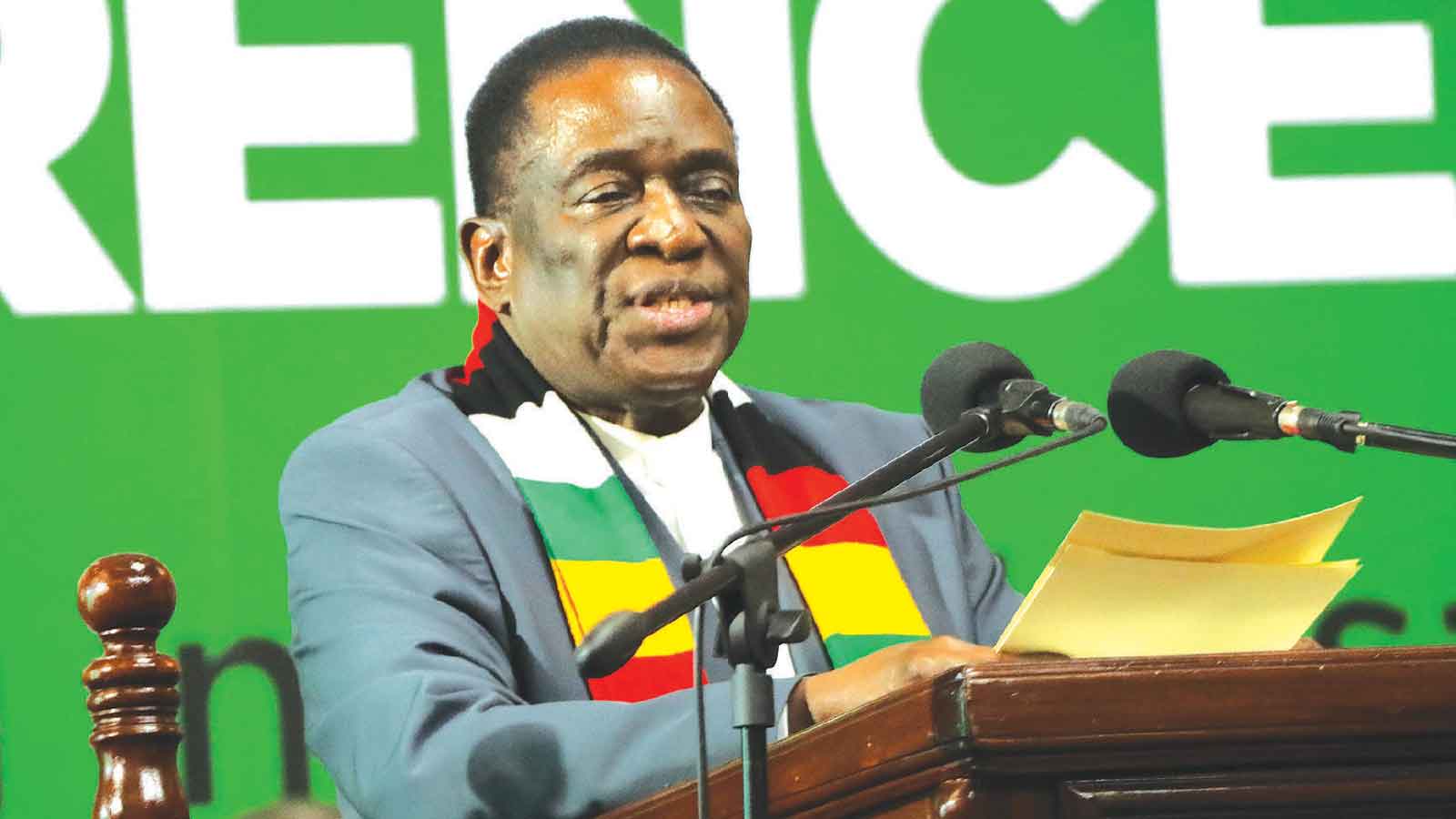
PRESIDENT Mnangagwa has called for the adoption of Artificial Intelligence (AI) in parliaments to bridge the gap between legislators and the communities they represent as this will enhance direct and frequent interactions, promoting greater involvement of grassroots communities in decision-making processes.
The President, who is also SADC Chairman, said this while officially opening the 57th SADC Parliamentary Forum Plenary Assembly at Elephant Hills Resort here yesterday.
The week-long event, that runs until Saturday, is being held under the theme: “Harnessing Artificial Intelligence for Effective and Efficient Parliamentary Processes in the SADC Region: Experiences, challenges and opportunities”.
President Mnangagwa said the theme for the Plenary Assembly resonated well with global and regional developments.
“This is more so given that the strategic vision of SADC emphasises technological cooperation and knowledge sharing as means to strengthen democratic institutions across the region,” he said.
“The Fourth Industrial Revolution was characterised by a fusion of emerging technologies, blurring the lines between the physical, digital and biological sectors. Cyber-physical systems have proliferated in all facets of society and economic activity within Africa and beyond anchored on AI and innovation.
“For SADC parliaments, the potential benefits of AI and innovative technologies are multi-pronged. These offer solutions for resource optimisation, which will in turn enable our parliamentarians to achieve greater results.
“Additionally, technology can bridge the gap between parliamentarians and citizens in our geographically dispersed constituencies. This will enable more direct and frequent interaction, thereby improving representation and involvement of grassroots communities in parliamentary processes.”
The President added that MPs could also use AI to revolutionise legislative processes for more evidence-based and people-centred policies.
He also said SADC Heads of State and Government, within the framework of the SADC Regional Indicative Strategic Development Plan 2020-2030, should prioritise the development of appropriate skills related to ICT, and emphasised the need to enhance accessibility to new technologies as well as promote research and development to boost Afro-centric innovation and development digital solutions.
“Undoubtedly, various parliaments in the region are all at various stages of ‘digital maturity’. This diversity of experience creates a rich environment and ecosystem for collaboration. Common approaches to technological adoption should be promoted to enhance inter-operable systems that facilitate greater cooperation amongst our parliaments.”
President Mnangagwa said cross-border technology sharing and investments must also be encouraged towards strengthening interconnectivity and the lowering of tariffs for citizenry benefit.
On its part, he said, Zimbabwe, through the whole of Government approach, was scaling up the integration of digital solutions into the governance framework.
“To date, Zimbabwe has established innovation hubs and industrial parks across all our universities. These centres of excellence are advancing our technological agenda and remain at the core of our innovation efforts,” President Mnangagwa said.
He said partnerships with universities, research institutions and industry to promote digital literacy, stimulate local content creation and advance research in new technologies, including AI, were proving valuable.
President Mnangagwa also warned against the dangers that could be posed by AI.
“At a national scale, the adoption of AI and other emerging technologies must enhance rather than compromise their integrity and independence of the region’s democratic institutions.
“To this end, measures must be put in place to deal with issues of cyber security, data protection, digital sovereignty and the potential for technological dependence, among others,” he said.
The President added that Zimbabwe had enacted the Cyber and Data Protection Act to regulate data security and ensure fairness in data related to and services driven by AI.
He said the Pan African spirit, rich cultural heritage and traditions and the need to protect independence and sovereignty should guide the region’s approach to the integration of new technologies in all sectors.
“Our governance systems, democratic traditions and parliamentary processes, as well as the philosophy of ‘governance by the people, for the people’, should be jealously guarded.
“In deliberating these emerging issues, therefore, I call upon you the elected representatives of the peoples of the region, to ensure that systems based on artificial intelligence and other technologies do not merely cut-and-paste global models. They must reflect the unique priorities and perspectives of the SADC region and Africa in general, from an Afrocentric perspective.
“Be assured that there is political will from the level of my fellow Heads of State and Government, in SADC, to support endeavours of this SADC Parliamentary Forum. This includes the institutionalisation of parliamentary involvement in regional integration, democratic consolidation and sustainable development across our region,” President Mnangagwa said.
He challenged the SADC PF to play its part through democratic oversight and accountability towards integration and shared prosperity for the region.
“The ultimate beneficiaries of all our efforts must be the people who should experience a higher quality of life that leaves no one behind,” President Mnangagwa said.
Meanwhile, the President went down memory lane describing SADC PF as an institution that was close to his heart.
“I recall that during my tenure as Speaker of the Parliament of Zimbabwe from 2000 to 2005, I had the honour of actively participating in the development of the Norms and Standards for Elections in the SADC Region.
“I was also privileged to serve as Head of Mission for the SADC Parliamentary Forum Election Observation Mission to Malawi for the 2004 General Elections. Later, I had the distinct honour of officially launching the SADC Model Law on Eradicating Child Marriages and Protecting Children Already in Marriage. This was during the 40th Plenary Assembly, graciously hosted by the Parliament of Zimbabwe in 2016,” President Mnangagwa said.