Online Reporter
Tendai Gukutikwa
Post Reporter
THE calculator was once dismissed as a tool that would weaken learners’ mathematical ability.
Years later, the internet drew the same fears when learners gained instant access to information at the click of a button.
Today, Artificial Intelligence (AI) is the latest technological revolution to reach classrooms worldwide, bringing unprecedented opportunity, while raising difficult questions about ethics, academic integrity and digital safety.
Consider the learner faced with homework, instead of opening a textbook, they reach for their smartphone and ask ChatGPT for the answer. Within seconds, an essay appears.
The temptation to copy and paste is immediate.
Across Zimbabwe and the world, AI is quietly changing how learners study, research and solve problems.
It is helping learners explain difficult concepts, prepare presentations and explore careers that barely existed a decade ago. Yet as the technology becomes woven into everyday learning, educators and technology experts warn that AI must remain a tool for learning, not a substitute for thinking.
While AI has the potential to revolutionise education, its greatest value lies in helping learners become more creative, innovative and analytical, rather than simply generating answers.
Zimpapers cybersecurity manager, Mr Wellington Mudzuka, said learners are entering a digital era where AI and cybersecurity must go hand-in-hand.
“Artificial intelligence is no longer a technology of the future, it is already shaping how young people learn, communicate and solve problems. The challenge is ensuring that learners use AI responsibly. It should help learners understand concepts, think critically and improve their skills. It should never replace independent thinking or become a shortcut for academic work,” said Mr Mudzuka, adding that while AI presented enormous opportunities for education, business and innovation, it also exposed young people to new forms of cybercrime.
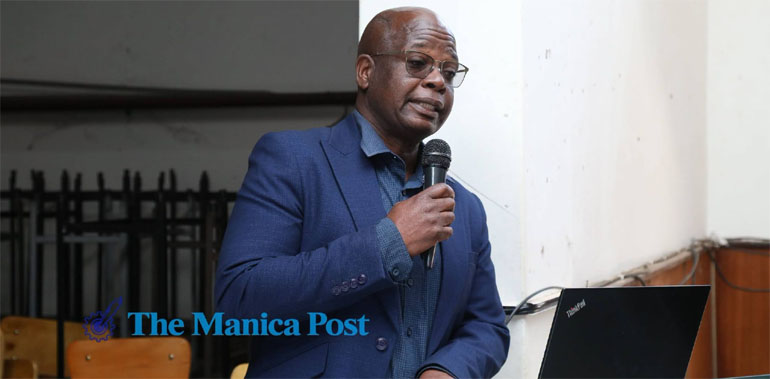
“As we embrace artificial intelligence, we must embrace cybersecurity with the same seriousness. The same technology that helps us solve problems can also be exploited for phishing, online scams, identity theft and misinformation if users are careless,” he said, urging learners to think carefully before sharing personal information online. Young people sometimes forget that whatever is posted on the internet can remain there forever. Before sharing a picture, a comment or personal information, ask yourself whether you would still be comfortable seeing it years from now. Your digital footprint can open doors, but it can also close them,” he said.
NetOne regional manager, Mr Willard Mazanhi, said Zimbabwe’s future depends on how effectively today learners strikes that balance.
“We are living in a digital economy, and artificial intelligence is one of the technologies driving that transformation. The future will favour those who understand AI and know how to use it responsibly. Instead of fearing the technology, young people should master it,” said Mr Mazanhi, dismissing fears that AI will eliminate jobs, saying it is already creating new opportunities.
“The jobs of tomorrow are changing. Today’s learners can become software engineers, cybersecurity specialists, robotics experts, data scientists or digital entrepreneurs. Artificial intelligence is opening doors that did not exist a few years ago,” he said.
However, he warned that innovation must be accompanied by responsibility.
“AI can help detect fraud, strengthen cybersecurity and improve customer services, but the same technology can also be abused through phishing attacks, identity theft and sophisticated cybercrime. That is why ethics and cybersecurity must always remain part of the conversation,” he said, challenging learners to become creators of technology rather than passive consumers.
“The next generation of innovators is already sitting in Zimbabwe’s classrooms. Some of them will develop solutions that transform healthcare, agriculture, mining, education and manufacturing. The opportunities are limited only by their imagination,” he said.
For many learners, AI has already become an indispensable study companion.
Speaking on the sidelines of the second Zimpapers Manicaland High Schools Cybersecurity Conference last week, Alpha Institute College Upper Six learner, Jayden Makawi, said AI has enormous potential to prepare young people for the future, provided they remain in control.
“Human beings must always come first. AI is a powerful assistant, but it becomes dangerous when people manipulate it to deceive others or commit cybercrime,” he said, adding that technology is exposing them to opportunities beyond traditional classroom learning.
“Today, AI can help you design websites, create digital content, explore business ideas and even discover careers that many learners have never considered before. These are practical skills that can create employment in the future,” he said, while cautioning against its use as a shortcut. If we rely on artificial intelligence to do all our thinking, we are limiting our own potential. AI should challenge us to become better learners, not lazier ones,” he said.
Another learner, Clarice Mukundo, described AI as a useful academic companion that has simplified research and school projects.
“It helps me understand difficult topics, organise presentations and research information much faster than before, but after using AI, I still have to understand the work myself. Copying everything without learning means you are only cheating yourself,” she said, while exuding concern about its darker side, particularly the ability to manipulate digital content.
“AI can now create fake images, voices and videos that look real. Someone can misuse your picture or even imitate your voice. That is why young people must protect their personal information and think carefully before posting online,” she said.
Her concerns reflect a growing global debate.
Schools and universities worldwide are reviewing assessment methods as AI tools become more sophisticated.
Rather than banning the technology completely, educators are encouraging learners to use AI to strengthen research, improve writing and solve problems, while ensuring original thinking remains central.
As AI becomes more accessible, one lesson is clear: the greatest advantage will belong not to those who allow AI to think for them, but to those who learn to think alongside it.
For Zimbabwe’s young generation, AI may well become the defining technology of their education.
Whether it produces graduates who simply ask machines for answers or innovators capable of solving real-world problems will depend, not on the technology itself, but on the choices they make every time they open that AI prompt.