Gibson Mhaka, Senior Reporter
ZIMBABWE has positioned itself among Africa’s leading nations embracing artificial intelligence (AI) after developing a comprehensive national strategy aimed at harnessing emerging technologies to drive economic growth, improve public service delivery and safeguard the country’s digital sovereignty.
The country’s Artificial Intelligence Strategy 2025-2030, which received Cabinet approval in October last year and was officially launched in March this year, is expected to provide a framework for the responsible adoption and governance of AI across all sectors of the economy.
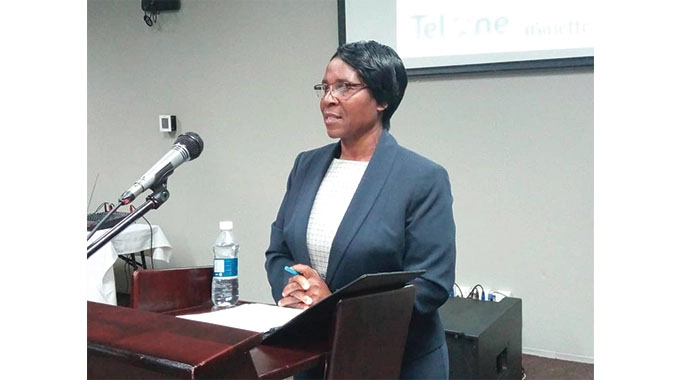
Presenting the strategy during a high-level plenary discussion on the Zimbabwe Artificial Intelligence Strategy 2025-2030 at the just ended Sixth SADC Cluster Meeting of Ministers Responsible for Transport, ICT, Information and Meteorology in Bulawayo, permanent secretary in the Ministry of Information Communication Technology, Postal and Courier Services Dr Beaullar Chirume said Zimbabwe’s AI journey had been driven by extensive consultations and benchmarking with global and continental best practices.
“Zimbabwe, we are country number 17 in Africa in terms of development of the AI strategy,” said Dr Chirume.
“We looked at a number of countries in Africa and beyond that have developed either a policy or strategy.
“We were particularly interested in the African union AI Strategy developed in 2024. We also looked at the Rwandan experience, Kenya, Egypt and other international examples.”
Dr Chirume said Zimbabwe’s efforts gained momentum after the country was selected as a beneficiary of UNESCO’s Readiness Assessment Methodology (RAM) initiative, which recommended the development of a national AI strategy.
“We were very lucky in Zimbabwe to be chosen as a beneficiary to the RAM initiative by UNESCO. After that, one of the key recommendations made was that we develop an AI strategy,” she said.
The strategy was crafted through a broad-based consultative process involving Government ministries, academia, civil society organisations, development partners and industry stakeholders from across the country.
“We conducted national consultations across the entire country. We were here in Bulawayo at the National University of Science and Technology, we were in Masvingo and Harare, just to make sure that we include everybody across the board.
“What I’m happy about is that we included all ministries, departments, academia, civil society and our development partners in the development of this strategy.”
Dr Chirume said the strategy is anchored on four key objectives — promoting responsible AI, ensuring inclusivity, accelerating social transformation through digital public infrastructure and preserving Zimbabwe’s technological sovereignty.
“We want to develop responsible AI. We want it to be inclusive. We want it to enhance social transformation in Zimbabwe using the digital public infrastructure that has already been spoken about and, of course, maintain our sovereign capability as a nation,” she said.
Recognising the transformative and disruptive potential of AI, the Government has also established a governance framework to oversee implementation.
Dr Chirume said Cabinet had designated the National Digital Regulatory Committee to spearhead the development of the national AI policy framework, supported by an AI Strategy Implementation Office housed within the ministry and technical working groups drawn from across Government.
“You do need a governance structure for this to work effectively. AI is pervasive, just like any other technology, and we need everybody to be involved,” she said.
A key pillar of the strategy focuses on developing local skills and expertise to ensure Zimbabwe has the human capital required to compete in the digital economy.
“We cannot go anywhere if we don’t have the requisite technical capacity for us to be able to deliver this, and we have already started training civil servants. We will also even train our ministers,” said Dr Chirume.
Other strategic pillars include AI infrastructure development, computational sovereignty, service transformation through AI adoption, governance and regulatory frameworks, research and innovation, as well as international cooperation.
The strategy will be implemented in phases, beginning with the establishment of governance structures, followed by scaling up AI programmes and ultimately achieving tangible transformation across sectors.
To stimulate innovation, the Government is also rolling out initiatives targeting young innovators, entrepreneurs and start-ups.
“We have a grand challenge in Mutare at the end of July where we are saying: bring your innovations and let’s assess their viability and see if we can implement them in the relevant Government entities,” said Dr Chirume.
She identified skills shortages, data gaps, inadequate infrastructure, financing constraints and regulatory challenges as some of the major obstacles facing AI adoption.
At regional level, Dr Chirume called on Sadc member states to strengthen collaboration on artificial intelligence by integrating AI into existing digital transformation frameworks and creating mechanisms for sharing datasets, algorithms and expertise.
“We could actually have a Sadc regional AI implementation fund and a network of excellence,” she said.
Dr Chirume emphasised that successful AI adoption would require strong political leadership and coordinated action across Government and society.
“This needs to be driven from the highest office of the land with our ministers and permanent secretaries because it cuts across the board, and we all must be involved in the development of AI in our respective jurisdictions.”
The strategy comes at a time when countries across Africa are increasingly embracing artificial intelligence as a catalyst for industrialisation, innovation and economic competitiveness, with Zimbabwe seeking to position itself at the forefront of the continent’s digital transformation agenda.
AI strategy charts Zimbabwe’s path to digital transformation