

 Online Reporter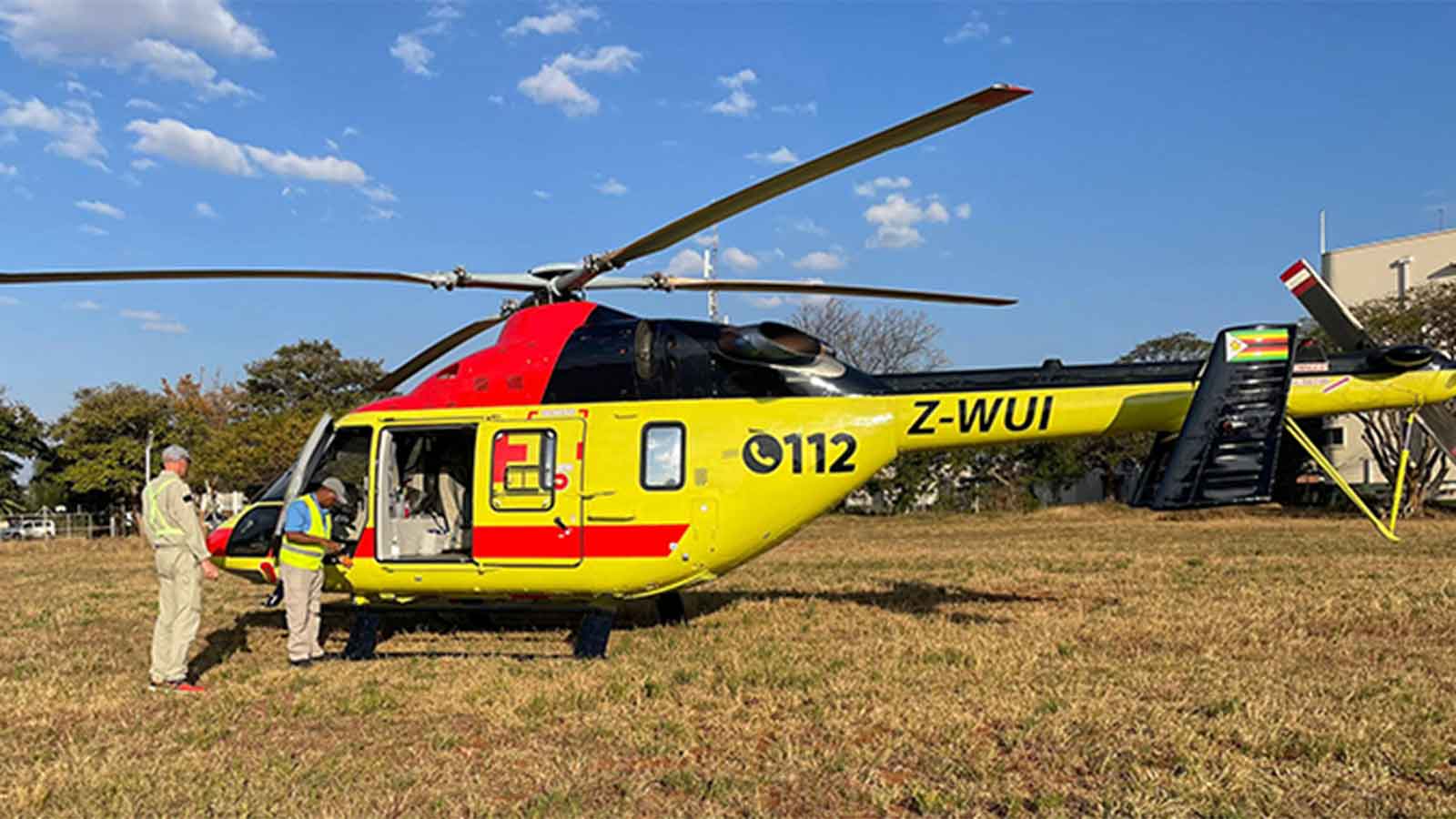
Herald Reporter
The Helidrive Zimbabwe aero-medical team successfully executed a high-complexity emergency transfer of dicephalic parapagus conjoined twins on January 6, 2026, airlifting the infants from Chinhoyi Hospital to the specialised care unit at Sally Mugabe Hospital.
The neonates, delivered via emergency caesarean section, required urgent transfer following a diagnosis of complex anatomical joining at the torso.
Medical reports confirm that the infants share cardiopulmonary structures, resulting in asymmetrical respiratory function.
Due to the absence of antenatal ultrasound imaging, the condition remained undiagnosed until delivery.
At the time of the transfer, one infant was experiencing respiratory distress, although medical teams reported that both remained responsive throughout the flight.
In an interview, Dr Freddy Mhondiwa, chief medical director at Helidrive Zimbabwe, said the successful outcome of such critical cases rests on a structured ‘chain of survival”.
“Our role is to provide rapid aero-medical evacuation, advanced pre-hospital support, and coordinated hand-over to receiving specialist teams,” Dr Mhondiwa said.
“Outcomes are strongly influenced by early recognition, structured clinical assessment, and timely escalation of care.
“The airlift of the conjoined twins marks one of several high-acuity operations recently completed by Helidrive.
Last week, the team performed a similar emergency evacuation in the Musume district, airlifting a 13-year-old victim of a crocodile attack to United Bulawayo Hospitals (UBH).
“The patient had abdominal trauma and a fractured femur following the attack,” Dr Mhondiwa revealed.
“Our team provided rapid aero-medical evacuation, advanced pre-hospital care, and safe transfer to a tertiary facility for definitive management.
“These two cases illustrate distinct but equally critical challenges within emergency and referral medicine. The neonatal case involved a rare congenital anomaly identified at delivery, highlighting gaps in access to comprehensive antenatal imaging and the importance of early referral pathways for complex neonatal conditions.
“The trauma case involved a severe injury sustained in a remote setting, where initial stabilisation and rapid transfer to a tertiary centre were essential to enable definitive multi-disciplinary management.”



