Online Reporter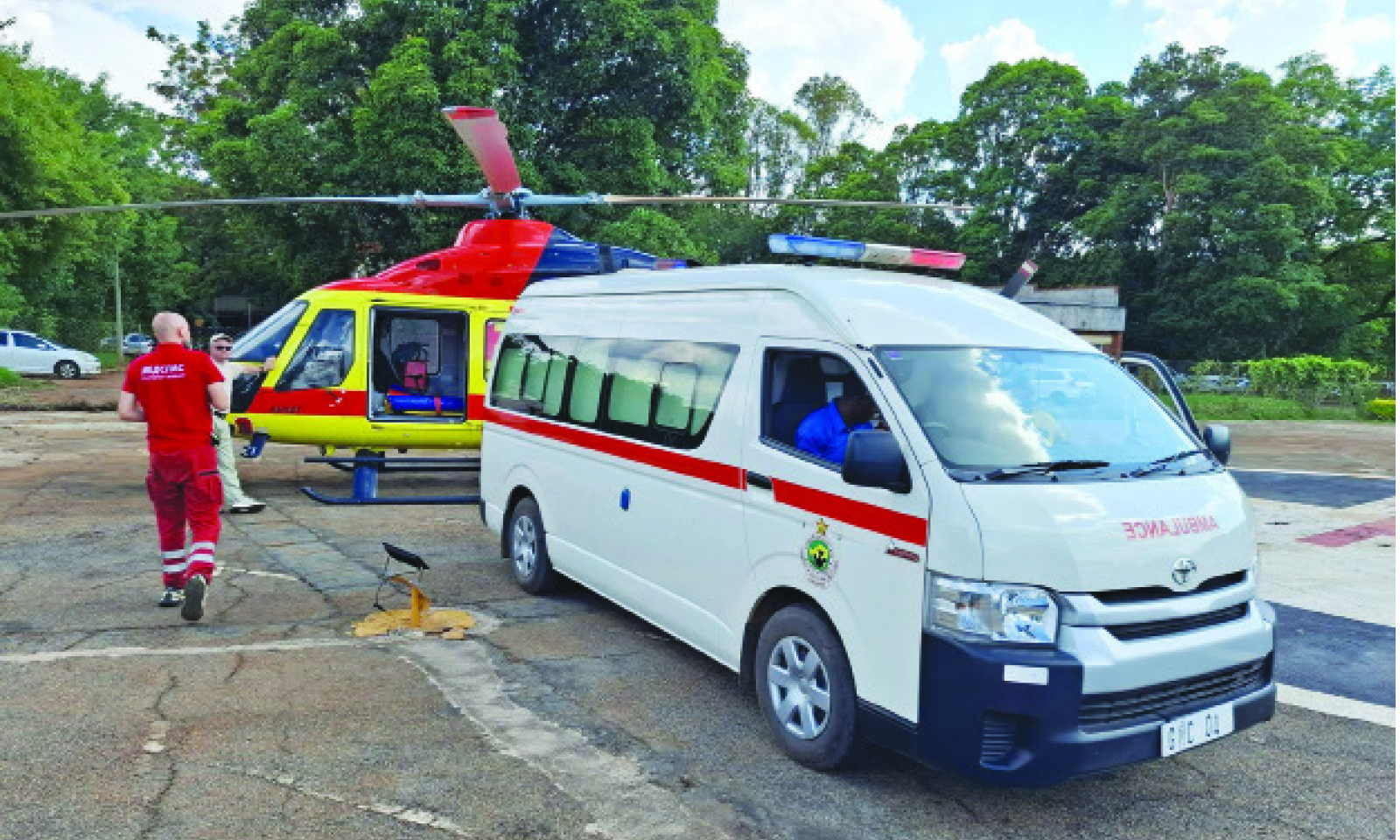
Trust Freddy-Herald Correspondent
MORE than 45 years ago, the sound of a helicopter would send villagers scurrying for cover as it signalled death during the liberation war.
Today it is the sound of life, as help arrives and hope is restored and the elderly talk about the dramatic difference.
Barely a year old, the Government-sponsored Helidrive National Air Rescue Service has taken to the skies, offering a transformative lifeline that knows no boundaries.
Over 643 patients have now been successfully airlifted to medical facilities, receiving critical care and treatment that has saved their lives.
The swift roar of a helicopter slicing through the air on a medical emergency was a rarity that once belonged to the realm of the elite.
But now, a short stroll toward Parirenyatwa or Sally Mugabe Hospitals reveals a new reality: helicopters are now regularly taking off and landing, rescuing at least one person or more each day.
“Those helicopters used to make me scurry for cover during the war,” a 75-year-old Sekuru Mupunga, who was seated in Sally Mugabe hospital canteen said with a chuckle. “When I hear it, I know it’s the air ambulance, bringing help to those in need. It’s a blessing to our community.”
He also commended the Government for bringing the Air ambulance. “This is the true meaning of independence and the Government should continue to bring world class services and also ensure that our hospitals are fully stocked with medicine.
“I’m grateful for the service they provide, saving lives and bringing hope to rural areas.”
Ms Mikiona Gwatidzo also recalled bringing her children to the air ambulance base to help their appreciation for the service. “Back then, my kids would say they wanted to go to the agriculture show to see helicopters taking off, but I simply told them that they can see them anytime here, so it’s something that they are now accustomed to.”
From the poor and the rich to everyday citizens, pastors, traditional healers, Christians, Muslims, and adherents of indigenous beliefs, no one is left behind when it comes to life-threatening emergencies, and all can benefit from this free service that prioritises saving lives.
As Helidrive continues its operations in Harare and Bulawayo, plans are underway to expand services to tourist centres, ensuring that both locals and visitors have swift access to crucial medical transport.
From knife stab wounds to mid-air births, the service’s team of dedicated medical professionals has handled it all with precision and care.
Over 70 percent of cases are critical, yet the team’s expertise and dedication have proven to be a winning combination.
The team recently performed an extraordinary mid-air delivery, bringing a healthy baby boy into the world from a 13-year-old mother.
The critical airborne birth occurred as the young patient was being airlifted from Maphisa Hospital to the United Bulawayo Hospitals, transforming a routine medical transfer into a race against time. Police have since launched a manhunt for the man who impregnated the minor.
The air ambulance service carried its first patient, an ordinary citizen who suffered cardiac arrest, ferrying the woman free of charge from Chegutu to Harare last year in August.
The flight, which had two local doctors as part of the crew, took 20 minutes from Chegutu District Hospital to Sally Mugabe Central Hospital, a journey that would require almost two hours by road, considering the huge traffic volume along Harare-Bulawayo highway.
The 20-minute flight time is within the concept of the “Golden Hour”, which is paramount in emergency and trauma care, referring to the critical first 60 minutes following a severe injury or medical emergency.
Since its inception, this has been the routine: whether it’s an artisanal miner injured in an accident, a patient suffering from malaria, or a woman in labour requiring emergency care in a remote village, they are being saved.
Gweru Provincial Hospital also recently carried out its first inter-hospital air transfer, which saw one of Zimbabwe’s air ambulances land at the hospital.
A seven-month-old baby boy was on board the flight and he was being managed by child specialist paediatricians at Mpilo Hospital before being transferred to Gweru.
The Helidrive National Air Rescue Service was established through a partnership between Russia and Zimbabwe, reflecting a commitment to improving air evacuation capabilities in the face of national challenges.
Air ambulances play a crucial role in emergency medical response offering intensive care and overcoming geographical barriers.