


 Online Reporter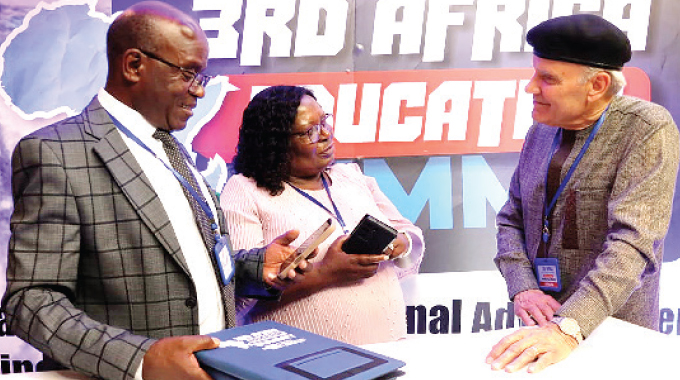
Mashudu Netsianda in Victoria Falls
PRESIDENT Mnangagwa has rallied African governments, private sector players, academic institutions and the diaspora to collaborate and invest more in research and development to unlock opportunities in key sectors such as agriculture, healthcare, climate change and artificial intelligence.
He also called for stronger partnerships between educational institutions and industries to align curricula with market demands.
President Mnangagwa made the remarks while officially opening the 3rd Africa Education Summit in Victoria Falls on Friday. The summit, which follows previous gatherings in Rwanda and Nottingham, United Kingdom, serves as a critical platform for driving educational reforms that will accelerate Africa’s development and industrialisation.
It was held under the theme: “Translating our Educational Advancement to Continental Development,” and was jointly hosted by the Global Skills Hub United Kingdom, Africa Education Stakeholders, and the Government of Zimbabwe.
In his address, President Mnangagwa said there is a need for African nations to rethink their education systems to ensure they produce solution-driven graduates rather than certificate-holding job seekers.
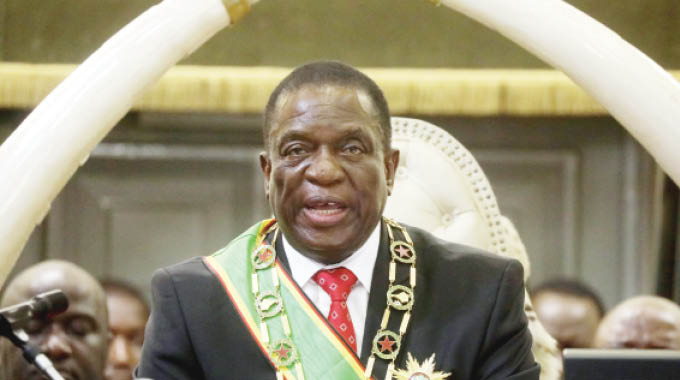
“These reforms have a bias towards the realisation of results based on both tangible and non-tangible indigenous endowments for social and economic transformation,” he said.
“I, therefore, call for increased investment in research and development, which are key cogs for the accelerated modernisation and industrialisation of Africa.
“Our governments, private sector, academic institutions and diaspora must collaborate to avail the necessary funding to promote research, be it in agriculture, healthcare, climate change, or Artificial Intelligence.”
President Mnangagwa also challenged education institutions to partner with industries to be actively involved in curriculum development to ensure a seamless flow between industry demands and the calibre and skills of graduates upon their exit from the school systems.
“Zimbabwe’s national development mantra ‘leaving no one and no place behind’ is ensuring that education is accessible to all, regardless of socio-economic background, gender or disability. Women and girls, in particular, must be empowered to excel in all fields, breaking barriers and contributing meaningfully to our continent’s progress,” he said.
“I challenge this summit to proffer solutions that are in the best interests of our people. Let us leave this gathering with actionable policies, measurable targets and a renewed commitment to making education the engine of Africa’s development, modernisation and industrialisation,” said President Mnangagwa.
He implored ministers responsible for education in Africa along with education stakeholders and development partners, to fully harness insights from the just-ended summit and translate their advancements in education into appropriate knowledge systems.
“All of us have a duty to re-define strategic and relevant approaches to translate Africa’s education advancement for continental modernisation, industrialisation and sustainable development,” said the President.
“Through our collective efforts, shared economic prosperity and a higher quality of life for the peoples of Africa must be a reality.”
President Mnangagwa urged education stakeholders on the continent and partners from beyond, to work concertedly to align this strategic sector with the evolving demands of intricate national realities, as well as the broader global economy.
He also acknowledged the digital divide as a significant barrier to educational access in many African countries and called for increased investment in ICT infrastructure, e-learning platforms, and digital literacy to bridge the gap.
President Mnangagwa challenged scholars and authors from Africa to participate in generating reading materials and literature for the benefit of learners, noting that Africa is rising and education is one of its strongest pillars.
“Let us build a robust and responsive education system that informs, transforms, teaches, empowers and prepares students to shape a brighter future,” he said.
“Our education systems must enable us to take pride in our identity, who we are as an independent African people and to preserve our unique and rich cultural heritage,” said President Mnangagwa.
He challenged the summit delegates to ensure that their discussions translate into actionable policies and measurable targets that strengthen education as the foundation for Africa’s modernisation, industrialisation and sustainable development.
“I, therefore, challenged delegates to explore actionable policies and measurable targets to strengthen education as the foundation for Africa’s modernisation,” said President Mnangagwa.
The summit brought together ministers responsible for education, policymakers, scholars and development partners from across Africa to deliberate on ways to translate educational advancements into tangible economic and social benefits.


