Online Reporter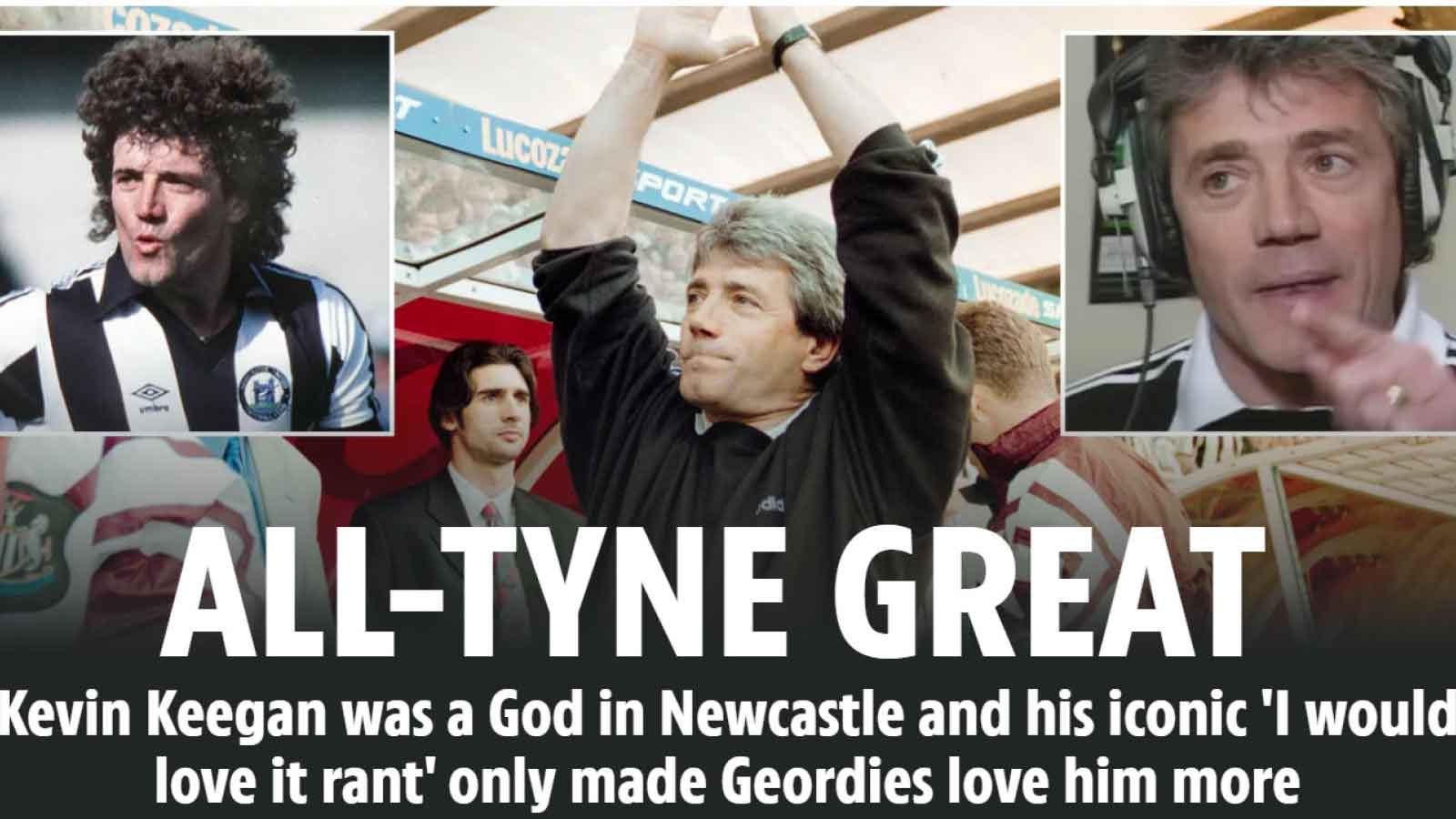
WHEN Kevin Keegan netted twice against Newcastle to help Liverpool to a 3-0 victory in the 1974 FA Cup final, it seemed inconceivable that it would be on Tyneside where he became a football God.
Keegan was a great player for Liverpool, that is indisputable. Bought from lowly Scunthorpe, he was instrumental in not only that cup success but had already won the league title and Uefa Cup the year before.
And he went on to lift the league trophy twice more, another Uefa Cup and the European Cup before departing for German outfit Hamburg where he was a two-time European footballer of the year. Yet despite such success, it was Newcastle where he truly became part of football folklore as both player and manager, despite never winning a major piece of silverware for one of the game’s sleeping giants.
It was a stunning moment to see Keegan unveiled as a shock new signing from high-flying Southampton, who had qualified for Europe in the old First Division.
He had also just returned from the 1982 World Cup with England and here he was pitching up at a club which had lost its way drifting around the second tier of English football playing in a dilapidated ground where fans had all but given up hope.
Keegan admitted it felt like coming home, because of his Geordie roots through his father, and that it had always been a dream of his to pull on the black and white shirt. As if he needed to endear himself to us anymore.
The local paper proclaimed “Let The Good Times Roll”, and fans queued round the block to witness his debut where, inevitably, he scored in a 1-0 triumph over QPR, throwing himself into the crowd in celebration.
By the end of 1984 Keegan had made sure the Magpies were back at football’s top table. He brought not just a club but a city back to life.
With promotion confirmed, Keegan scored in his final competitive appearance, a 3-1 victory over Brighton in front of an adoring 35,000 sellout crowd.
The other scorers that day were Peter Beardsley and Chris Waddle. What a forward line that was.
There was to be one more game for Keegan at St James’ Park, a testimonial against Liverpool and, ever the showman, it ended with him being whisked from the centre circle by helicopter.
We were drunk on Keegan mania and it left us with a heavy hangover when he departed.
By the time he returned, this time as manager eight years later, we were in an even worse place than when he’d arrived as a player.
Newcastle were in serious danger of being relegated to the third tier but, after briefly walking out claiming new owner John Hall hadn’t given him the transfer funds he expected, the pair made up and Keegan took Newcastle on an extraordinary journey. He saved us from relegation, won the old First Division title a year later to get Newcastle into the recently formed Premier League and engineered a third place finish the following season.
By 1995/96, Newcastle appeared to be on the brink of their first top flight title since 1927.
The transformation was almost complete and we fans could almost touch English football’s biggest prize. The black and whites were 12 points clear and looked unstoppable.
But by March the lead was down to a single point and comparisons were being made with Devon Loch, the horse which was striding home, miles ahead in the 1956 Grand National only to stumble approaching the finish line and lose the race.
A 4-3 defeat at Liverpool, in what is regarded as one of the greatest Premier League games of all-time, saw Keegan slumped over an advertising hoarding as the realisation dawned that the dream was about to become a nightmare.
His famous Sky TV rant in which he exclaimed, “I would love it, love it, if we beat them” after Manchester United boss Alex Ferguson claimed teams were trying harder against the Red Devils than against Newcastle has gone down in the annals.
It made Keegan something of a joke figure to opposition football fans but not to us Geordies.
For us, it summed up his passion for our team and how desperate he was to succeed.
Of course we missed out on the title and Manchester United triumphed but King Kev’s Great Entertainers have never been forgotten – Sun.