admin
admin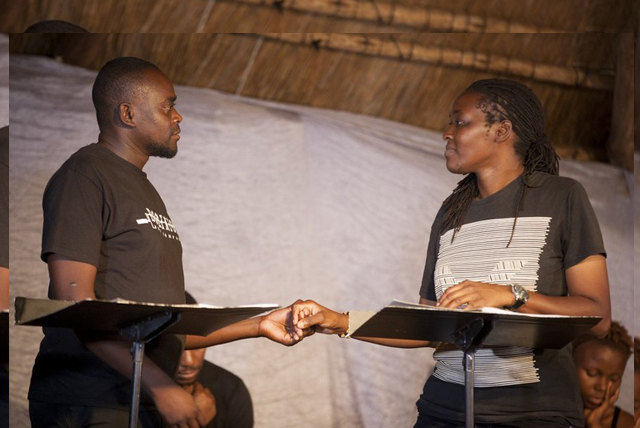
Takudzwa Chihambakwe
“OUR goal is to facilitate excellent new Zimbabwean works into existence, works that can compete on a global level and leave behind a Zimbabwean dramatic literature legacy. Staged readings also nurture dramaturgy, which allows for the portrayal to be rich, resonant and specific to the placement of the play in time, space and moment in history,” said Almasi Collaborative Arts associate artistic director, Zaza Muchemwa.
By staging reading sessions at the Zimbabwe Germany Society, Almasi has not only kept this form of theatre alive but has also reached out to a novel audience and developed new talent.
“The Staged Reading Series is a free programme that not only promotes dramatic literacy but also exposes great dramatic works to the Zimbabwean community while simultaneously training directors and actors alike.
“The programme also encourages audience development and interaction with the community through post-performance talkback sessions. The staged reading series have steadily been taken in by the theatre community as more experienced and aspiring actors alike participate in the staged readings.
“They have also seen a steady rise in audience attendance where on average 32 percent of the audience at each staged reading performance are first time attendees.
“It is also through the staged reading series that six Zimbabwean directors were mentored by American director and educator Julia Wharton, three new Zimbabwean plays were presented to the Zimbabwean public and six playwrights showcased their work in progress for the purposes of developing the said work,” revealed Muchemwa.
To date, Almasi has presented staged readings of several plays to the Zimbabwean public and among them is Lorraine Hansberry’s “A Raisin in the Sun” directed by Patience Tawengwa, Sarah Ruhl’s “Dead man’s cellphone” directed by Julia Wharton, Danai Gurira’s “The Convert”, August Wilson’s “Radio Golf” directed by Julia Wharton and Lynn Nottage’s “Fabulation” or “The Re-Education of Undine” directed by Patience Tawengwa.
“Dramatic literacy is a crucial component of powerful, excellent play making. A component needed in Zimbabwean dramatic arts development is the comprehension and in-depth analysis of excellent dramatic works that have come before.
“Without awareness and understanding of some of the greatest dramatic works, the Zimbabwean dramatic artiste cannot develop to the level of dramatic literacy necessary to create compelling, well structured, dramatic works,” said Muchemwa.
“As 2016 comes to a close, Almasi will present Bertolt Brecht’s “The Good Woman of Setzuan” in November and “Anowa” by Ama Ata Aidoo directed by Sandra Chidawanyika-Goliath in the month of December.
“Next year will see Almasi Collaborative Arts continuing with its staged reading series,” Muchemwa added.



 Online Reporter