Online Reporter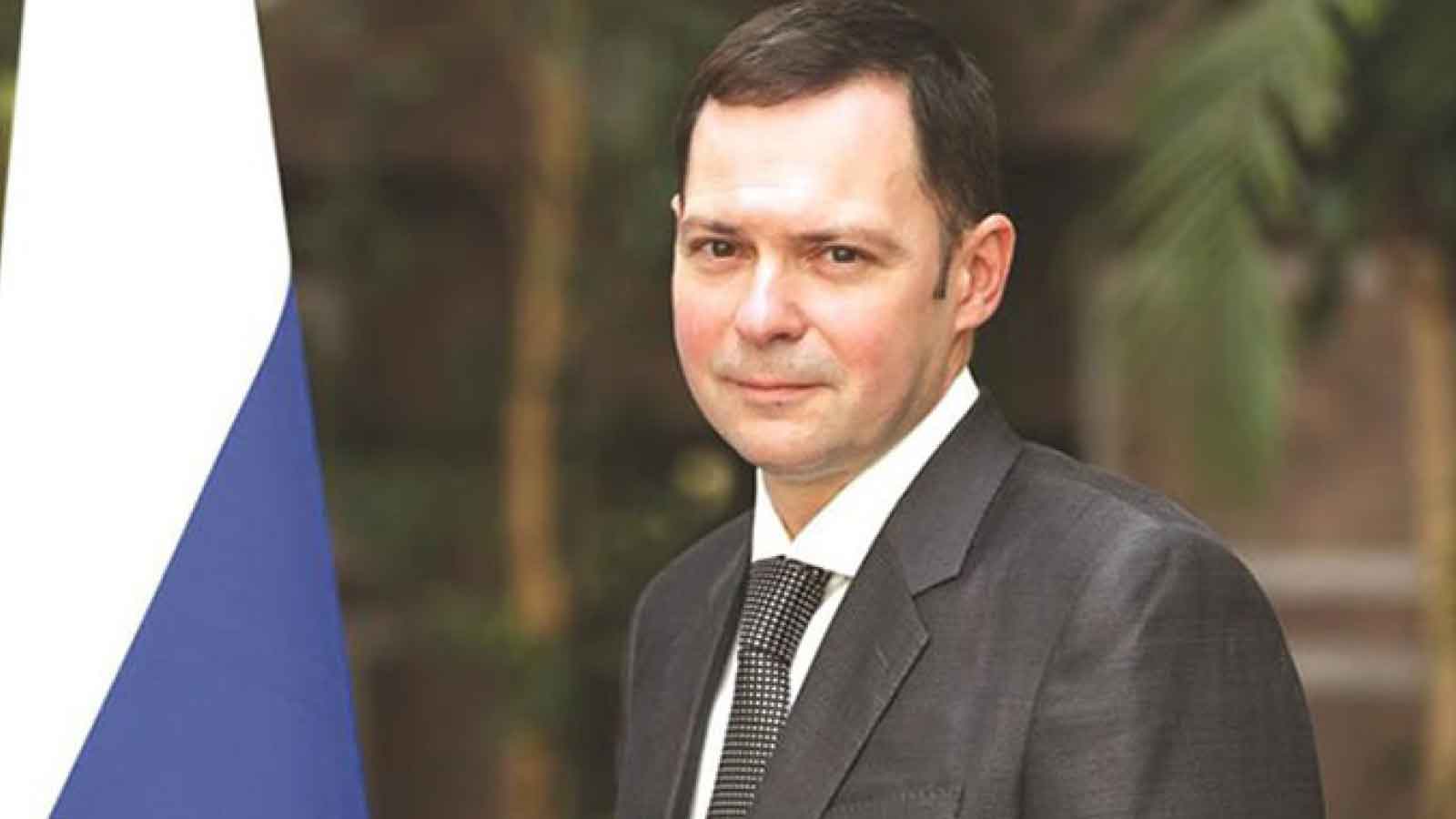
Kuda Bwititi-The Interview
DIPLOMATIC engagement between Zimbabwe and Russia intensified in 2025, underscored by President Mnangagwa’s visit to Moscow to observe the 80th anniversary of the victory in World War II. Looking ahead, the 45th anniversary of diplomatic ties in 2026 presents a pivotal opportunity to reinforce bilateral cooperation. To discuss the state of relations, our Politics, Foreign Affairs and Opinions Editor Kuda Bwititi (KB), engaged Russian Ambassador Nikolai Krasilnikov (NK).
KB: Reflecting on 2025, what would the embassy highlight as the most significant milestones or achievements in Zimbabwe-Russia diplomatic relations?
NK: On February 18 we will raise glasses to celebrate the 45th anniversary of establishing diplomatic relations between our countries. Through joint efforts applied together with our Zimbabwean friends from various Government offices, Parliament and public institutions, the last year became a remarkable milestone along the highway of Russia-Zimbabwe cooperation.
The most significant event was the meeting by His Excellency, the President of the Russian Federation Mr Vladimir Putin and His Excellency the President of the Republic of Zimbabwe Cde Dr Emmerson Dambudzo Mnangagwa in Moscow on May 10, 2025.
The mutual commitment was confirmed to expand partnership in various fields, especially to give a strong impetus to the bilateral trade. These talks at the highest level allowed us to coordinate deeper on a wide range of issues of the bilateral and international agenda. It is symbolic that the meeting was held during the commemoration of the 80th anniversary of the Victory in the Great Patriotic War, which is the sacred and integral part of the Russian mentality and statehood.
KB: In addition to the meeting between President Mnangagwa and President Putin, which other high-level exchanges were monumental in 2025?
NK: On March 6 our Foreign Ministers, Mr Sergey Lavrov and Professor Amon Murwira – held talks in Moscow. They reviewed prospects of diversification of trade and investments, implementation of long-term projects in mining, energy, infrastructure development, information and communication technologies. Opportunities for expanding cultural and humanitarian cooperation were outlined as well. The ministers signed the bilateral declaration on ways and methods for countering, mitigating, offsetting and compensating negative consequences of unilateral coercive measures.
The mutually beneficial cooperation in the bilateral and multilateral formats was highlighted by both Minister Lavrov and Minister Murwira during the Russia-Africa Ministerial Conference in Cairo, where they had another bilateral meeting on December 20 and participated in the Plenary Session.
The energetic and fruitful contacts of Moscow and Harare throughout the year make us confident that Russia-Zimbabwe diplomatic relations are well on track, taking both our nations to commemorate 45 years of such a beautiful journey which started on February 18, 1981.
KB: Which sectors saw the strongest growth in cooperation?
NK: Alrosa, the major diamond producer in the world has been conducting geological exploration in Zimbabwe over a few recent years. In 2025 the company announced that it would expand the scope of the activity with searching for gold and doubling the investment up to US$ 30 million.
The joint venture of Alrosa and a Zimbabwean partner enjoys the valuable support from the Government, Parliament, local authorities and communities, and it’s no wonder. Alrosa Zimbabwe has proved to be committed to observing meticulously the Zimbabwe environmental and ecological legislation and to fulfilling its humanitarian obligations before people living in the areas designated for geological research.
For example, last October, after concluding operations in the Shinja region, Manicaland, the company set a new high standard by handing over to the local community the rehabilitated infrastructure with fish-farming ponds.
Partnership in healthcare is also a priority of the bilateral relations. Last year the relevant Ministers — HE Mikhail Murashko and Hon. Douglas Mombeshora — signed an agreement on cooperation in the field of healthcare, medical education and science.
Contacts were made with a view of exchanging experience and technology through educational seminars and joint training, particularly in the fields of gynaecology and infant care, as well as epidemiology.
We are proud that Russia participates in implementation of establishing Zimbabwe National Air Ambulance Service, the first of its kind in Africa. Russian and Russia trained Zimbabwean pilots, doctors and paramedics operate a fleet of helicopters delivered to Harare in 2023 by Rostec, Russia’s major manufacturer of the advanced technology products. HeliDrive Company, which runs air ambulance service across the North West of Russia, operates the project in Zimbabwe. Last year the air ambulance service added Victoria Falls to its bases in Harare and Bulawayo. Russia-Zimbabwe teams have airlifted up to 1200 patients, requiring urgent, life-saving care.
Another significant area of the mutually beneficial cooperation is Information and Communication Technology. Through the joint efforts of the consortium of the leading Russian and Zimbabwean companies in the field, and the Ministry of ICT, Postal and Courier Services a vast online cyber security training programme was launched in Harare to prepare high level experts who are expected to strengthen the national sovereignty of Zimbabwe in the relevant area.
KB: Looking ahead, what are the key prospects and priority issues for deepening relations between the two nations in 2026?
NK: In the framework of the multipolar world order which Russia, Zimbabwe, China, Belorussia and other like-minded countries are constructing, one of the priorities for 2026 is the Third Russia-Africa Summit. It is envisaged that for the first time the Forum will be held here, in Africa.
We are confident that His Excellency President Mnangagwa will provide, as usual, an important contribution to developing further Russia-Africa Partnership by leading well and highly represented Zimbabwean delegation, which will make a huge impact on plenary and panel discussions, and also on drafting final documents of the Summit. So, we expect that for reciprocate benefit of Russia and African countries as well as other friendly nations, committed to ensuring universal respect for the international law and the UN Charter, the Summit will promote peace and security in Africa and beyond, socio-economic development outlined in the Agenda 2063: The Africa We Want, as well as global trade and economic cooperation — sustainable and without illegal coercive measures in force.
KB: What are your expectations specifically on trade?
NK: As for the bilateral Russia-Zimbabwe agenda we look forward to increasing our trade turnover, to applying space technologies to provide communication services and Earth remote sensing, needed in agriculture and natural resources exploration. It is also essential to proceed with working out projects on the use of nuclear energy, including in medicine — to treat cancer — and in agriculture — to radiate grain to increase its resistance.
KB: Russia has a long history of educating Zimbabwean students. What is the planned scholarship intake for 2026?
NK: Every year the Government of the Russian Federation allocates more than 150 scholarships for Zimbabweans to study in higher education institutions in my country. In 2025/2026 academic year, 171 scholarships were allocated. The most popular among Zimbabwean youth are studies in medicine, mining, agriculture, information and communication technologies. So, every year graduates of Russian universities return home with the knowledge and experience necessary for a successful career and a valuable contribution to the socio-economic development of Zimbabwe.
KB: Zimbabwe is bidding for a non-permanent seat on the UN Security Council for the 2027–2028 term. How does Russia view this bid within the context of our bilateral relations?”
NK: As we take the angle of multilateral cooperation it is remarkable that Zimbabwe’s aspiration to occupy a non-permanent seat in the UN Security Council for 2027-28 enjoys broad support of the African Union, SADC, Russia and many other countries. In course of preparing for our collaboration in the UN Security Council Russia attaches great importance to the activity of the Group of Friends in Defence of the UN Charter. It is becoming a major platform for articulating the voice of the global majority, countering the Western narrative and building a just multipolar world order. We highly appreciate Zimbabwe’s intention to host another high level meeting of the Group this year.
KB: Can the Embassy confirm whether the Russian Federation has officially introduced a visa-free travel regime for holders of Zimbabwean ordinary passports?
NK: Currently, Zimbabwean holders of ordinary passports can enter the Russian Federation only with a visa. Since December 2024, Zimbabweans can obtain online a unified electronic visa without visiting the embassy’s consular section. The Russians may get visa on arrival.
Of course, visa free regime will facilitate significantly cooperation between our countries. It will ease business contacts, encourage tourists and minimise expenses of young Zimbabweans aspiring to go to Russia for studies. I hope that this interview will draw attention of the Foreign Ministry and Home Affairs to activate their work on the draft agreement on mutual abolition of visa requirements.
KB: To conclude, what other high-level visits or key projects are on the agenda for 2026?
NK: The areas I mentioned above will be in the focus of attention of the 6th session of the Bilateral Intergovernmental Commission for Economic, Trade, Scientific and Technical Cooperation, co-chaired by the Minister of Natural Resources and Environment Hon. Alexander Kozlov and Prof Murwira. The Zimbabwean side will host the event sometime this year. We count on an active involvement of business community of Russia and Zimbabwe that is crucial for implementation of all agreements and arrangements which may be concluded by Government officials.