admin
adminAt the outbreak of the first World War in 1914, hundreds of black people (men) voluntarily joined the South African forces and were sent to either East Africa or to South West Africa, then called German West Africa, now Namibia.
Some were virtually conscripted into the force.
Two reasons could be given for that development. Unemployment was very high due to the massive displacement of the black population as whites established farms in the recently acquired areas on the basis of the land law as amended in 1913. That was the major factor.
The second was that since recruitment of the black people for war was carried out largely in the “native reserves” by African chiefs who were all working under the guidance and supervision of the Union Government’s Native Affairs Ministry, coercive measures were used by virtually every chief in order for them to achieve their respective quotas.
The chiefs were a pitiable situation: they were on one hand ex-officio honorary presidents of the SANNC, and on the other hand the Union Government’s “eyes, ears” and spokespersons in the native reserves.
That placed them figuratively between the devil and their conscience with the devil wielding all the means of administrative, legislative and judicial powers, and their conscience always pricking them to stand for their oppressed and oppressed people. Chiefs who had tried to follow their conscience were brutally treated and ended up at either St Helena Island, as was the case with Dinizulu of the Zulus, or at Robben Island, as did Chief Langalibalele of the Hluli.
To go back to the past-World War One SANNC, we find the black workers of South Africa forming the Industrial and Commercial Workers Union (ICU) led by Clements Kadallie in 1919.
It was this trade union organisation that was joined by Zimbabwe’s founder of African trade unionism Sergeant Masotsha Ndlovu in the early 1920s.
In 1923, the SANNC changed its name to the current one, the African National Congress. The reason for the change was that the word “native” had acquired a derogatory connotation as well as a sense of inferiority.
In the baaskap economic and socio-political environment prevailing in South Africa at that time, the word had become a form of racial insult.
A year before the change of name, some SANNC members had been involved in a massive strike by the Witbank coal mine in the east of Johannesburg.
Jan Smuts was the prime minister at that time. He ordered armed troops to crush the strike, and 214 men were killed in the process.
The incident was to remain as one of the horrible crimes of the Jan Smuts regime on the ANC calendar up to this day.
In 1924, general elections kicked out the Jan Smuts administration and brought in Barry Hertzog of the National Party, which formed a coalition government with the Labour Party.
Hertzog was a racialist without a semblance of conscience.
His administration introduced measures to make sure that Africans had no permanent foothold in the urban areas.
He made sure that the 1913 Natives Land Act was rigorously applied.
He led a predominantly Boer political campaign highlighting what he termed “the black danger”, swart gevaar in Afrikaans.
It was while he was riding on the crest of this swart gevaar campaign that his party won an overall majority in the 1929 general elections.
He set in motion measures to remove the few black people on the voters’ role in the Cape Province.
He said the black people should be represented by four senators throughout the Union of South Africa.
The senators would be elected by white people.
In the Cape province, no registration of black voters would take place any longer although very few had done so in the past due to the relatively high educational and property qualifications required.
The province was a very strong ANC area because of the general socio-economic conditions prevailing following the introduction of native reserves.
The African people’s reaction to these repressive measures was to call what was referred to as the All-African Convention (AAC) in Bloemfontein in December 1935.
The conference was attended by more than 400 people from not only different cultural, social and workers’ organisations, but also from a wide range of the country’s political persuasions.
The communists called for a militant opposition to the repression of black people but their proposals were played down by such ANC leaders as Dr Alfred Xuma.
While strongly asserting their loyalty to the British monarch, the gathering appealed to the United Kingdom government to intervene on the black people’s behalf.
Meanwhile, AAC delegates agreed to organise meetings with government officials to hold prayer sessions and protest gatherings.
It is important to state that an SANNC delegation had gone to London in 1914 to plead with the British to intervene on the black people’s behalf.
The British told the delegation that it could not do anything about the issue.
The situation got worse than ever as the World War Two broke out in 1939.
Many Boer political leaders were in sympathy with Adolf Hitler’s Nazi regime, but Jan Smuts and his South African party were pro-British, and so was the ANC for obvious reasons.
If the Nazis are so hostile against the Jews, whose skin is as white as that of the Germans, they will not want the blacks to step on their shadows, so argued ANC ideologies.
Once more the black people of the Union of South Africa joined their country’s armed forces.
Their role was largely non-combative because it was feared that assigning them combative duties would give them an experience they could use to liberate themselves on their return to their country.
Their role was mostly in the engineering department, construction of roads, bridges and similar work.
They were, however, given some military training to enable them to defend themselves in case of need.
Back home, the ANC was experiencing a change of mood within its leadership and general membership.
As more educated young people joined the organisation, they brought with them a greater sense of urgency into the party political programme.
Some of these young militants had been deeply influenced by the pan-Africanist philosophy of the Afro-American Marcus Garvey whose “Africa for the Africans” call had been widely propagated by the ICU during its heydays.
One of the educated young people whose sharp mind helped to revitalise the ANC was a former student of Adams College, Anton Mziwakhe Lembede, who helped to found the ANC’s Youth League in 1943.
The league was founded some three years after Dr Xuma was elected the ANC president.
He injected more urgency and organisational efficiency into the ANC top leadership.
In 1944, the Youth League published a proclamation criticising the ANC for what it termed “elitism” and for giving in to oppression.
It accused Dr Xuma’s leadership of being passive.
Lembede became the league’s first president when it held its inaugural congress on Easter Sunday 1944.
The League’s proclamation stated: “The hour of youth has struck. As the forces of national liberation gather momentum, the call to youth to close ranks in order to consolidate the national unity front becomes more urgent and imperative.”
While all this was occurring, many black youths were studying at various schools and universities in South Africa.
They originally came from various neighbouring countries, most of which were under British colonialism.
They were inspired by the ANC. On their return to their fatherlands, they launched their own ANC versions.
That was the case in Northern Rhodesia (now Zambia), Nyasaland (now Malawi), Uganda and Southern Rhodesia (now Zimbabwe).
The founding president of the ANC of Northern Rhodesia was Harry Nkumbula, that of the ANC Nyasaland was Levi Mumba who had earlier founded the country’s first modern political movement, the North Nyasa Native Movement in 1912, shortly after the Bloemfontein inaugural congress (8 January 1912).
Uganda’s first national party was called the Uganda National Congress and was formed in 1952.
Its first president was Ignatius Musazi. Founded on virtually the same principles as the South African ANC, the UNC (as it was popularly called) was the first party to demand what was called “self-government”, and it wanted it immediately.
In Zimbabwe (then known as Southern Rhodesia), an African National Congress was formed by a small commercial landowner, Aaron Jacha Rusike at Makwiro in 1934.
He was actively helped by his cousin, Rev. Matthew Rusike and Rev. Samkange.
The drafting of the constitution of the Southern Rhodesia ANC was done by the lawyer Alfred Mangena, who had played a prominent part in the formation of the SANNC at Bloemfontein in 1912.
Another prominent South African who assisted in the launch of the ANC of Southern Rhodesia was Professor Davison Jabavu, who had been featuring a great deal in the All-African Convention activities in South Africa.
In 1962, some Mozambicans living in Salisbury (now Harare) launched their country’s version of the ANC.
It was led by a Mr Simbi who lived briefly in Lusaka, Zambia, but disappeared in 1965 together with his couple of lieutenants.
In Zimbabwe, the SAANC’s additional impact occurred when some of the black students from this country were deported from that country because of participating in that organisation’s activities.
One of these students was James Robert Dambaza Chikerema who after his return teamed up with George “Bonzo” Nyandoro, Paul Mushonga and Eddison Sithole to form the Salisbury City Youth League in the mid-1950s.
The other deported student was Tarcissius George (TG) Silundika who joined Joshua Nkomo’s national executives first on the National Democratic Party (NDP) and later that of the Zimbabwe African People’s Union (ZAPU).
Joshua Nkomo, popularly called “Father Zimbabwe” joined the ANC while he was a social science student at Jan Hofmeyr College in Johannesburg in the 1940s.
He became the most prominent nationalist leader in Zimbabwe when he returned home following his graduation.
He took over the ANC’s presidency in Southern Rhodesia from Rev Samkange in 1952, then became the NDP top most leader, and later that of ZAPU until the 1987 ZANU (PF)-PF-ZAPU unity accord.


Online Reporter
- Chronicle , SundayNews
- September 23, 2026
- 16 views
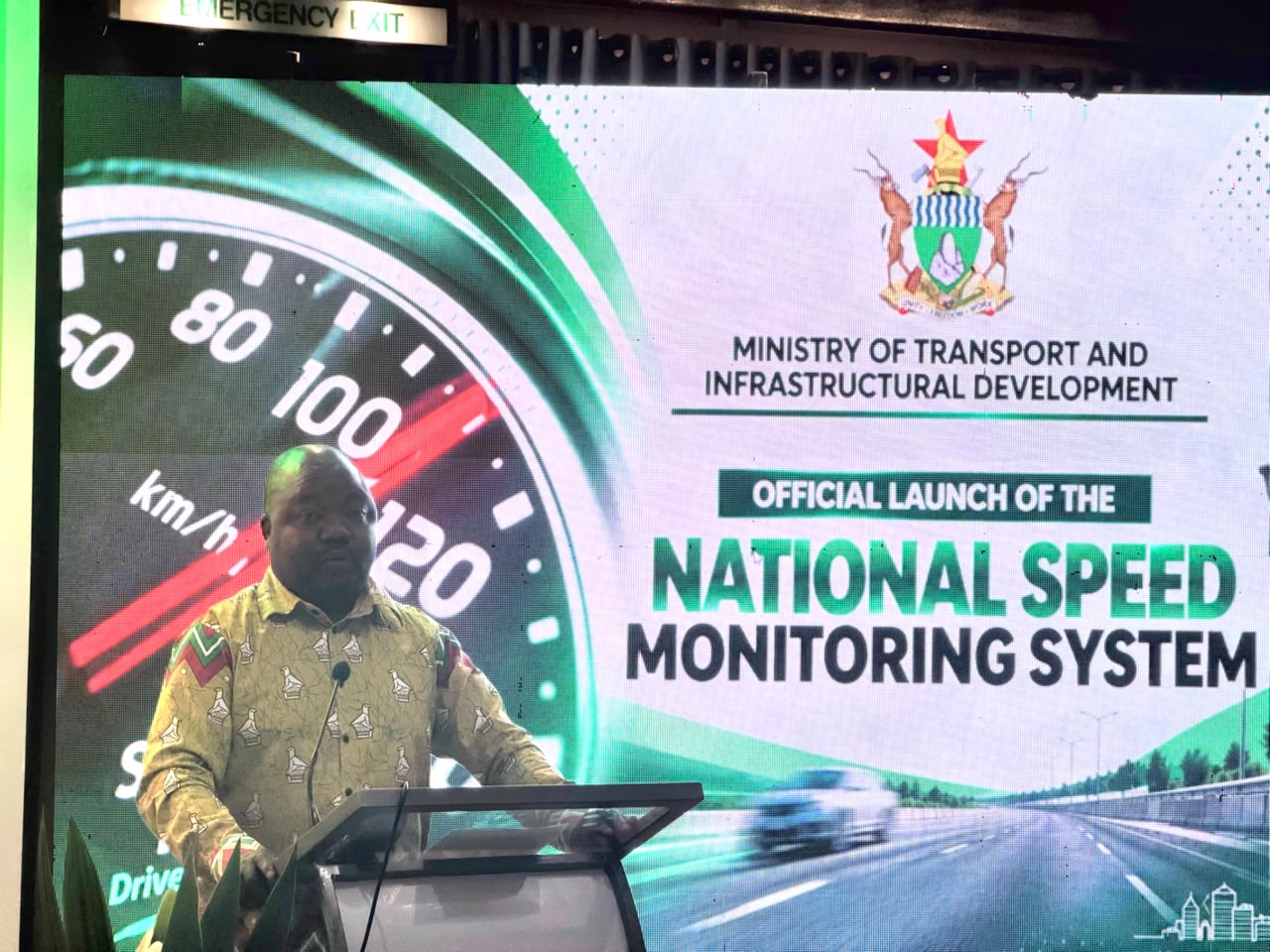
Speed monitoring system launch boosts digital economy drive
Mthabisi Tshuma [email protected] THE launch of the National Speed Monitoring System (NSMS) is part of Government’s drive to build a digital economy by using artificial intelligence and other emerging technologies…