

 Online Reporter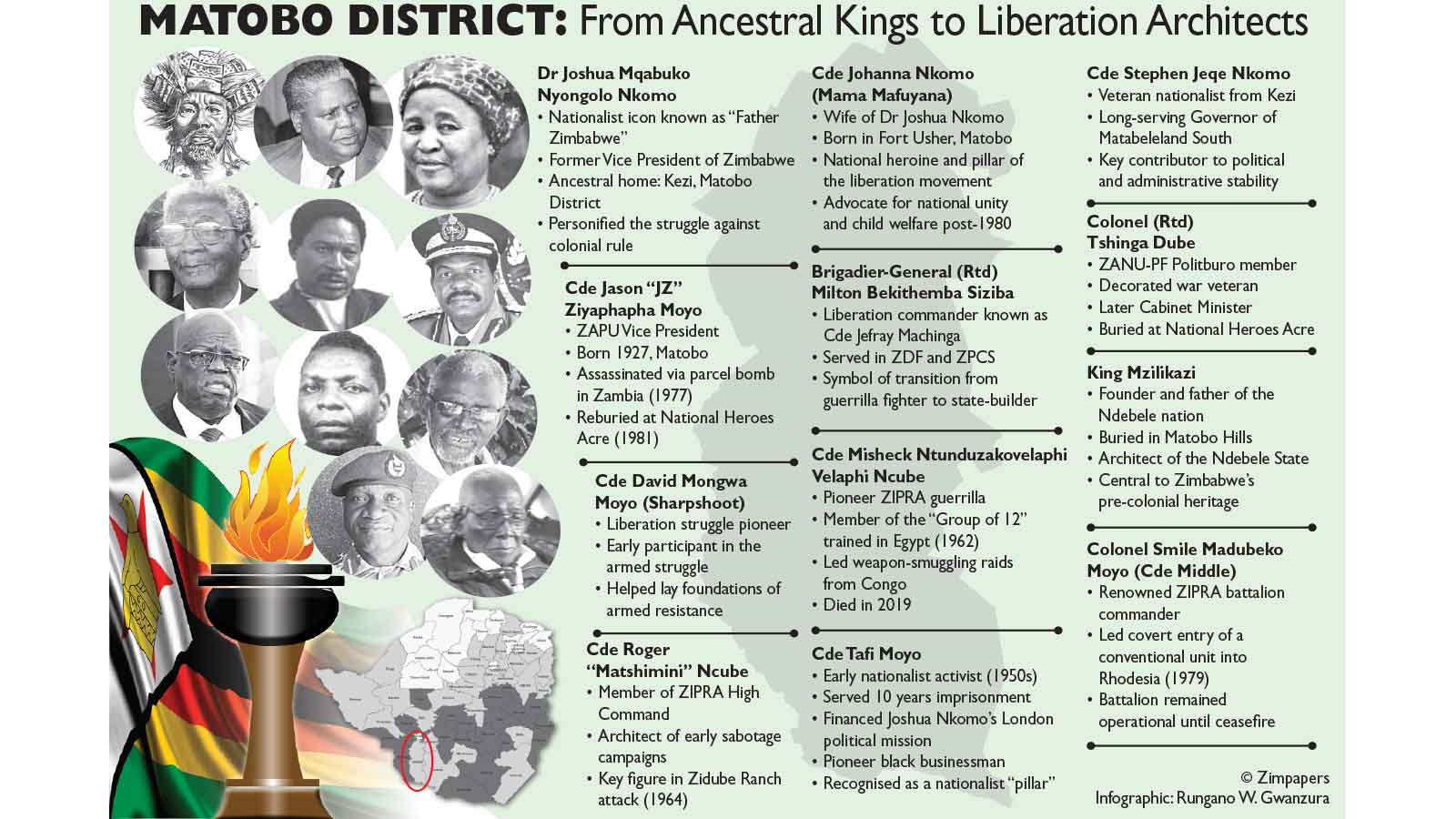
Gibson Mhaka
Zimpapers Politics Hub
AS the nation braces for the 46th Independence Day celebrations, all roads lead to Maphisa in Matobo District, Matabeleland South province.
By choosing Matobo to host this year’s festivities, the Second Republic under the visionary leadership of President Mnangagwa is not merely acknowledging a geographic location, it is bowing to a district that holds an indelible mark on Zimbabwe’s liberation narrative.
This choice brings the spirit of independence back to a place that intrinsically embodies the resilience and struggle for freedom. Matobo is a living testament to greatness, deeply embedded in the nation’s struggle for self-determination.
As Zimbabwe prepares to celebrate its fallen and living heroes of its hard-won independence during the upcoming festivities, the spotlight on Maphisa ensures that Matobo’s pivotal role is prominently recognised on the national stage.
The Ancestral Cradle of “Father Zimbabwe”
At the summit of Matobo’s esteemed roll call of liberation figures stands the late Father Zimbabwe, Vice President Dr Joshua Mqabuko Nyongolo Nkomo. With his ancestral home located in Kezi, Dr Nkomo’s profound connection to this district solidifies its historical importance.
Matobo gave the nation the man who became the very personification of the struggle against colonial bondage.
Adding to this legacy is Cde Johanna Nkomo (Mama Mafuyana), the widow of the late Dr Nkomo.
Born in Fort Usher, Matobo, she was a national heroine who provided the silent strength that anchored the liberation movement.
Her dedication to national unity and the welfare of children after 1980 remains a beacon of the district’s nurturing spirit. Kezi also gave rise to Cde Stephen Jeqe Nkomo, a great nationalist and long-serving Matabeleland South Governor, whose contributions to the administrative and political stability of the nation are indelible.
The Ultimate Price: Martyrs of the Struggle
The district is also the birthplace of Cde Jason “JZ” Ziyaphapha Moyo, the Zapu Vice President who paid the ultimate price. Born in 1927, JZ Moyo tragically died in a parcel bomb explosion in Zambia in 1977.
His reburial at the National Heroes Acre in 1981 marked the homecoming of a strategic genius whose blood watered the tree of our liberty.
Another proud son of Matobo is the late Brigadier-General (Rtd) Milton Bekithemba Siziba, known as Cde Jefray Machinga.
A prominent commander during the war, he served with distinction in both the Zimbabwe Defence Forces and the Zimbabwe Prisons and Correctional Service, embodying the transition from a liberation guerrilla to a State builder.
The Pioneers
Matobo’s contribution to the armed struggle dates back to the very foundation of the movement. Cde David Mongwa Moyo, affectionately known as “Sharpshoot,” was a pioneer whose early involvement laid the groundwork for the freedom we enjoy today. Similarly, Cde Misheck Ntunduzakovelaphi Velaphi Ncube, a veteran nationalist who passed away in 2019, was a pioneer ZIPRA guerrilla.
He was among the “Group of 12” who undertook military training in Egypt in 1962.
His legendary mission involved raiding Congolese rebels for weapons, leading to the first significant smuggling of arms into Southern Rhodesia – a feat that shifted the struggle from political agitation to armed confrontation.
Alongside him was Cde Roger “Matshimini” Ncube, a member of the ZIPRA High Command.
These men were the architects of the sabotage campaign, attacking white-owned installations and disrupting the colonial judiciary system, most notably during the Zidube Ranch attack of 1964.
Military Brilliance and Strategic Cunning
The late Colonel (Rtd) Tshinga Dube, a Zanu-PF Politburo member and decorated war veteran, is yet another prominent son.
Interred at the National Heroes Acre, Col Dube’s contributions as a military strategist and later as a Cabinet Minister underscore the district’s tradition of excellence.
The military narrative of Matobo is further enriched by Colonel Smile Madubeko Moyo (Cde Middle).
His battalion achieved what seemed impossible in August 1979: they successfully fooled the Rhodesian security forces and sneaked a conventional unit — complete with heavy equipment — into the country undetected.
They remained “dug in” in Tsholotsho’s Butabubili area until the ceasefire, a testament to the tactical discipline of Matobo’s sons.
The Ancestors of the Struggle
Any historical account of Matobo is incomplete without the mention of Cde Tafi Moyo, the late Highlanders patron and ‘ancestor’ of the liberation struggle. His political activism in the 1950s led to ten years of imprisonment, notably after he personally purchased a travel ticket for Joshua Nkomo to fly to London for political activities.
A pioneering black businessman, his centenary in 2006 was attended by then-President Robert Mugabe, who lauded him as a “pillar” of the nationalist cause.
A Sacred Stronghold: From Mzilikazi to Njelele
Beyond the human heroes, the very land of Matobo is sacred. It is here that the revered father of the Ndebele nation, King Mzilikazi, was interred. From the exploits of this warrior king, the Ndebele state was born, becoming a foundational part of our national identity.
The Matobo Hills served as a crucial sanctuary during both the First and Second Chimurenga.
The rugged terrain provided cover for Ndebele warriors resisting British expansion in 1896, and later, the Njelele Shrine served as a spiritual consultative centre for liberation fighters.
This deep connection between traditional beliefs and the pursuit of freedom remains the district’s greatest spiritual treasure.
As the independence flame flickers in the Matobo breeze this April, it illuminates the faces of the fallen and living heroes who call this district home.
Matobo is not just hosting a party, it is reclaiming its rightful place as the heartbeat of Zimbabwe’s story of growth, pride and unwavering defiance.



