admin
admin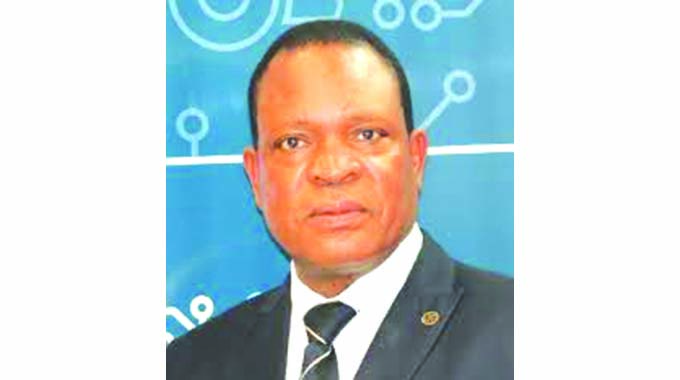
Herald Reporter
At least 10 000 hectares of prime land have been identified in Masvingo for the implementation of a public investment scheme under the Agricultural and Rural Development Authority (Arda).
Under the Arda Vision Incubator and Accelerator Model (Arda Viam), Government is availing land through a special purpose vehicle to be managed by Arda in which Zimbabweans, including those in the diaspora, can invest and own shares.
The model was launched recently by the Minister of Lands, Agriculture, Fisheries, Water and Rural Development Dr Anxious Masuka, and is set to help hundreds of prospective farmers on the waiting list for land allocations, without affecting those who have already benefited from land redistribution.
One does not need to own land in order to participate in agriculture, but can simply invest money and own shares, while letting experts do the job.
The programme will also create value addition and beneficiation of harvested products, accelerate rural industrialisation and expedite rural development for the accelerated attainment of Vision 2030 of achieving an upper middle income economy.
Since the beginning of the large-scale land redistribution at the turn of the millennium, the country has grappled with a ballooning number of applicants seeking to be allocated land to farm.
There are over 260 000 applicants on the waiting list, and they have been given an opportunity to join farming through investing and buying shares in the Arda scheme.
Another more than 10 000 Zimbabweans living in the diaspora have expressed interest in investing in agriculture during President Mnangagwa’s interactions on the sidelines of his international engagement and re-engagement trips.
Since land is a finite resource, the Government came up with ARda Viam to ensure that all interested Zimbabweans are active participants in farming instead of being bystanders.
Speaking at the launch of the Arda Viam recently, Minister Masuka said the model will arrest the scourge of rapid villagisation throughout the country, while stimulating economic development.
“We are using land as a vehicle for economic development,” Dr Masuka said. “We have 260 000 people on the waiting list and 10 000 people in the diaspora who have applied for land.
“We are unable to accommodate every applicant through the traditional and conventional manner like we have done in the past. We have, therefore, created the Arda Viam where land seekers will invest and be given shares, including those on the waiting list. It is a vehicle for empowerment and investment in the sector,” he said.
“Arda Viam would be a land and agricultural investment arm, given land by Government, where diaspora land seekers would invest and be given shares through this model.
“Arda Viam is a vehicle for empowerment, a vehicle for investment, unlocking the potential for land, without the burden of owning and running discrete and uneconomically viable units of land.”
Dr Masuka said the scheme was in itself a vehicle for preservation of agricultural land, avoiding large scale villagisation and assuring the nation of food security, while generating the much needed exports.
Arda board chairman Mr Ivan Craig said in an interview that the programme was important in that it would accommodate even those without farming expertise.
“You can be part of owning a piece of land through shareholding and investing in this scheme. It does not require expertise in farming,” he said. “It is quite an interesting project where those who invest will get value for their money.
“For example, an investor in the diaspora can actually find a market for a certain crop and through their investment, Arda can ensure that the crop is grown and exported to that market.”
Arda chief executive officer Mr Tinotenda Mhiko said: “One only requires a profitable business case and a sustainable model to run the business. The proposed model identifies the V30 accelerator model and other de-risking models for managing land development.”
Mr Mhiko said Arda Viam would be a crowd funding model that will unlock the much-needed capital for the development of land and sustainable management of crops to ensure viability and profitability.
“The investment structure can be extended to the general populace and financial investment organisations such as pension funds,” he said.


 Online Reporter