Online Reporter
Judith Phiri [email protected]
The Agricultural and Rural Development Authority (ARDA) has rolled out a major climate-resilient sorghum production programme in Mashonaland West Province during the 2025/26 agricultural season, reinforcing Government’s drive to secure national food supplies amid recurring droughts.
Under its Joint Venture (JV) model, ARDA partnered 436 farmers, establishing over 15 000 hectares of sorghum and targeting no less than 45 000 tonnes for delivery into the Strategic Grain Reserve.
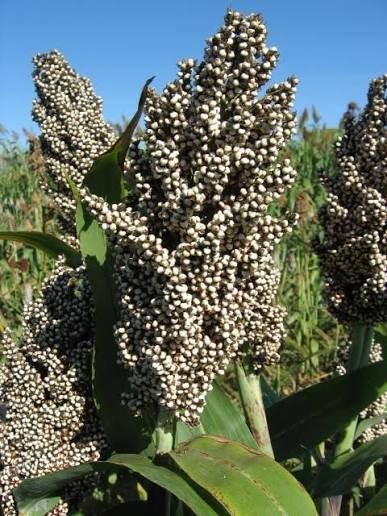
In an update, the Ministry of Lands, Agriculture, Fisheries, Water and Rural Development said the programme places traditional grains at the centre of Zimbabwe’s climate-smart agriculture agenda, recognising their resilience in erratic rainfall conditions.
ARDA Operations Director Mr Shingirayi Jenah said: “The initiative demonstrates a deliberate shift towards sustainable production systems that protect both farmers and national food stocks. This programme is about building resilience at farm level while safeguarding the nation’s food security.”
He said sorghum has proven its strength under harsh climatic conditions, and through the joint venture model they were ensuring farmers have guaranteed inputs, technical backstopping and a secure market.
Mr Jenah said a defining feature of the programme was that it is a mentorship-driven production model, where lead farmers provide hands-on guidance to contracted growers.
“The peer-to-peer approach has improved compliance with recommended agronomic practices, strengthened monitoring and enhanced yields across participating wards,” he added.
Farmers involved in the programme welcomed the assured access to inputs and extension support, noting that the JV framework significantly cushions them against high production costs and climate risks.
Sorghum and other traditional grains such as millet have shown strong tolerance following a two-week dry spell that affected much of the province, particularly dryland maize on lighter soils.