admin
admin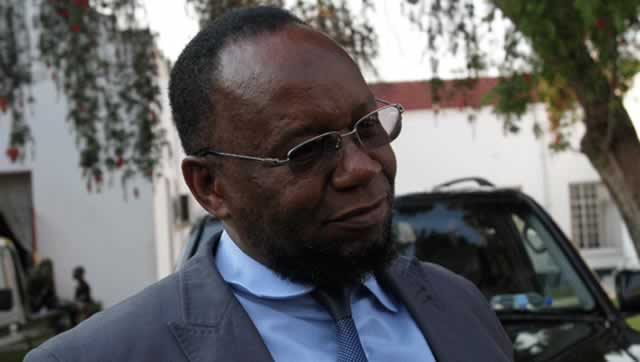
Yoliswa Dube Features Reporter
PRIMARY and Secondary Education Minister, Dr Lazarus Dokora has courted controversy with a number of policy changes he is effecting at the ministry. The education sector, some said, would be in dire straits after Dr Dokora’s ban on holiday lessons and teachers’ incentives a few months ago. Others felt the minister was steering the education sector in the right direction, urging him to stick to the changes he has introduced.
“I’m behind Dr Dokora all the way. I think by introducing these changes, he has saved a lot of parents from many inconveniences and rip-offs. Teachers behave as though they’re the only ones that get little money. They fail to consider that some of us have to work twice as hard to cater for our children’s education needs.
“The policies introduced are meant to ensure that parents in the education system are not exploited by teachers and headmasters by making them pay incentives in addition to the improved salaries and allowances they get from the government.
“Schools were taking it a bit too far especially in terms of extra lessons. What extra lesson does a child in Grade Two need?” asked Nkosinothando Ncube, a parent with a child at a local junior school.
Ncube said the scrapping of entrance test fees was also useful as schools were now more concerned about making money from the process.
“You find that some schools were asking for exorbitant entrance fees as much as $200 yet they know that not every child they invite for entrance tests will make the cut. At the end of the day, all that money goes into the bank account of a school my child was not accepted into.
“Saying schools must seek legal recourse from parents following failure to pay school fees was also a welcome move because the person who has the debt is the parent and not the child therefore that child must not miss out on learning time because of school fee arrears,” she said.
The mother of two, both of primary school going age, said teachers should focus on imparting knowledge to the children under their care.
“Everybody is pressed for money, where do they think parents will get the extra money to pay incentives from? I think the issue of incentives has overshadowed all the other changes because money has always been a contentious issue but let’s look at the bigger picture, which is making sure we have a population with a quality education,” said Ncube
Another parent, Mirriam Chisvo said Dr Dokora was out of line by making drastic changes in a short space of time.
“Entrance test fees are meant to sieve out the chaff and make the selection process easier. We can’t have everybody, even those that can’t afford attending these expensive schools. It’s a matter of maintaining certain standards.
“If he says no more school trips, what is he hoping to achieve? Those are some of the things that make education fun. I still have childhood memories of visiting the Victoria Falls when I was still in school. We can’t take that away from our children,” she said.
Chisvo said some children needed extra lessons as they did not learn as fast as their peers.
“These holiday lessons were never compulsory. Parents who felt their children needed extra help got them the help. I don’t see anything wrong with a teacher accepting money for the extra work,” she said.
School heads attending the annual National Association of Secondary School Heads conference in Victoria Falls recently hit out at Dr Dokora, accusing him of causing confusion in schools through the raft of policy changes he has made since taking over the portfolio last year.
During debates at the indaba attended by close to 900 delegates, school heads expressed displeasure over the minister’s policy reforms.
Participants said policy pronouncements by Dr Dokora, who could not be reached to respond to the criticisms, since assuming office were negatively affecting schools, while accusing him of failing to consult.
Also discussed at the symposium were reports of alleged proposals not to pay teachers during holidays, which Dr Dokora has since dismissed as false, the ban on the sale of uniforms by schools as well as the prohibition of holding sporting events during weekends.
“We understand that parents also have other responsibilities to take care of but they should know that before I’m a teacher, I’m a father and also have children to cater for. I require money to do that, that’s why teachers need extra money to supplement their salaries,” said one teacher who spoke on condition of anonymity.
He said the introduction and scrapping of other “policies” were understandable considering some things such as school trips were superfluous.
“It makes sense to scrap entrance test fees and so on but the minister needs to understand that some of these schools are pressed for cash, which the government does not have and can’t readily offer.
“It’s now a matter of opinion considering some of us think holiday lessons are necessary for the child and of course for the teacher to get extra cash.
“Probably the biggest issue is failure by Dr Dokora to consult. He should have spoken to us and heard how we felt about some of these changes,” said the teacher.
The proposed salary adjustments for heads according to qualification, skills, experience and type of the school headed as well as the ban on incentives, holiday and extra lessons have proved to be unpopular with teachers.
The directive for schools to seek legal recourse against parents who default in paying levies and tuition fees, instead of sending pupils home, as well as the banning of Form One entrance tests have generated intense debate.
Zimbabwe Teachers’ Association (Zimta) chief executive officer Sifiso Ndlovu said what others thought were “policies” were creations in other people’s minds.
“Some of these things were never policies but because they had been around for a long time people thought they were policies. As Zimta we say incentives don’t bring equity and they’re not sustainable.
“We said this in 2009. It was dividing teachers and it has never been a sustainable method of paying them. Now, the Ministry of Primary and Secondary Education is no longer putting a legal rider on incentives, they’re not mandatory unlike in the past,” he said.
Ndlovu said teacher incentives were introduced when educators were earning as little as $100.
“Right now, if school development committees can afford to pay teachers incentives, they can still do so. Scrapping these incentives has of course worked on the morale of the teachers who were getting them. They’re bound to get dejected and demoralized now that these incentives have been scrapped.
“We also need to understand that these were not ‘bans’ per se but methods of conducting and regulating business in schools have now been put in place. For example, extra lessons were not banned but schools need to apply to hold them instead of conducting them willy nilly.
“School heads for examination classes including Grade Seven, Form Four and Form Six are within their rights to send children for extra lessons but we can’t have ECD or Grade Two pupils having extra lessons. Otherwise, there aren’t any other fundamental changes,” said the Zimta chief.



 Online Reporter