Moffat Mungazi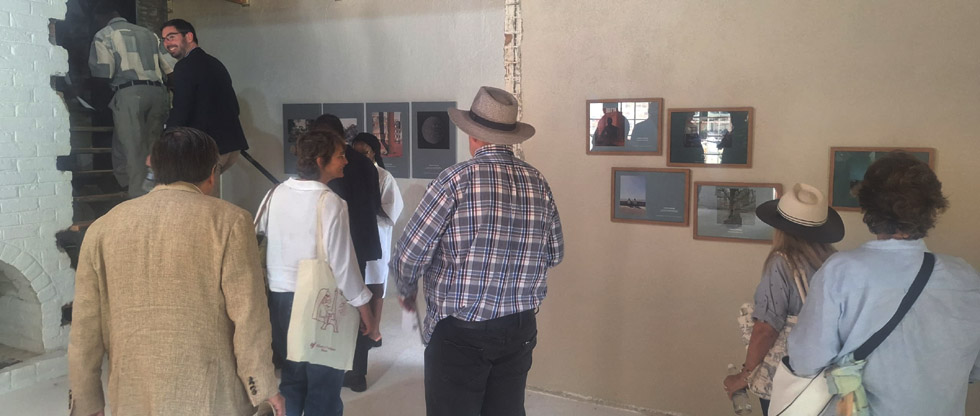
Liberty Dube
Entertainment Correspondent
THE link between art and peace is not incidental, but deeply intertwined with the human experience as art, throughout history, has been a witness to conflict and means of reconciliation.
Whether through literature, visual and performing art, artistic expression has the power to evoke empathy, bridge divides and challenge entrenched narratives.
Ambassador of Switzerland to Zimbabwe, His Excellency Stephane Rey, said art provides a unique psychological and emotional perspective that complements legal and diplomatic frameworks.
He was speaking at the opening of the Dialogues on Humanity exhibition to celebrate the 75 years of the Geneva Conventions at an arts hub, Unhu, formerly known as Drifters.
The Geneva Conventions are a series of international treaties concluded in Geneva between 1864 and 1949.
Two additional protocols to the 1949 agreement were approved in 1977. The conventions are intended to ameliorate the effects of war on soldiers and civilians.
The pictures mounted on walls at the venue depict various war crimes such as hostage-taking, pillaging, murder, mutilation, cruel treatment, torture, attacks against civilian populations or non-combatants, among other things.
“The link between art and peace is not incidental, but deeply intertwined with the human experience. Throughout history, art has been a witness to conflict, a record of human suffering, and, crucially, a means of reconciliation. Whether through literature, painting, photography, or performance, artistic expression has the power to evoke empathy, bridge divides, and challenge entrenched narratives.
“In peace mediation, art serves as both a mirror and a catalyst. As noted in recent studies on the role of art in peace processes, artistic practice is increasingly being integrated into mediators’ toolkits. Art provides a unique psychological and emotional perspective that complements legal and diplomatic frameworks. It enables people to express emotions that might otherwise be inexpressible in formal peace negotiations. It allows us to build trust, create spaces of dialogue, and humanise those who have been dehumanised by war. Why not go beyond mediation and adapt the toolkit to peaceful coexistence in general? In the worst of times. In the best of times,” he said.
One of the hosts, Georgina Maxime Masamvu, an artiste and curator at Village Unhu said: “The hub used to be a backpacker’s lodge and gallery, and had a beer hall years ago before it was transformed into an arts centre.
“The reason for us accepting to collaborate with the Embassy of Switzerland in Zimbabwe in commemorating and celebrating the 75th Geneva Convention was to show this exhibition of photographs which have come from the Museum of Elis in Bern and Lausanne so that we begin to, not only concentrate the art education in other parts of the country, but to also bring that same art education and art appreciation through photography to Manicaland and in Mutare, in particular. We are hoping that this exhibition begins to open up dialogue in understanding what the Geneva Conventions are all about, and why they are being celebrated on this 75th year, and why they have been celebrated at this particular space which is created by artistes called Village Unhu. And we are hoping that the exhibition will last until April, and we are inviting all that are interested in learning through a series of films which will happen later and other conversations about photography and about art until April holidays.
“The connections of the photos with the Geneva Convention is if we look at the many laws that the Geneva Convention has created and how Zimbabwe has adopted the Geneva Convention into their own democratic space, there is no way we can ignore how we cannot see the connections between the two.
The fact that every human being has the right to peace and tranquillity is fundamental. Every human being also has the right to shelter and accommodation, which are distinct yet interconnected concepts.
Zimbabwe is a country that has been spared the ravages of war. There is a significant connection between these principles and the Geneva Conventions, which were established in response to the atrocities of war and the abuse of human rights. This serves as a poignant reminder of our shared humanity, which is deeply rooted in our community and Village Unhu ethos.”



 Online Reporter