admin
admin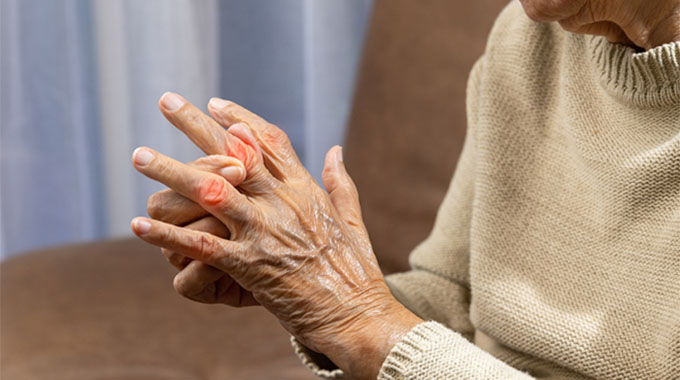
Rumbidzayi Zinyuke-Health Buzz
Getting to old age is indeed a blessing.
But with age comes many conditions and illnesses that can hinder one from enjoying that time of their life.
Arthritis is one of those conditions that can be life-altering for many who are affected.
The condition is one of the leading causes of joint pain among older people. However, while it is most common among adults over 65, children, teens, and young adults can also develop arthritis. Not only can it cause disability, the condition can lead to poor quality of life and premature death.
According to the Centres for Disease Control and Prevention, arthritis and other rheumatic conditions, is recognised as one of the leading cause of disability globally.
A review done in 2020 showed that the prevalence of rheumatoid arthritis (RA) in Africa ranged from 0,06 percent to 3,4 percent depending on the country and setting.
While the statistics may seem insignificant, the impact of arthritis can definitely be felt at household level right through to national level. More often than not, people think arthritis is an inevitable effect of old age.
They rarely think about how the condition can be prevented or how to deal with it when it happens.
What is Arthritis?
Arthritis is the swelling and tenderness of one or more joints. The disease involves inflammation or degeneration (breakdown) of joints and this causes pain when that joint is used. There are more than 100 types of arthritis, but the two most common types are osteoarthritis and rheumatoid arthritis.
Global estimates show that 9,6 percent of men and 18 percent of women aged over 60 years have symptomatic osteoarthritis.
About 80 percent of those with osteoarthritis will have limitations in movement and 25 percent cannot perform their major daily activities of life.
Osteoarthritis involves wear-and-tear damage to a joint’s cartilage — the hard, slick coating on the ends of bones where they form a joint. Cartilage cushions the ends of the bones and allows frictionless joint motion, but enough damage can result in bone grinding directly on bone, which causes pain and restricted movement. This can happen over many years, or it can be quickened by a joint injury or infection.
Rheumatoid arthritis is less common than osteoarthritis. It often starts when a person is between 30 and 50 years old and affects women more than men.
Here, the body’s immune system targets affected joints, which leads to pain and swelling. The outer covering of the joint is the first place affected. This can then spread across the joint, leading to further swelling and a change in the joint’s shape. This may cause the bone and cartilage to break down.
People with rheumatoid arthritis can also develop problems with other tissues and organs in their body. Gout arthritis is where the accumulation of uric acid crystals in the body. The attack is usually sudden, with severe pain, swelling, redness and is quite common at the base of the big toe.
While arthritis is often associated with older people, it can also affect children. Most types of childhood arthritis are known as Juvenile Idiopathic Arthritis (JIA).
JIA causes pain and inflammation in one or more joints for at least six weeks. Although the exact cause of JIA is unknown, the symptoms often improve as a child gets older, meaning they can lead a normal life.
Symptoms of arthritis
As mentioned before, depending on the type of arthritis, signs and symptoms may include pain, stiffness, swelling, redness and decreased movement.
Risk factors
There are various factors that can lead to one developing arthritis. Experts says some types of arthritis run in families, so there are more chances of developing it if one of the parents or siblings have the disorder.
Of course, the older one gets, the higher the risk of them developing osteoarthritis, rheumatoid arthritis and gout.
Women are also more likely than men to develop rheumatoid arthritis, while most of the people who have gout, are men.
Previous joint injury, sustained while playing sport or in an accident, can eventually lead to the development of arthritis in that joint. Obesity can also be a high risk factor for arthritis.
Complications
When left untreated, symptoms of arthritis may worsen and affect day-to-day life.
Severe arthritis, particularly if it affects the hands or arms, can make it difficult for one to do their daily tasks. As arthritis progresses, one may experience less comfortable movement and this can interfere with their daily routine. With decreased mobility, there is a possibility of gaining weight, which is not good for a person with arthritis.
There is also increased risk of metabolic disorders since being overweight with an inflammatory condition like arthritis may increase chances of developing type 2 diabetes, high blood pressure, high cholesterol, and heart disease. Experts say if arthritis is attributed to an autoimmune disease like rheumatoid arthritis, the inflammation can actually spread and affect the skin, eyes, blood vessels, and lungs. Like many other diseases, arthritis can have effects on mental health as it may increase the risk of anxiety and depression due to ongoing pain, inflammation, and social isolation.
Treatment of arthritis
Unfortunately, there is no cure for arthritis, but there are many treatment options that can help slow it down, including lifestyle changes, medicines, physiotherapy and surgery.
However, not everyone can afford some of these treatment options, but there are some remedies that may be used to alleviate the symptoms. For those struggling with obesity, weight loss may help to reduce stress on weight-bearing joints like the knees, hips and spine. Regular exercises can also help to keep the joints flexible while heating pads or ice packs may help relieve arthritic pain.
For people with gout arthritis, avoiding red meat may help. A healthy diet rich in fresh vegetables, fresh fruits, and whole foods can help boost the immune system and help relieve the symptoms of both osteoarthritis and rheumatoid arthritis. An antioxidant-rich diet can help reduce inflammation by eliminating free radicals from the body.
Acupuncture can also be helpful. This is an old Chinese treatment primarily performed to relieve pain. In Acupuncture, thin needles are placed at specific body points. It is believed that this process reroutes energies and restores balance in the body.
The Zimbabwe-China Traditional Medicine and Acupuncture Centre was established at Parirenyatwa in 2020 and has been providing alternative, affordable medical treatment for many Zimbabweans since then.
Physical therapy involving exercises can be used to strengthen the muscles around the affected joint. Then there is surgery. One can get an operation to replace their joint with an artificial one. This type of surgery is most commonly performed to replace hips and knees. Above all, avoiding negative thoughts will help anyone conquer any disease. As long as one dwells on negative thoughts, they will escalate and this can increase their pain.
Staying positive and enjoying old age can definitely be a way to beat the pain and make living with arthritis bearable.
Feedback: [email protected]



 Online Reporter