Online Reporter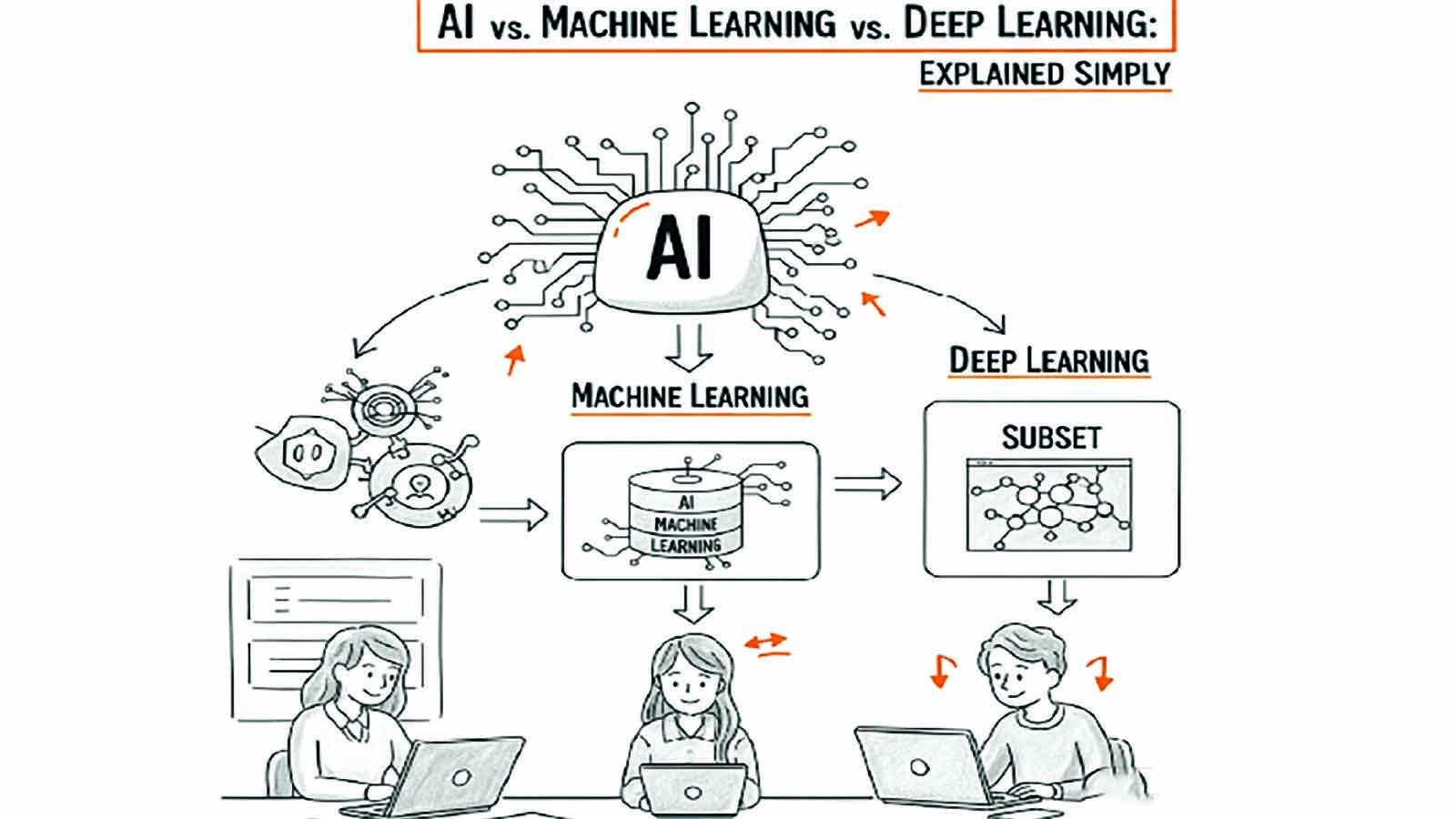
Godknows Hofisi
Business Law
So far, I have written three articles on Artificial Intelligence (AI), including one on “Academic theories on technology adoption” and another on “Basics of Artificial Intelligence.
Definition of AI
In one of the articles, I defined Artificial Intelligence (AI) as the science of making machines that can think, learn and make decisions like humans.
At its core, AI involves creating systems that can perform tasks requiring human intelligence, such as recognising images, understanding speech, solving problems and making decisions.
I added that in simple terms, AI is like having a smart computer that can learn from experience, solve problems and make decisions on its own.
Rather than merely following rigid instructions, AI systems can process large amounts of data, identify patterns and improve their performance over time. This capability has transformed industries worldwide, from healthcare and finance to agriculture and manufacturing.
How AI works
AI systems rely on several key technologies:
Machine Learning (ML): Algorithms that learn from data without being explicitly programmed.
Deep Learning: A subset of ML using neural networks with many layers to model complex patterns.
Natural Language Processing (NLP): Enabling machines to understand and generate human language.
Computer Vision: Allowing machines to interpret and analyse visual information.
These technologies enable AI to process vast datasets, recognise patterns and make predictions or decisions with increasing accuracy.
Artificial Intelligence and future careers
After my articles, I received many calls, particularly from young people who wanted to know the likely impact of AI on future jobs or careers.
Quite honestly, I am not a technology guru by any means. I am just a commercial lawyer, chartered accountant and a doctoral student trying to understand AI and its connection with finance.
AI is likely to change most careers rather than eliminate all of them. It will automate routine tasks, increase productivity, and create demand for people who can combine AI skills with professional knowledge. There are views that AI may displace some roles while also creating new occupations and reshaping existing work.
Young people, their parents, schools, colleges and universities, human resources departments and company management and the Government should accept the reality of AI and factor that into plans.
How careers may change
There are different views. Some of the views are as follows:
Routine data entry, basic reporting, simple customer support and repetitive administrative tasks may become increasingly automated.
Professionals will use AI as a work assistant for analysis, forecasting, writing, design, decision-making and problem-solving.
Human skills such as leadership, creativity, communication, empathy, ethical judgment and critical thinking will become more valuable.
Many workers will need continuous training because job requirements will change frequently.
New employees may be expected to understand how to use, evaluate and supervise AI systems, even when they are not AI specialists.
AI is therefore likely to change tasks within jobs before completely replacing entire occupations. Its effects will differ according to the industry, the complexity of the work and the extent to which the work requires human interaction and judgment.
Whether AI will become the main study area
There are differing views on whether AI will become the study area, but specialising in different areas or people will continue to pursue different areas and then see how AI will fit in those areas of study or profession.
As regards AI as a study area, there are views that the following areas may be worth pursuing:
Machine learning focusing on systems that learn from data.
Deep learning, whose main focus will be advanced neural-network models.
Generative AI covering systems that produce text, images, audio, or software.
Natural language processing involves understanding and generating human language.
Computer vision, dealing with interpreting images and video.
Robotics covers intelligent physical machines.
Data science involves extracting insights from large datasets.
AI Engineering focuses on developing and deploying AI applications.
AI governance and ethics for safety, accountability, privacy and fairness.
AI in business: the application of AI to finance, marketing, operations and management.
Examples of AI jobs
New or expanding roles may include:
AI and machine-learning engineer.
Data scientist and data analyst.
AI product manager.
AI implementation or transformation consultant.
AI risk, governance, and compliance specialist.
Cybersecurity and AI-safety professionals.
AI trainer, evaluator, or quality-assurance specialist.
Domain specialists who apply AI in fields such as accounting, healthcare, agriculture, law, education, and supply-chain management.
Experts also expect increasing demand for professionals who understand both AI and a particular industry, rather than only for people who can build algorithms.
Advice
A strong future career strategy is to combine one professional field with practical AI competence. Generally, the strategy is to ensure one remains relevant by having competence in technology.
Conclusion
Technology has changed businesses and jobs over time. AI will bring more changes.
Disclaimer
This simplified article is for general information purposes only and does not constitute the writer’s professional advice.
Godknows (GK) Hofisi, LLB(UNISA), B.Acc(UZ), Hons B.Compt (UNISA), CA(Z), ACCA (Business Valuations) MBA (EBS, Heriot- Watt, UK) is the Managing Partner of Hofisi & Partners Commercial Attorneys, chartered accountant, insolvency practitioner, commercial arbitrator, registered tax accountant and advises on deals and transactions. He has extensive experience from industry and commerce and is a former World Bank staffer in the Resource Management Unit. He sits on the Board of the Council of Estate Administrators in Zimbabwe./He writes in his personal capacity. He can be contacted on +263 772 246 900 or ghofisi@ hofisilaw.com or gohofisi@ gmail.com. Visit www.hofisilaw.com for more articles.