


 Online Reporter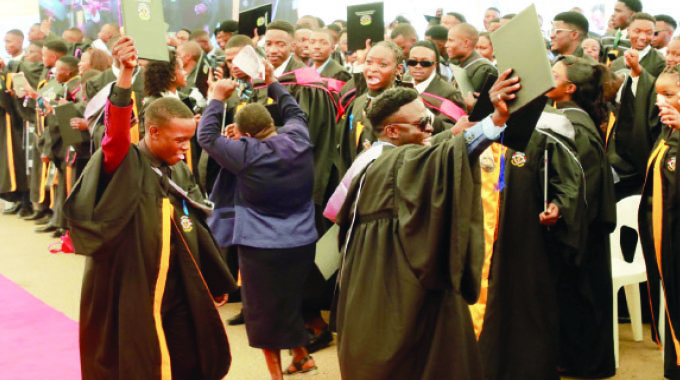
Michelle Musandinyoze and Tanaka Nkala, Zimpapers Writers
ARTISANS produced by vocational centres and industrial training colleges should take centre stage in driving Zimbabwe’s industrialisation, modernisation and inclusive growth, Higher and Tertiary Education, Innovation, Science and Technology Development Minister, Dr Frederick Shava, has said.
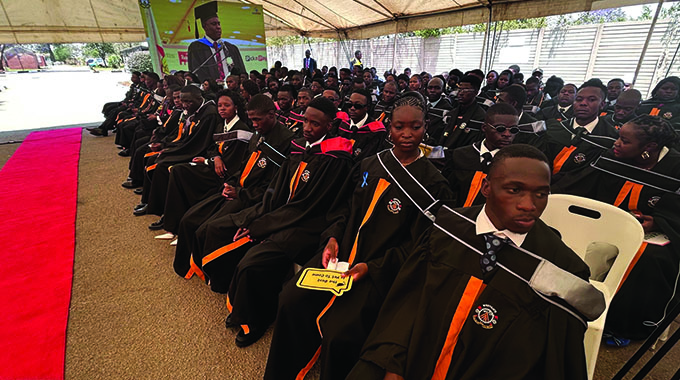
Speaking at the Westgate Industrial Training College 2025 graduation ceremony in Bulawayo on Wednesday, where 204 students were awarded certificates after completing programmes in automotive, electrical and mechanical engineering the minister said artisans have an economic role to play in the development of the country.
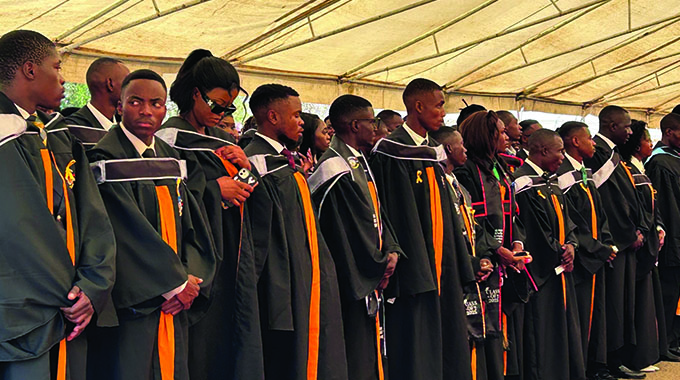
Held under the theme “Driving Skills Upgrading and Innovation through Heritage-Based Education 5.0 to achieve an upper-middle-income economy by 2030,” the ceremony reinforced the Government’s thrust to use vocational and technical training as a pillar of economic transformation.
Represented by Deputy Minister Simelisizwe Sibanda, Dr Shava said Heritage-Based Education 5.0, which combines innovation, cultural identity and entrepreneurship, is the blueprint for building an empowered, industrialised Zimbabwe.
“At the heart of the country’s transformation agenda lies Heritage-Based Education 5.0, a strategic imperative that fuses innovation with cultural identity. Education 5.0 is our national blueprint for industrialisation, modernisation, and inclusive growth,” he said.
Dr Shava urged young artisans to form enterprises, innovation consortia and community-based projects that drive economic growth while reflecting Zimbabwe’s cultural identity.
“I challenge you to form student-led consortia, engage in community-based enterprises, and champion inclusive innovation that uplifts all Zimbabweans. Education 5.0 teaches us resilience from history, ingenuity from traditions and community from values,” he said.
Dr Shava commended the college for championing inclusivity through the Work for Fees Programme, which enabled 12 semi-skilled artisans to pursue training, describing it as “a model of equity, empowerment and social justice.”
He also applauded the institution’s outreach initiatives such as the Integrated Skills Expansion Outreach Programme (ISEOP), which recently trained 257 community members in Bubi and Nkayi districts.
“Beyond the classroom, the college continues to demonstrate its commitment to community transformation through the Integrated Skills Expansion Outreach Programme (ISEOP). In Bubi and Nkayi districts alone, the college trained 257 community members, including 179 males (69,6 percent) and 78 females (30,4 percent),” he said
College principal Mr Juma Banda said the institution was diversifying its programmes to match the changing economy and produce graduates ready to serve both local industry and international markets.
The 2025 graduation saw 159 men and 45 women receive certificates in fields such as automotive, electrical and mechanical engineering, with an overall pass rate of 74 percent.
For outstanding graduates like Lincoln Boniface, winner of the Principal’s Award after scoring 10 distinctions, the day was more than academic recognition.
“Now that we have attained skills, we must use them to build the nation, showing that we can be entrepreneurs and contribute to the country’s economic growth,” he said.
Buhle Ngundu, who scooped a Zimdef Class 3 award in mechanical engineering, described her achievement as a victory over gender stereotypes and breaking barriers.
“As a woman in a male-dominated field, there are challenges such as discrimination and stereotypes. I am proud to show that women, too, can handle machines and excel,” she said.
Mr Banda said the institution was deliberately diversifying its programmes in line with the fast-changing economy, producing graduates who can compete both locally and globally.
“The mutation of economic activities has attracted a re-focus by the institution to diversify the courses offered. This ensures a steady pool of skilled artisans for the local industry and beyond,” he said.
The Government has prioritised skills development as part of the National Development Strategy 1 (NDS1) and the Agriculture and Food Systems Transformation Strategy, recognising artisans as critical drivers of industrial revival. By producing competent graduates, vocational institutions are expected to feed into industries, create jobs and foster entrepreneurship as Zimbabwe works towards achieving an upper-middle-income economy by 2030.



 Bongani Ndlovu