Online Reporter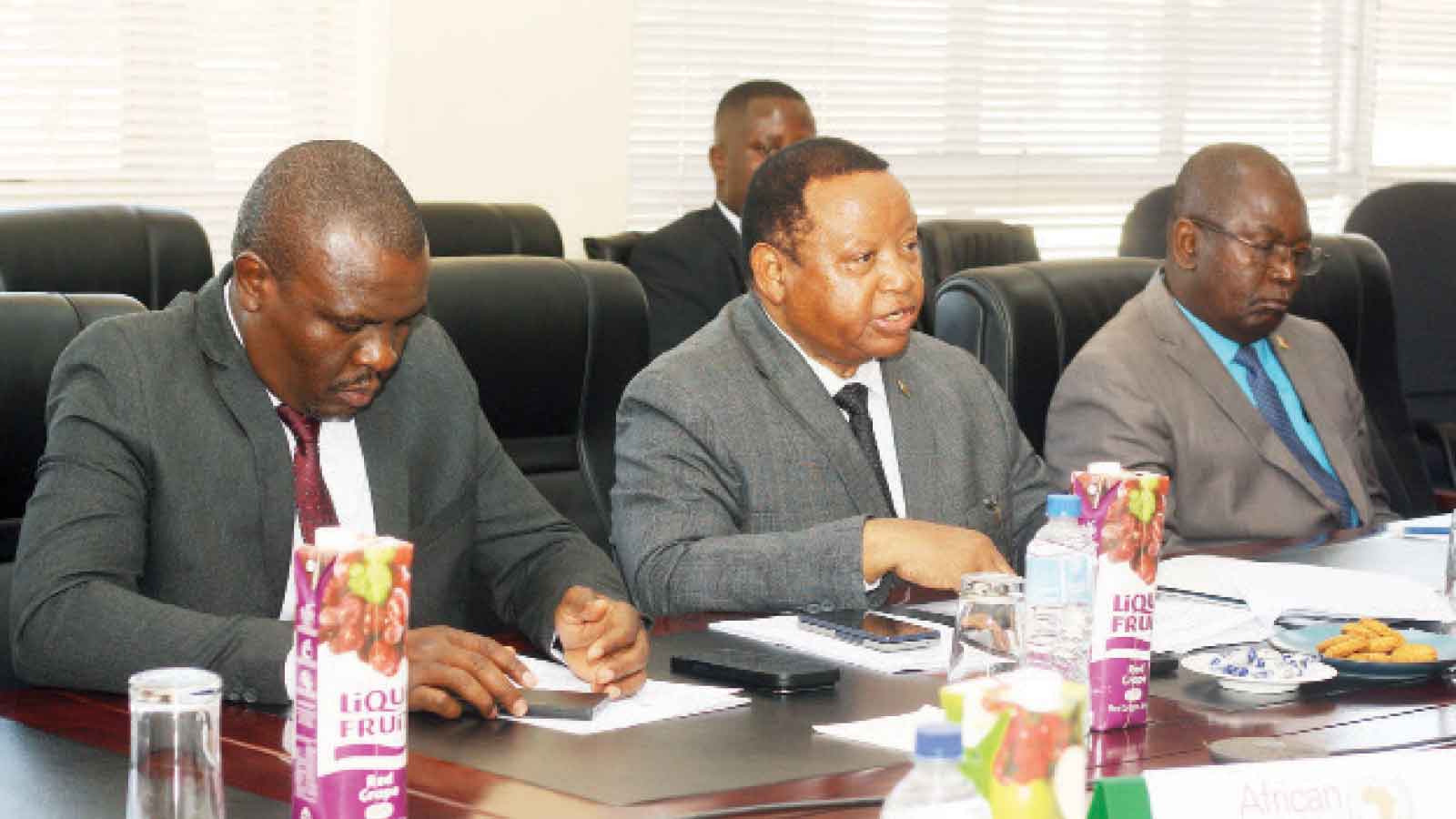
Trust Freddy-Herald Correspondent
THE African Union has commended Zimbabwe’s Heritage-Based Education 5.0 philosophy, describing it as a continental eye-opener that breaks the mould of colonial educational structures to drive localised industrialisation.
Visiting AU Commissioner for Education, Science, Technology, and Innovation, Professor Gaspard Banyankimbona, made the remarks when he paid a courtesy call on Higher and Tertiary Education, Innovation, Science, and Technology Development Minister, Dr Frederick Shava, in Harare yesterday.
The AU chief is in the country on a high-level policy learning and benchmarking visit aimed at studying Zimbabwe’s educational transformation and its deployment of innovation hubs to drive local industrialisation.
Speaking at the bilateral meeting, Prof Banyankimbona condemned legacy education systems across Africa for prioritising academic theory over industrial problem-solving, saying they leave local researchers exposed to theft.
“. . . some of us have been suffering, writing stupid proposals, sending them elsewhere, having your ideas stolen like nothing and then people are doing it for their own business, and we are still the same.
“And we made professorship by writing those stupid proposals. So I think I want to congratulate Zimbabwe for this particular move. I want to thank you very much for this kind of eye-opener for other African countries” Prof Banyankimbona said.
He also said that standard inherited educational models were tailored to fulfil the economic and social objectives of former colonial rulers, rather than addressing the basic and developmental needs of indigenous citizens.
“The one who created the school has a mission. And that one was the colonial ruler. He has that particular mission. So with this heritage-based education, it is now up to us to own our own education system. For our own mission, which is actually to address the needs of our own people. Do we have food and water? Then can we upgrade to infrastructure, to health and everything else?”
Prof Banyankimbona expressed satisfaction with concrete industrial breakthroughs emerging from the policy shift, expressing excitement over Zimbabwe’s domestic manufacturing of vehicle number plates through state university innovation hubs.
The AU Commissioner and his delegation are in the country on a high-level benchmarking visit
“I want to thank you very much for this kind of eye-opener for other African countries. So we are here today not only to appreciate the development that Zimbabwe has made with this heritage-based philosophy for education 5.0, but also to tell you that you have what other countries on the African continent need.”
Welcoming the delegation, Minister Shava said the benchmarking visit signified the enduring spirit of African cooperation and solidarity, adding that the exchange of ideas will contribute to building a stronger, more integrated African education system.
He briefed the AU Commissioner on the scale of the country’s higher education sector, which now comprises 21 universities (12 State-owned and nine private), 32 tertiary institutions—including 18 teacher training colleges, eight polytechnics, and six industrial training colleges—and 10 specialised line agencies.
“The ministry’s core responsibility is to formulate and implement policies for human capital development, while promoting science, technology, and innovation,” Dr Shava said.