

 admin
admin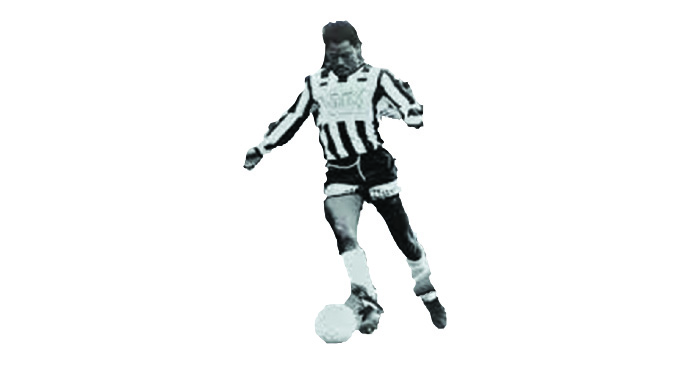
Elliot Ziwira–Senior Writer
Among his colossal discography, the lyrical maestro, Oliver “Tuku” Mtukudzi, has a song that places home, no matter how lowly or highly others deem it, above the individual’s star.
Regardless of one’s achievements, or whatever would have become of one’s cards dealt from life’s deck, home will always remain the space that claims one’s milk teeth.
The superstar croons in the timeless hit, “Ghetto Boy“:
“I was born in the ghetto
And my mama is in the ghetto
My heart is in the ghetto
You can call me the ghetto boy
I was born in the ghetto
Yes, my papa is in the ghetto
My heart is in the ghetto
You can call me the ghetto boy
You can take me out of the ghetto
And can never take me there again
But you never take the ghetto out of me. . .
You can call me the ghetto boy.”
Yes, as the heavens opened up for you, you may have dined and danced with the who-is-who on the global arena under the haze of wafting whiffs of rich cigar smoke; sipping whisky from diamond rimmed decanters, but you remain the ghetto boy that mummy spanked into tune.
You may be a frequenter of the best hotels or other eateries where exotic cuisine is served, but none of that will ever beat dearest mummy or granny’s culinary touch. No matter how spacious your mansion now is, that tiny space in the ghetto remains the best thing that ever happened to you.
Indeed, we grew up in the ghetto, where everyone would cheerfully greet each other: “Ndeipi blaz, muri kenge here?” or “Hi sonny, uri sharp here?”
Ghetto fabulous; where a neighbour would call us and send us to magrossa (shops) without even taking the burden of asking our parents first, and off we would go. Everyone was a brother’s keeper then, and children belonged to the community.
You could receive a good spanking from a neighbour, or a passing elder, even, for any public nuisance or misdemeanour, and your pa or ma would never sulk over it.
In any case, you would even get a hiding for bringing the family name into disrepute for such delinquency.
At school as at home, the rod was never spared to appease the law, and none that I knew was ever killed by it. Instead, we were moulded to become responsible citizens. Even on public transport, a child knew his or her place.
There was much inspiration and oneness in the ghetto, pertinently our Glen Norah ‘hood, like I alluded to in the previous instalment.
See, while I am trying to be space conscious, my story is in a hurry to unhook itself from my memory cache and run ahead of itself.
Maybe I am just being nostalgic. I have just remembered something.
I would not go to school until I heard a word being spelt out on radio: “J-A-R-Z-I-N”, followed by the phrase: “Ndini wenyu Jarzin Man, Admire Taderera ndichiti yave nguva yekukurukura nevatengi”.
In those days the customer was king!
I would know then that 6.45am had struck, even though it would take me five more minutes to leave home.
I don’t know if it was by coincidence, but I would come back home to the eerie tune of the programme “Zviziviso Zverufu” on Radio Two. It was the same pattern in both primary and secondary school, particularly in the lower forms.
Yes, I was born in the ghetto, you can call me the ghetto boy, I don’t mind.
This quiet borough I am in now is really not where my heart is, so spacious, yet so mean and suffocating, where everybody knows nobody, and the milkman’s bell no longer clinks like it used to.
Enduring football stars from the glen
Well, Simon Mudzudzu, like I said in the previous instalment, featured in the title-grabbing Metal Box team of 1973 under Allen Davey, alongside July “Jujuju” Sharara, Oliver Kateya, Austin Nehumba, Shadreck Kateya, Sunday Marimo (Chidzambwa), and Chita Antonio.
Mudzudzu’s house was third from ours, kuma16, in the direction of Chembira Hall.
He would later move from our rich glen to yet another borough, an affluent one, Glen Lorne, when he was 32.
Shadreck Kateya, Oliver’s elder brother, and Jujuju lived two streets behind ours; same Metal Box lines, kuma15, and worked with my father at Metal Box Central Africa Limited, the owners of Metal Box Football Club.
Sharara’s son, Tatenda, was my junior at Oriel Boys School.
An immensely gifted striker, Shorty, as we affectionately called him, charmed football gods at OBS, and in the process captured the hearts of many on either side of the toss since Form One.
I will hold on to his story for now, since he belongs to another era of footballers.
David George, who was also my father’s workmate, played for Dynamos and lived in our hood, kumaflats (Glen Norah A flats).
His son, Robson, who would later have a stint with the Glamour Boys, was in the same stream with my brother Shepherd.
We would play money-games with him at Chidyamatamba, a makeshift playground in our ‘hood, close to Chembira Hall and Chikomo Chembira. In this generation of yesteryear soccer greats were also Oliver Chidemo, David Mandigora, Jawet Nechironga and Shackman “Mr Goals” Tauro.
Chidemo played for Caps United, formerly Caps Rovers, alongside the likes of Cainos Chidungwe, goalkeeper Steven Chisango, Solomon Kaseke, James Chobodo, Salid Twaliki, John Muzveruki,
To Page 6
Back in the glen everyone was a brother’s keeper
from Page 3
and Tauro.
Together, they won their maiden championship trophy in 1979 in the same year that Tauro was crowned Soccer Star of the Year.
Famed for scoring a hat-trick against Wadi Medani of Sudan in the early 1980s, Chidemo later worked for the University of Zimbabwe. As the University of Zimbabwe Football Club coach from the late 1980s to early 1990s, he groomed many players.
Some of the players he mentored include Tauya Murehwa, who would later play for Dynamos, Bernard Muchemwa, Elliard Mambambo (now the chief sub-editor of The Herald), and Prosper Chonzi.
Others are, Arnold Tsunga, Simba Manjiche, Brilliant Mpofu (Blue Swallows), Nkululeko Malaba (Black Rhinos), Ladistos Zunde, Godfrey Pasipanodya, and Steven Murambatsvina.
Besides Tauro, a new generation of players, who emerged from the glen in the twilight of the careers of the football teachers, whose journeys have been so far tracked, included Friday ‘Breakdown’ Phiri and Moses Chunga.
Enter Razorman: The 18-year-old property owner
Moses “Razorman’ Chunga became part of the ‘hood in 1983, the year he joined the Glamour Boys, through acquisition of property in Glen Norah B near Chikomo chemaRasta.
He was only 18-years-old.
At Dynamos, Razorman shared the dressing room with his siblings, Kembo and Dickson.
Chunga revealed that he came across the house, which was being sold for $6 000, a princely sum then, through an agent.
He secured the property after paying a deposit of $1 000, and cleared the balance within a year.
Chunga is renowned for doing just about anything with the ball, including standing on it and scoring directly from a corner kick; a feat which he achieved not less than 15 times.
For that reason, he won the hearts of many, my tender one included, even though I was not a Dynamos fan.
CAPS United lived in my sleep and dreams.
Although I never got a chance to watch him play, the Razorman found space in my heart through the newspapers that Uncle Amon Dongonda religiously brought home, commentaries on the radio, and of course, through my father and brother, Andy’s glorification of him.
Young as I was, I would tell anyone who cared to listen: “KuDynamos ndongoda Moses Chunga”.
Setting the commentary box alight, Charles Mabika would go: “. . .to Moosses Chuuungaaa, going solooo”, and you would know that trouble and heartbreak wore a number seven blue jersey.
At some point, he stayed with his younger brother Dickson in our ‘hood, but I guess we should not claim him; Dickson, I mean.
Nicknamed Razorman, because of his precision in front of goal, Chunga banged in 46 goals in the 1986 season. He would leave the glen for a stint in Europe in 1987, where he turned out for the Belgian side Eendracht Aalst.
Sometime after his return from Belgium in the early 1990s, Bambo sold his Glen Norah house and bid farewell to the ‘hood, leaving us poorer and richer. He remains a hero in the valley of talent.
Peerless Mr Goals
Shackman “Mr Goals” Tauro enchanted my heart.
He simply was in a class of his own.
Born on June 28, 1959, Tauro attended Rusvingo Primary School in Highfield.
Zororo Youth Centre, in the same suburb, played a pivotal role in nurturing the football zeal in him.
He joined the glen courtesy of his employers, CAPS Private Limited, the owners of CAPS United then. My brother Shepherd and I had friends’ kumalines ekuZvimba where he stayed.
I once met someone whose name eludes me now, but he was a teacher at Glen Norah High 2, who attended primary school with Tauro at Rusvingo. It should be Mapuranga. He recalled that the star could effortlessly tear defences apart, and score goals in double digits in a single match.
He claimed that Tauro’s Rusvingo team could sometimes beat opponents 29-0 or 33-0.
The valley keeps on giving
Other soccer players to emerge from Glen Norah are Kudzanayi Taruvinga, Tobias Sibanda, David Phiri, Oscar Motsi, Tidings Keta, Benjamin Mpofu, Edwin Farai, Basil Chisopo, Mike Madzivanyika and Amidu Hussein.
As has been highlighted in the previous instalment, this generation of players was followed by the likes of Vitalis Takawira, George “Gazza” Mandizvidza, Dumisani “Commando” Mpofu, George Nechironga, Francis Nechironga, Lloyd “Toga” Pfupa, Robson George, Mike Temwanjira and Justman Kopera.
I will return to the enigma of the glen that saw CAPS United midfield kingpins, among the players mentioned above, being crudely tackled to early retirement, some other day.
Toga played for CAPS United, and had a coaching stint with the now defunct Buymore, before joining Thomas ‘Mukanya’ Mapfumo’s Sporting Lions as an assistant coach.
He lived a stone’s throw from Spaceman Bar, muline manaMbigo. A neighbour to my late sekuru, Marios Tigere, he was born and bred in the ‘hood. We would meet a lot of players kwaMbigo or at Toga’s. Mukanya would also frequent the place.
Commando bought a house in Glen Norah C, close to Glen Norah High 1 School.
I first met him through Edwin Mutimbanyoka, whose father was one of the pioneers of pirate taxis that plied the Glen Norah-Machipisa route, and was married to my would-be wife, Linda’s sister, Prisca.
Eddie, a mechanic of repute, was Mpofu’s buddy; and the couple once stayed at Commando’s house.
Both Eddie and Prisca are late.
Nonetheless, the rich glen was not yet done. From its lavish belly new jewels continued to sprout.
Out came Tinashe “Father” Nengomasha, Tatenda Sharara, Dickson Choto, Brighton Chipula, Muchineripi Kasirori, James Matola, Artwell Mabhiza, Washington Pakamisa, Tsungai Mudzamiri, Rodney Makawa, and Abbas Hussein.
A midfield genius, Nengomasha played for Douglas Warriors and Black Aces before Joining South African Giants, Kaizer Chiefs, and later Bidvest Wits. He was named South Africa’s Footballer of the Year (2003-2004), and won the South Africa PSL Players Player of the Year Award (2003-2004).
Father was part of the Warriors team that played in the 2004 AFCON finals held in Tunis under the legendary Sunday Chidzambwa. The star-studded team included skipper Peter Ndlovu, Lazarus Muhoni, Wilfred Mugeyi and Kaitano Tembo.
Tatenda, Sharara’s son, was my junior at Oriel Boys School. We would board the ZUPCO “schools” bus at Chitubu terminus together. And, each time, he would be in the company of his little sister, Sandra, who was in lower primary school.
He would later earn first team colours at Churchill Boys School where he did his Advanced-Level, alongside Tinashe Nengomasha and Leo Kurauzvione.
In 1999, at 17, and still at high school, Tatenda broke into the Dynamos first team, playing alongside the likes of Memory Mucherahowa, Kaitano Tembo, Callisto Pasuwa, Ernest Chirambadare, Gift Muzadzi, Sandros Kumwenda, and Lenny Gwata.
Registered in the reserve side for the CAF Champions League, Tatenda became a part of the daring Dynamos team of 1998 under the tutelage of Chidzambwa, which controversially lost 4-2 to ASEC Mimosas of Cote d’Ivoire in the second leg of the final.
He would later leave in 1999 on loan to Black Aces when Moses “Bambo” Chunga joined DeMbare as head coach, and returned in 2000. The football gods would lead the diminutive dynamite to Sporting Lions in 2001, before redirecting him to Kambuzuma United for a brief period.
His last port was at Njube Sundowns from where he would hang his boots in 2004, aged 24, following a ‘juju-related’ sickness, as he put it. He is now into talent scouting and coaching.
May the deities of football remember our Shorty, and convey his scorchers to the golden nets of his dreams!
I first met Dickson Choto at Glen Norah High 2.
He was an Ordinary-Level pupil, and I had just secured a post as a teacher. It is here that I would meet a fellow teacher, who attended school with Shacky Tauro.
I would become the coach of the school’s B and A teams. Always inseparable, my brother Shepherd would assist me throughout my stint as a gaffer.
Solid and composed, Choto, was the rock in our defence.
There were many talented players in the team, including the twins, Justice and Justin, Hope Chihota, Prosper and Brighton Chipula, who were goalkeepers, my brother Farai (also a goalkeeper), Ronald Sakonda, Munyaradzi ‘Chipopi’, Muchineripi ‘Muchi’ Kasirori, and Anele Nkala, among others.
Chipula would later play in goal for premiership sides Bantu Rovers and Triangle United, while Kasirori turned out for Black Rhinos.
Choto would go on to play for Darryn Textiles before moving to Poland.
Between 2001 and 2013, he played for three Polish teams; Gornik Zabrze (2001-2002), Pogon Szczecin (2002-2003), and Legia Warszawa (2003-2013).
After making an impression in the Polish league, Choto was called for national duty and played in the history making Warriors team of 2004 under Chidzambwa. He won two Polish championships with Legia Warszawa (2006, 2013), four Polish Cup titles, and one Polish Super Cup trophy.
He presently runs a football academy.


 Online Reporter