Chronicle Editor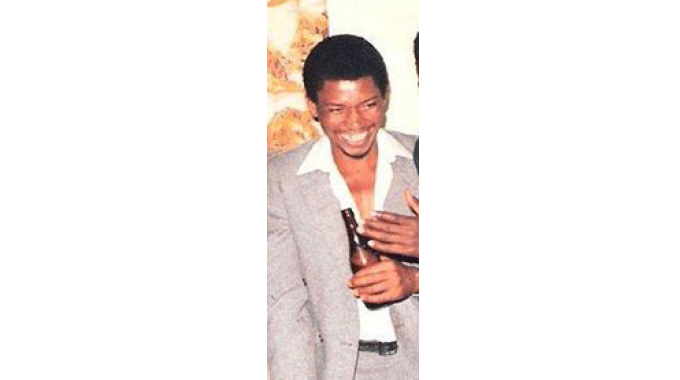
Bruce Ndlovu, Sunday Life Reporter
IT is the song that most people claim to know, yet it is rarely ever heard. Its melody, over three decades after it was released, is still familiar enough.
“Bambulele, bambulel’uMajola Wafa kabuhlungu, Wafa kabuhlung’uZibusiso. Wasitshil’umoya Wasitshiy’egcekeni’uZibusiso Hamba kahle, hamba kahle Majola Sobonana phambili”
The voice singing it, is also familiar. This is, after all, Lovemore Majaivana at his mournful best, singing about a figure that was clearly dear to his heart.

Bambulele uMajola is a dirge, a painful illustration of Majaivana at his bleak best. Singing about death is rarely ever a pleasant proposition, but in this song, Majaivana did his best to show that even in the face of heart-wrenching pain, beauty can be found.
It is a sorrowful tune, drenched in not only Majaivana’s tears but the bleeding hearts of thousands of Highlanders fans who saw one of their icons brutally cut down at the young age of 30.
The night of August 28 in 1989 would be the last time that the Soweto stand would ever rise up and say “Zii” as Majola twisted and turned in the middle of the park.
So often, when people speak of Majaivana’s music, it is in reference to some of his “sunnier” songs, the tracks that get into rotation as soon as people from or associated with Bulawayo get bitten by the party bug.
He is the go-to guy after a hard-fought Bosso victory, when the beers start flowing and the fanatics of the boys in black and white start to review the afternoon’s events, smiling about those moments when it could have all gone wrong.
When you want to bring a smile to Bulawayo native’s face, when you want to see heels clicking as people randomly leap into the air, Majaivana is your guy. When all else has failed, he is the clueless DJ’s remedy for any hard-to-please Bulawayo crowd.
From Moya Wami to Emagumeni and Badlala Njani, the catalogue speaks for itself and in stadiums and pubs, a diet of MaJee hits is served to patrons that never seem to get tired of his tunes.
However, rarely will one ever come across Bambulele uMajola. Majaivana has been gone for over two decades and his catalogue is resultantly scattered far and wide. Yet, any search of Bambulele uMajola on almost all platforms is almost futile. Even on the darkest corners of the internet, it is impossible to find this sorrowful gem. Indeed, some joke on social media that even Majaivana himself does not have a copy of the song.
Despite the popularity of the track, perhaps its subject matter has meant that it has been relegated to the periphery of the great man’s catalogue.
On that song, Majaivana serves as a rather devastatingly spokesperson for grief. It is perhaps uncomfortable to listen to a man sing so well and so effectively about death. Music after all, is usually used to evoke joyful emotions, reminding us of the softer parts of our hard lives. There is a reason why we do not sing funeral hymns at parties. On Bambulele uMajola, Majee instead reaches into the depths of his heart and wrings out every last drop of bitter sadness he can find, then puts it into song.
Perhaps, listeners were oblivious to the pain that Majaivana also had to process and come to terms with as he made that tune. This was, after all, a man who was extremely sensitive and usually took things to heart more than most. How else can one explain his decision to pack and leave without so much as a glance back at his country of birth.
“My life has always been a sad one, I’ve been dealt blows below the belt,” once Majaivana said in one undated interview.
The death of Majola, was one that would have come as brutal of a shock to Majaivana as it was to the rest of the country, Highlanders fans in particular.
According to an eye witness, the late Zimbabwe Saints player Joseph Machingura, Majola was stabbed outside Shangri-la restaurant on August 28 in 1989, after he had tried to stop a man assaulting a Highlanders fan.
“Instead of assaulting the fan, a female, the attacker who was brandishing a knife went straight for Majola and stabbed him on the left side of the neck.” The assailant and a friend then fled into the night as Majola bled on the hard concrete.
“I then left the player lying in a pool of blood and ran after the two men who disappeared into dark alleys,” Machingura said.
Majola was then rushed to Bulawayo Central Hospital in a taxi at around 11pm where doctors and surgeons struggled to save his life for more than three hours. He was pronounced dead at 2.45 am after losing large quantities of blood. As the nation reeled from the shock of Majola’s murder, police would trigger a fevered search for the assailants, with the country’s borders on high alert.
Two men, Jabulani Nyoni and Masauko Banda would later be charged for Majola’s death. Perhaps Majola’s funeral serves as the best illustration of the atmosphere in which Majaivana made his famous song.
With over 5 000 people attending to pay respects to the Bosso stalwart, funeral proceedings started at St Columbu’s, where relatives, friends, political leaders and representatives were all in attendance. The funeral would bring Bulawayo to a standstill and as Majola’s body was driven to Athlone Cemetery, Highlanders players jogged alongside the hearse. Thousands that gathered by the grave side sung hymns as his body was lowered to its final resting place.
However, throughout the proceedings, the situation was inflamed, with the Highlanders faithful not taking kindly to losing one of their own in such a painful manner. So tense was the situation that the country’s late Vice-President and founding father, Joshua Nkomo, was brought out to soothe bruised hearts and calm emotions.
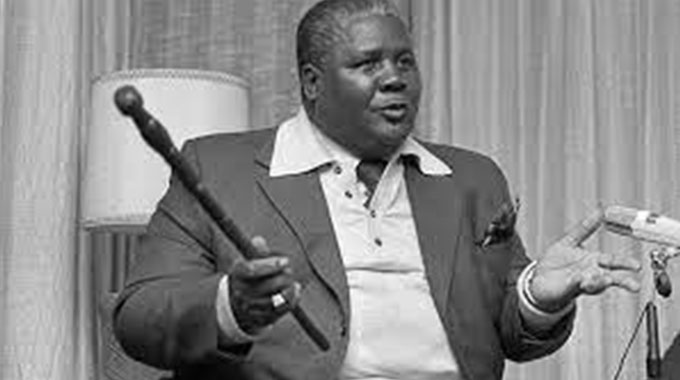
“Emotions were running high, people were angry after Titus Majola died and because Dr Nkomo understood that football was supposed to unite people and not divide them, he personally went to the funeral in Makokoba suburb and managed to cool down tempers. It was so incredible how he managed to make people see reason that the death of Majola was an unfortunate incident,” said former Zim Saints chairman Vincent Pamire.


 Online Reporter