Chronicle Editor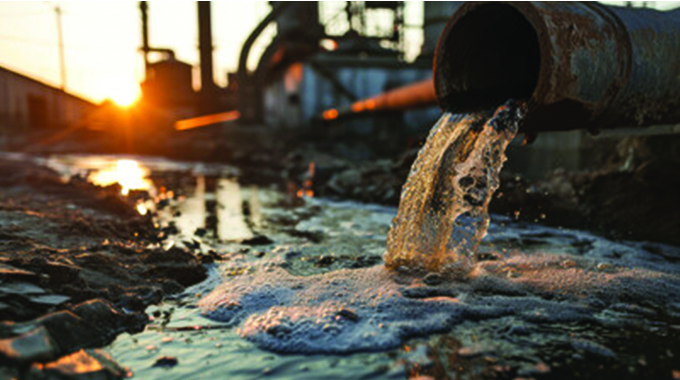
Vusumuzi Dube, Online News Editor
THE Bulawayo City Council (BCC) is working on amending its by-laws to introduce spot fines that will be charged to companies that pollute the city’s streams through the discharge of various effluents that are by-products of their manufacturing processes.
This was revealed by the local authority’s corporate communications manager, Mrs Nesisa Mpofu, who said they have since engaged seven companies in the city but could not have them pay spot fines as the current provisions in the city’s by-laws do not provide for such.
Wastewater generated and disposed of from industrial establishments during the production of goods and services is generally referred to as trade waste or trade effluent.
Although Mrs Mpofu could not name the companies she said the firms’ offences included, discharging greasy and soapy effluent, sulphates containing effluent from tanning processes, poorly treated cement containing effluent and poorly treated acidic organic effluent.
“In one case, the company uses a weir system to collect their wash waters meant to be pumped into the pre-treatment plant but at times it spills over the boundary into Phekiwe River. The company has been engaged on several occasions leading to on and off improvements.
“In another, accidental spillages from the plant and effluent spillages particularly from chokes along the sewer line they share with other companies occasionally find their way into a nearby stream that leads to Bulawayo Spruit (Mazayi River).
“Highly organic pollutants are not desirable in streams as they clog bacteria making it fail to bio-degrade wastes resulting in poor self-purification of the stream and accompanying odours. Acidic effluent streams kill bacteria necessary for the bio-degradation of river waste-waters thereby compromising stream self-purification. They have engaged the Council with a plan to have a working effluent pre-treatment plant by 2025 but progress is slow,” reads the report.
The council spokesperson revealed that to a large extent, the polluting nature of trade effluent depends on the chemicals used in the production process and how such waste is treated thereafter.
“In the City of Bulawayo, the discharge of trade effluent into municipal sewers is controlled under the Bulawayo (Sewerage, Drainage and Water) By-law Statutory Instrument 390 of 1980. Under this By-Law it is mandatory for all industrial establishments to pre-treat their effluent before discharging it into the sewerage system.
“Effluent from industrial establishments is conveyed to the sewage treatment plant where final treatment takes place before it is discharged to the environment or used for irrigation. Under the same by-law, it is an offence to discharge trade effluent into public water courses that is streams and rivers,” said Mrs Mpofu.
She said under this bylaw, no person shall discharge or deposit, or cause or permit to be discharged or to be deposited, into any public drain, either directly or through any private drain, any solid matter, suspended matter, mud, chemical, oil, grease, trade effluent or other refuse, which may cause a nuisance.
“No person shall also discharge or cause or permit to fall, flow or enter, or be carried or washed into any public drain, whether directly or through any private drain, any liquid other than rain-water, subsoil-water or spring-water, except with the prior written permission of the council and subject to such conditions as it may impose,” said Mrs Mpofu.



 Online Reporter