Online Reporter
Raymond Jaravaza
THE Bulawayo City Council (BCC) has restarted its commercial sorghum production at Aisleby Farm after a five-year pause, aiming to create new income streams and lessen its reliance on ratepayer funds. The initiative, overseen by the council’s Business and Investment Committee, successfully planted 105 hectares of sorghum, with harvesting expected to begin this week following a successful trial run.
BCC Business and Investment Committee Chairperson, Councillor Mxolisi Mahlangu, noted that the last commercial crop was planted in 2019. This season’s crop is anticipated to yield substantial returns, with Ingwebu Breweries identified as the primary buyer.
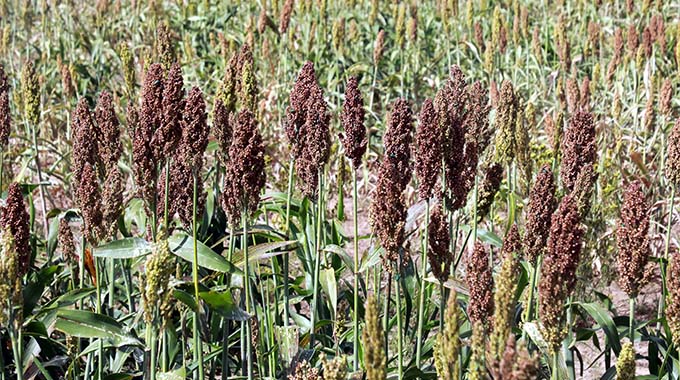
Last week, Clr Mahlangu, along with fellow committee members including Councillors Ntando Ndlovu and Ashton Mhlanga, and Acting Town Clerk Engineer Sikhumbuzo Ncube, led a delegation of councillors on a tour of Aisleby Farm, where a thriving sorghum crop is now ready for harvesting.
The sorghum production project is one of several strategic business units under the city’s portfolio, which also includes Aisleby Farm, various beer gardens, swimming pools, the Mzilikazi Art, Craft and Pottery Centre, Parks Nursery, and the Council Caravan Park, among others. Clr Mahlangu said that the council planted sorghum on 105 hectares as a trial and is now considering doubling the hectarage next season, following the success of this year’s crop. He stated that BCC invested US$13 000 in land preparation and planting, with an additional US$7 000 required for harvesting.
“The first step we took last year was to instruct council management to approach Ingwebu Breweries to determine whether they would agree to be the primary buyer of our sorghum and to advise us on the specific seed variety suitable for their production needs.

“Once that was confirmed, we engaged Arda (Agricultural and Rural Development Authority) to hire equipment for land preparation, as BCC’s tractors were not operational at the time, and we proceeded to plant 105 hectares,” he said.
Clr Mahlangu said the crop, which is approximately 60 percent ready, is projected to generate a profit of US$45 000 once sold to Ingwebu Breweries.
“Harvesting could begin this week, pending the release of funds by council. The total cost of production, from land preparation to harvesting, is around US$20 000, and we expect to realise a profit of about US$45 000 from the sale to Ingwebu Breweries.”
A combine harvester will be hired from Arda for the harvesting process. When Zimpapers visited the farm yesterday, the news crew observed a flourishing sorghum crop across the expansive fields.
Clr Mahlangu emphasised the importance of vibrant business units in reducing the city’s reliance on revenue from ratepayers.
“Given the way the local economy has evolved over the years, it is essential for BCC to think innovatively and create new revenue streams. Many residents are unable to pay their rates in full or on time, yet the council still needs funds for daily operations, service delivery, and sustaining its wage bill,” he said.
He said that the decision to revive commercial sorghum production was made after it was observed that parts of Aisleby Farm were lying idle and underutilised. “We cannot allow a situation where farm employees at Aisleby depend on ratepayer revenue for their salaries when the farm itself has the potential to be self-sustaining and contribute valuable income to the council,” he said.
Councillors who toured the sorghum production unit expressed their satisfaction with the integrated farming model at Aisleby Farm, which also includes animal husbandry. The farm houses 500 cattle of various breeds and over 400 goats.
“Remember, we started with 105 hectares as a trial since the land had not been used for about five years. This year’s crop has performed exceptionally well, which is very encouraging, and we are now looking to expand to over 200 hectares next season,”
“The goal is to transform the farm into a thriving enterprise capable of contributing to the city council’s wage bill, thereby easing the financial burden on ratepayers and allowing those funds to be redirected towards other critical service delivery needs,” said Clr Mahlangu