

 Online Reporter
Takudzwa Gochero, [email protected]
ZIMBABWE has, over the past decade, intensified its response to climate change through tree-planting campaigns, climate-smart agriculture programmes, environmental education, clean-up campaigns, renewable energy initiatives, and community adaptation projects.
Government agencies, civil society organisations, development partners, schools, faith-based institutions, and community groups have all invested considerable resources in raising awareness about climate change and encouraging citizens to act.
These initiatives are undoubtedly important. They have brought climate change into public discourse and empowered many communities with knowledge and practical skills. However, an important question remains largely unanswered: Are these initiatives changing how Zimbabweans behave?
This question lies at the heart of climate communication.
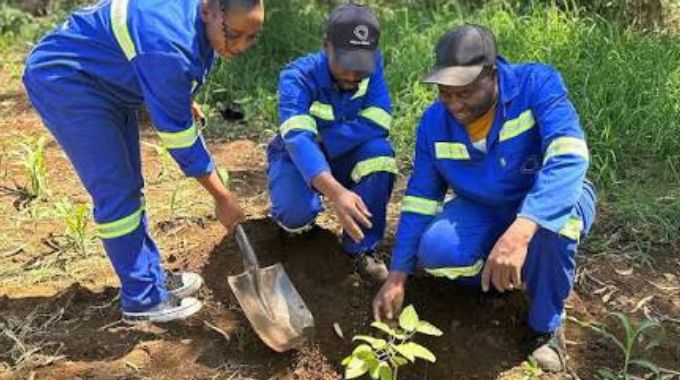
Too often, the effectiveness of climate communication is measured by the number of workshops held, trees planted, radio programmes aired, schools reached, or participants engaged. While these indicators demonstrate activity, they reveal very little about whether communication has achieved its ultimate purpose — changing behaviour. If climate communication is intended to influence how people think, decide, and act, then its success should not be measured by awareness alone but by observable changes in human behaviour.
Awareness not the end goal
Communication has long been recognised as a tool for influencing attitudes and behaviour. Climate communication is no different. It seeks not merely to inform citizens about climate science but to encourage decisions and actions that contribute to climate resilience and environmental sustainability.
Yet in Zimbabwe, many climate initiatives still evaluate success through outputs instead of outcomes. Annual reports often celebrate the number of participants trained, seedlings distributed, awareness campaigns conducted, or partnerships established. These achievements are valuable, but they do not necessarily indicate behavioural transformation.
A community may receive extensive training on sustainable land management yet continue practicing streambank cultivation.
Thousands of tree seedlings may be planted during a commemorative event, but how many survive a year later?
Schools may participate enthusiastically in environmental awareness days while learners continue littering their surroundings or burning waste. Such examples illustrate the difference between participation and behavioural change. One does not automatically lead to the other.
Behaviour is the true measure of climate communication.
The central objective of climate communication should be to cultivate pro-climate behaviours while reducing anti-climate ones. Pro-climate behaviours are actions that contribute positively to environmental sustainability and climate resilience. These include protecting forests, conserving water, adopting climate-smart agricultural practices, recycling waste, maintaining planted trees, reporting environmental crimes, protecting wetlands, and supporting renewable energy solutions.
The writer is currently developing a Participatory Climate Change Communication 360 Framework, in which he identified that pro-climate behaviour manifests in a group of people called Climate-Aware Citizens.
Anti-climate behaviours, on the other hand, undermine environmental sustainability. They include veld fires, illegal sand abstraction, indiscriminate tree cutting, wetland destruction, poor waste disposal, open burning of refuse, streambank cultivation, and the spread of climate misinformation.
These behaviours manifest themselves in two types of citizens: climate-unaware citizens and climate contrarians. This clearly exposes the three groups of citizens in the climate communication ecosystem: climate-aware, climate-unaware and climate contrarians.
Therefore, the success of climate communication should be evaluated by whether these behaviours become more or less common within societies. If illegal dumping continues, despite repeated awareness campaigns, communication strategies deserve closer examination. If communities continue to destroy wetlands after years of environmental education, the issue may not be a lack of information but a failure to influence behaviour.
Participation not to be confused with transformation
Zimbabwe has increasingly embraced participatory approaches to climate action. The writer has had an opportunity to cover events and initiatives done by Let’s Green the Future Trust and Climate Action Network Zimbabwe.
For example, Let’s Green the Future Trust launched a wide-range of initiatives, such as when members of the Climate Club at Jairos Jiri Association — Southerton Centre participated in a tree-planting initiative under the Children for Climate Justice Project. In the same manner, Thomas Coulter Primary School in Hwange received a 3,5 kVA solar power system from Climate Action Network Zimbabwe (Canzim). Young people were also equipped with practical renewable energy skills.
More than 900 learners now stand to benefit from reliable electricity, while approximately 35 youths received hands-on training in solar installation and maintenance, preparing them for opportunities in Zimbabwe’s growing green economy.
Communities are invited to these initiatives to foster inclusion and create valuable platforms for engagement. At national level, there is the National Tree Plating Day, National Clean-up Campaign and Pfumvudza/Intwasa-climate smart agriculture.
However, participation itself should not be mistaken for behavioural change.
An individual may attend every climate workshop organised in their district, yet continue burning household waste, cutting down indigenous trees, or disregarding environmental regulations.
Likewise, another citizen, who has never attended a climate awareness event, may consistently practice conservation agriculture, preserve trees on their property, and responsibly manage waste. This can be exemplified from the narrow streets of Mbare in Harare to the bustling marketplace of Highfield, where residents grapple with the grim reality of overflowing bins, disease outbreaks and the insatiable stench of abandonment.
According to research, Harare generates an estimated 0,38kg of waste per person per day, resulting in 207 000 tonnes of waste annually. This distinction is important because climate communication should seek to transform everyday choices rather than merely increase attendance at climate-related events.
Behavioural change occurs when climate-conscious decisions become routine —when communities protect instead of exploit natural resources, when sustainable practices become social norms, and when environmental responsibility is embraced even in the absence of external incentives.
Looking beyond numbers
Climate communication in Zimbabwe should move beyond measuring how many people were reached to examining what changed after communication took place. For instance, instead of evaluating a tree-planting campaign solely by the number of seedlings distributed, organisations could assess tree survival rates after six months or a year.
Rather than counting the number of farmers trained in climate-smart agriculture, evaluations could determine how many have adopted conservation practices on their farms.
Similarly, clean-up campaigns should not only record the number of participants, but also assess whether illegal dumping decreases in the targeted communities. Climate education programmes in schools should examine whether learners become environmental ambassadors whose actions influence their families and neighbourhoods. Such indicators provide stronger evidence of meaningful behavioural change than attendance registers or activity reports.
Behaviour is shaped by more than communication
At the same time, it would be simplistic to assume that communication alone determines behaviour. Behaviour is influenced by economic conditions, cultural beliefs, social norms, public policy, infrastructure, and access to resources.
A household may understand the importance of proper waste disposal but lack reliable waste collection services. Farmers may appreciate the benefits of conservation agriculture but struggle to afford the necessary equipment or inputs.
This means that climate communication should not operate in isolation. It must be supported by enabling policies, accessible services, economic incentives, and community leadership that make pro-climate behaviour practical and sustainable. Understanding these influences allows climate communication practitioners to design interventions that address barriers to behavioural change instead of just increasing awareness.
Towards a participatory climate communication 360 framework
Zimbabwe has an opportunity to strengthen climate communication using the Participatory Climate Communication 360 Framework, which has behavioural indicators alongside traditional communication metrics.
Among many questions that deserve greater attention include: Are households changing how they dispose of waste? Are communities protecting wetlands more effectively? Are veld fires decreasing in areas targeted by awareness campaigns?
Are more farmers consistently adopting climate-smart agricultural practices? Are planted trees surviving because communities have taken ownership of them? Are young people influencing environmental behaviour within their families? Are citizens rejecting climate misinformation and supporting evidence-based action?
These questions shift attention from communication activities to communication outcomes. They recognise that climate communication succeeds not when people hear a message but when they incorporate it into their daily lives.
From communication to culture
Ultimately, climate communication should aspire to create a culture of environmental responsibility rather than a calendar of environmental events. Success should be reflected in cleaner neighbourhoods, healthier ecosystems, reduced environmental degradation, stronger community stewardship, and everyday decisions that support climate resilience.
These are the behaviours that demonstrate communication has moved beyond awareness and inspired lasting action. Zimbabwe has made commendable progress in promoting climate awareness. The next challenge is ensuring that awareness translates into behavioural change. Only then can climate communication be judged, not by the number of activities conducted, but by the positive environmental choices citizens make long after the campaigns have ended.
The future of climate communication in Zimbabwe will, therefore, depend not on how loudly climate messages are communicated, but on how deeply they are embedded in everyday behaviour.
That is the true measure of effective climate communication.
l Takudzwa Gochero is a climate change communication advocate, writer and publisher.




Absolutely