Online Reporter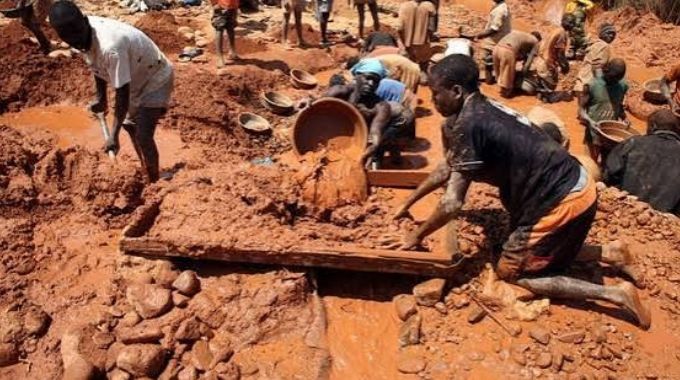
Gibson Mhaka, Senior Writer
ARTISANAL and small-scale gold mining plays a vital role in Zimbabwe’s economy, providing livelihoods to thousands of people, particularly in rural communities where formal employment opportunities remain limited.
Yet, despite its contribution to the economy and the livelihoods of many families, the sector continues to grapple with a myriad of challenges, ranging from lack of formalisation, limited access to finance and modern equipment, inadequate safety tools and practices, to limited access to empowerment, training and sensitisation programmes.
Among the issues of concern is the use of mercury in some gold-processing operations, which poses serious health and environmental risks when not properly handled.
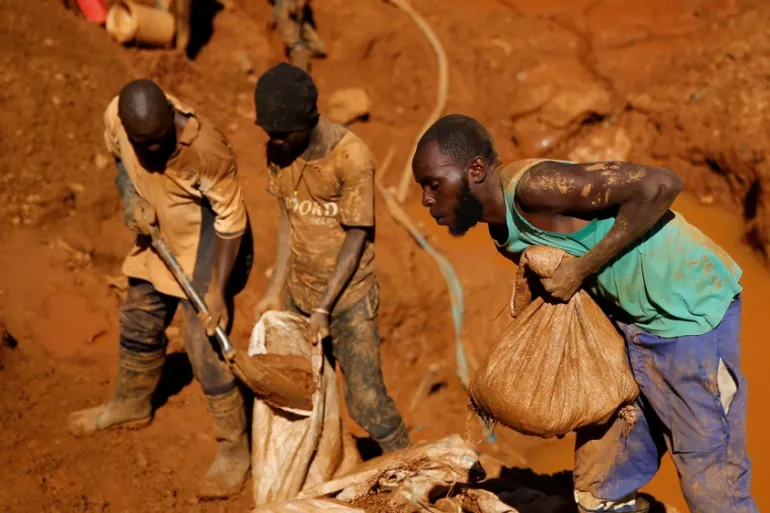
But for organisations seeking to support artisanal and small-scale miners, there is another challenge that is often overlooked — reaching them.
Engaging artisanal miners at their individual mining sites can sometimes be difficult because the arrival of unfamiliar officials, organisations or visitors may trigger anxiety and suspicion.
For miners whose livelihoods depend entirely on the gold they extract, a visit by outsiders can easily be interpreted as an inspection, eviction exercise or even an attempt to take over their mining operations.
This can make it difficult for Government departments, development partners and other stakeholders to reach miners with programmes designed to provide them with information, training, financial literacy, safety awareness and guidance on environmentally responsible mining.
However, the situation can be markedly different when artisanal miners operate from organised and structured mining sites.
At Good Hope Mine in Umzingwane District, Matabeleland South Province, artisanal miners from surrounding communities have been allocated shafts to work, creating an organised environment where they can pursue their livelihoods while maintaining a working relationship with the established mining operation.
The arrangement has not only helped create opportunities for local miners and reduce potential conflicts between the mine and surrounding communities, but has also created an organised community of miners that can easily be reached with information, training and empowerment programmes.
It was against this backdrop that the planetGOLD Zimbabwe sensitisation roadshow recently arrived at Good Hope Mine.
planetGOLD Zimbabwe is conducting sensitisation workshops and roadshows aimed at reducing mercury use by promoting responsible artisanal and small-scale gold mining practices in the country.
The project seeks to reduce the use of mercury in artisanal and small-scale gold mining while improving the health and livelihoods of mining communities.
Instead of suspicion or anxiety, miners gathered to listen, learn and engage with officials from the Environmental Management Agency (EMA), Ministry of Mines and Mining Development and other stakeholders on the dangers of mercury and the importance of adopting safer and more responsible mining practices.
For a moment, the miners stepped away from their shafts and processing areas and were treated to music and entertainment while receiving important lessons on mercury use.
Through songs, interactive presentations and discussions, the miners were educated on the dangers associated with mercury, its potential impact on human health and the environment, as well as the importance of proper handling and the adoption of safer, mercury-free gold-processing technologies.
For Good Hope Mine manager Mr Kelvin Sibanda, the organised nature of the mining activities makes engagements such as the planetGOLD Zimbabwe sensitisation workshops and roadshows much easier to conduct.
“This was a very good and fruitful engagement because it helps empower miners with information on how to conduct proper and responsible mining.
“Our company is largely made up of artisanal gold miners, so initiatives like this are important to us,” he said.
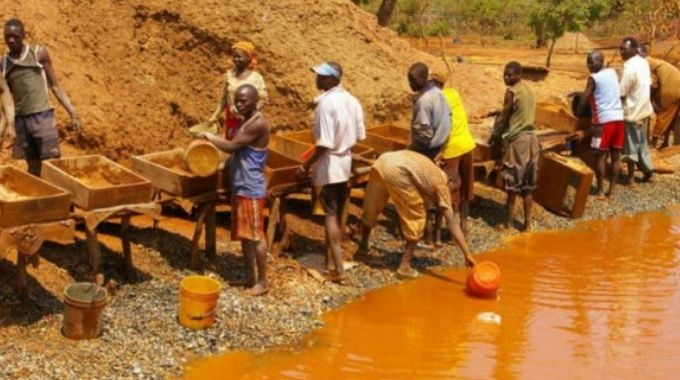
Mr Sibanda said the arrangement of allocating shafts to artisanal miners from surrounding communities was also part of Good Hope Mine’s corporate social responsibility programme.
“We work closely with the neighbouring communities, and most of our workers come from these communities.
“We have rarely had clashes with local miners because we support them by giving them shafts to work in so that they can improve their livelihoods,” he said. He said the initiative was part of the mine’s efforts to give back to the surrounding communities.
“For us, this is part of giving back to the community and is in line with our corporate social responsibility programmes.
“Such engagements are fruitful because they empower miners with information on how to conduct mining activities properly without harming the environment, wildlife and livestock,” he said.
The Good Hope experience therefore offers a glimpse of how organised artisanal mining sites can provide an effective platform for Government, mining companies and development partners to reach miners with programmes aimed at improving safety, protecting the environment and transforming the sector.
For Mr Mzingaye Moyo, an artisanal miner, such engagements are particularly important because artisanal and small-scale miners have often found themselves on the fringes of empowerment and sensitisation programmes despite their contribution to the mining sector.
“This engagement has been fruitful because, as artisanal and small-scale miners, we have often felt left out of empowerment programmes and other initiatives aimed at developing the mining sector.
“It is important for stakeholders to come to us, engage us directly and provide us with information that can help us improve our operations and mine safely,” he said.
His sentiments capture a broader challenge confronting Zimbabwe’s artisanal and small-scale mining sector — that miners cannot be expected to embrace safer and more sustainable practices if they are not given access to the information, equipment, finance and technical support required to make that transition.
For Ms Angela Ndlovu, a female artisanal miner, the planetGOLD roadshow was more than just a discussion about mercury.
It was an opportunity to gain practical knowledge that could change the way she conducts her mining operations.
“Through this roadshow, I believe I have gained quite a number of skills and valuable information that I can take with me when mining. This knowledge will help me improve my operations, run my mining site better and ultimately grow my mining activities,” she said.
Ms Ndlovu said continued engagement with artisanal miners was essential, particularly because many operators had limited access to information on financial planning, formalisation and safer mining practices.
“We are also asking the stakeholders involved to assist us with information and knowledge.
“At times, we simply do not know what we are supposed to do, particularly when it comes to planning and knowing the right steps to take,” she said.
Her experience captures the value of taking sensitisation programmes directly to mining sites, where information can be translated into practical changes in the way miners work.
For the Environmental Management Agency, such engagements are critical in ensuring that miners understand the environmental and health consequences of their activities.
Mrs Nozithelo Marumbwa, the EMA district environmental officer for Esigodini, said the agency was working with planetGOLD Zimbabwe, the Ministry of Health and the Ministry of Mines and
Mining Development to raise awareness about mercury use among artisanal and small-scale miners.
“We are here at Good Hope Mine, working with planetGOLD Zimbabwe, the Ministry of Health, the Ministry of Mines and Mining Development, and the Environmental Management Agency,” she said.
“Today, we are raising awareness about the use of mercury in the mining industry, particularly among artisanal and small-scale miners, after research established that they are among the major users of mercury.”
Mrs Marumbwa said mercury was a persistent and hazardous substance that could accumulate in the environment and pose long-term risks.
“As EMA, we are focusing on the effects of mercury on the environment. Our concern is that mercury is a persistent and hazardous substance that can accumulate in the environment and pose long-term risks,” she said.

She also urged miners to rehabilitate their mining sites after degradation or once they had extracted the gold they were seeking.
“Mine rehabilitation is important in restoring degraded land and protecting the environment and surrounding communities,” she said.
Ms Nyaradzo Mutonhori, project manager for the planetGOLD Zimbabwe Project, said the programme was also aimed at reducing the use of mercury in artisanal and small-scale gold mining.
The project is supported by the Global Environment Facility and led by the United Nations Environment Programme.
In Zimbabwe, it is being implemented in coordination with the Ministry of Mines and Mining Development and the Ministry of Environment, Climate and Wildlife through the Environmental Management Agency.
“In Zimbabwe, our target is to reduce the use of mercury by 4,85 tonnes.
“We are working in 11 project districts, where we will also introduce mercury-free gold-processing technologies and establish eight mercury-free gold-processing demonstration sites,” she said.
Ms Mutonhori said the roadshows were aimed at reaching as many artisanal and small-scale gold miners as possible with information on mercury reduction.
“The purpose of these roadshows is to reach out to as many artisanal and small-scale gold miners as possible and share information on mercury reduction,” she said.
She said the programme was also raising awareness about the National Action Plan to reduce the use of mercury in Zimbabwe’s artisanal and small-scale gold mining sector, in line with the
Minamata Convention on Mercury, to which Zimbabwe is a party. Through these roadshows, we want to ensure that miners understand the dangers associated with mercury use and are aware of safer and more environmentally friendly alternatives available to them,” she said.
planetGOLD Zimbabwe is part of a global programme being implemented in 26 countries, bringing together Governments, development partners and mining communities to promote safer and more environmentally sustainable gold-mining practices.
The programme seeks to reduce the use of mercury in artisanal and small-scale gold mining while improving the health and livelihoods of local mining communities.
While mercury remains an important focus of the sensitisation programme, officials from the Ministry of Mines and Mining Development also used the engagement to educate miners on mining safety, legal requirements and responsible mining practices.
Mr Donald Ndlovu of the Ministry of Mines and Mining Development explained the process of acquiring a mining title, noting that the Mines and Minerals Act [Chapter 21:05] was the principal legislation governing mining in Zimbabwe and served as the mother Act from which the various regulations governing the mining sector were derived.
He said two of the most relevant statutory instruments governing mining operations were Statutory Instrument 109 of 1990, the Mining Management and Safety Regulations and Statutory Instrument 72 of 1989, the Explosives Regulations.
“It is mandatory for every mine to have copies of the relevant statutory instruments, which can be acquired from Printflow, the company responsible for publishing Government publications.”
Mr Ndlovu said every mine should have a manager responsible for accountability, control and supervision of mining operations.
“The manager should also appoint, in writing, competent, trained and experienced supervisors to assist with the supervision of mining activities.”
He emphasised the importance of safe mining practices, saying mining operations should be conducted in a manner that prevents injuries to people and minimises damage to machinery, property and the environment.
He warned miners about the dangers associated with old and abandoned mining shafts, saying weakened excavation walls could collapse without warning while the accumulation of water in old workings could create additional hazards.
Harmful gases such as hydrogen sulphide could also be generated through the action of water on pyrite-bearing rocks and the decay of timber.
In addition, weakened shaft infrastructure and underground support structures could render old workings extremely dangerous to enter or use.
He also raised concern over riverbed mining, saying it could cause siltation and contamination of freshwater bodies through the release of mining chemicals into rivers and streams.
He urged miners to conduct their operations responsibly and comply with environmental requirements to protect water sources and surrounding communities.
On occupational safety, Mr Ndlovu said personal protective equipment should be worn whenever necessary to protect miners from workplace hazards.
He said the use of safe and well-maintained equipment reduced the risk of injuries while also minimising downtime caused by equipment breakdowns.
“All mine workings, whether old or new, should also be adequately protected and fenced where necessary to prevent members of the public from accidentally entering dangerous areas, particularly because many people may not have the training to recognise mining hazards,” he said.
Turning to explosives, Mr Ndlovu said they were dangerous and should always be handled with extreme caution.
He said the illegal acquisition or misuse of explosives could also pose a national security threat because they could be used in criminal activities or to destroy critical infrastructure such as bridges, buildings and other public facilities.
He said explosives should only be handled by trained and licensed blasting personnel and should only be sold and acquired through authorised and registered outlets approved by the Chief Government mining engineer.
Mr Ndlovu also emphasised the importance of environmental protection, saying miners should take measures to minimise land degradation, water pollution and other environmental damage.
Mining sites should also be rehabilitated after mining activities have been completed, where applicable.
Beyond safety and environmental protection, access to equipment and finance remains one of the major challenges facing artisanal and small-scale miners.
Mr Ndlovu said the Ministry of Mines and Mining Development also supports miners through the Mining Industry Loan Fund.
The issue of access to finance was also highlighted during a separate national dialogue on financing for artisanal and small-scale gold miners, where Government, financial institutions, development partners and miners explored ways of making the sector more bankable.
The dialogue acknowledged that many miners struggle to access formal finance because of informality, inadequate business systems, limited financial literacy and lack of collateral.
For women miners in particular, collateral remains a significant barrier.
Zimbabwe Miners Federation national secretary for women affairs, Ms Jessica Mazivazvose, said women often struggled to access finance because few had houses or mining claims registered in their names.
She said more information and training were needed to help miners understand planning, financial management and the steps required to access support.
The Good Hope experience therefore offers an important lesson for Zimbabwe’s artisanal mining sector.
Organisation does not have to mean pushing artisanal miners out of the mining equation.
Instead, bringing miners into structured working arrangements can provide an opportunity to connect them to formal mining systems, safety information, environmental programmes, financial services and cleaner technologies.
It can also make it easier for stakeholders to reach the very miners who are often hardest to reach.
For Mr Sibanda, the relationship between Good Hope Mine and surrounding communities demonstrates how mining operations can work with artisanal miners rather than treating them as competitors.
By allocating shafts to local artisanal miners, the mine is helping create livelihood opportunities while reducing potential conflict and providing a structured environment in which miners can be reached by empowerment and sensitisation programmes.
The planetGOLD roadshow showed how such an environment can be used to bring miners, Government officials and development partners together around issues that directly affect their health, livelihoods and the environment.
The miners were not simply told about the dangers of mercury.
They were given an opportunity to ask questions, engage with officials and learn about safer alternatives and responsible mining practices.
For Ms Ndlovu and other miners who attended the engagement, the value lies in taking that knowledge back to their shafts and putting it into practice.
For the Government and its development partners, the challenge is to ensure that such engagements continue and reach more mining communities.
Zimbabwe’s artisanal and small-scale mining sector cannot be transformed through regulation alone.
It requires sustained investment in formalisation, equipment, finance, safety, environmental protection and education.
It also requires mining companies and communities to find ways of working together.
At Good Hope Mine, the allocation of shafts to surrounding artisanal miners, combined with community support and sensitisation initiatives such as the planetGOLD roadshow, offers a glimpse of how such partnerships can work.
The gold may be buried beneath the earth, but the real transformation lies above ground — in how miners are organised, empowered and supported to extract it safely, responsibly and sustainably.