

 Chronicle Editor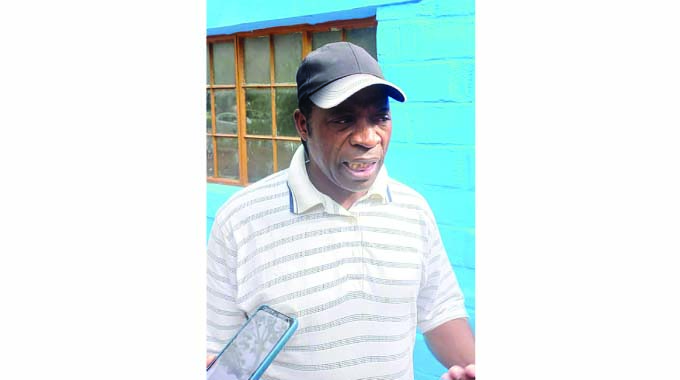
Bongani Ndlovu in Binga
Twasumbuka! Indeed, Binga is developing as the long-awaited dream to have a local radio station broadcasting in Tonga is finally coming to life, as studio renovations have started in earnest.
Twasumbuka Community Radio Station is expected to spur development in the formerly marginalised area in line with Government’s thrust of leaving no person or place behind.
The community radio station is racing to be on air by April this year with the hope that it will be a vehicle to promote local businesses, Tonga culture and language as well as highlight the challenges faced by the people in the area.
Twasumbuka Community Radio Station is part of 14 radio stations that in 2021 were licensed by the Government, seven of which are in Matabeleland North and South Provinces.
Twasumbuka, which will cater for Binga, Siabuwa and Kamativi, is part of the seven which include Radio Bukalanga (Pvt) Ltd (Bulilima), Matobo Community Radio Trust (Maphisa, Mangwe and Brunapeg), Ingqanga FM (Mbembesi), Ntepe-Manama (Gwanda), Lotsha FM (Beitbridge) and Lyeja-Nyati in Hwange.
The community radio licences were issued as an important development tool.
By supporting a robust rollout of community radio stations licensing, Zimbabwe is fulfilling its promise to broaden access to information for the benefit of citizens.
A Chronicle news crew visited Govera in Binga, the site where Twasumbuka Community Radio Station will be operating from.
Twasumbuka Community Radio Station board chairperson Mr Samson Sibanda took the news crew on a tour of the site where workers were busy painting one of two buildings, while others were renovating the toilets.
The roofing where Twasumbuka Community Radio Station studios will be housed has been replaced with a new one, while the electricals are being installed with a protective cover against heat having been placed.
The toilets have also been painted while the administration offices adjacent to the studio have been given a new coat.
Mr Sibanda said he was excited to see the renovations that were being done to the structure that was given to them by the Rural Infrastructural Development Agency (RIDA) (formally District Development Fund, DDF).
He said the community radio station was given the go ahead to use the building three weeks ago.
“We were given the offer to have our offices at the DDF complex three weeks ago and renovations started two weeks ago.
However, our lease agreement hasn’t been finalised. So far, we have done the roofing for the main building which is the studio and painted it alongside the administration offices. The electrics are being installed, although we haven’t applied for connection from Zesa,” said Mr Sibanda.
He said although a lot more work still needs to be done, the target is to be broadcasting by the end of April.
“Finishing the renovations and going on air depends on how much help we will get from the people. We’re hoping to be finished in April and broadcasting by then as our licence says we must be broadcasting before May. So we need more money, perhaps US$5 000 as the studio equipment is with the Ministry.
“There’s still a lot of work that needs to be done. For instance, the sound proofing inside the studio and installation of the equipment that is already in the country and with the Ministry of Information, Publicity and Broadcasting Services. We’re also constructing another toilet to accommodate women. There’s a need to put up fencing or a wall for security right round the complex,” said Mr Sibanda.
He said the community radio station has been well received with villagers contributing livestock for them to pay for the licence.
“We asked the community to chip in and come and help us since it’s a radio station for the people with the people. The community, especially in the rural areas, is coming up with contributions. Some people sent chickens, buckets of maize and goats which were traded for money. This was the money that contributed towards us paying for the radio licence,” said Mr Sibanda.
He, however, bemoaned the lack of interest from some in Binga town and failure to grasp the importance of the community radio station.
He said citizen journalists, the secretariat and board members have undergone training on how to manage the station and report news.
Mr Sibanda thanked Heritage Trust for funding some of the renovations that are happening at the site.
Mr Givemore Munkuli, a citizen journalist working with Twasumbuka Community Radio Station, who was also at the site said he was pleased to see the Binga community finally having their own radio station.
“I’m very much pleased that at last we have managed to renovate our building. For the past few months or so we have been waiting for assistance so that we can complete our building. I’m positive that very soon, we shall be starting our core business that is to broadcast to the community,” said Mr Munkuli.
His hope is that the Binga community will benefit immensely from the radio station.
“I hope the people of Binga and the Tonga people in particular are going to benefit a lot in broadcasting their businesses and the interaction of different people and their culture. We also hope that their day to day problems are going to be highlighted in a manner that they will be comfortable with,” said Mr Munkuli.
The Second Republic has been commended for recognising the importance of pushing development from the grassroots level while also preserving language, culture and heritage.
The community radio stations are expected to push developmental issues from the grassroots level in line with the devolution policy and the National Development Strategy 1 (NDS1) which should be unpacked to everyone across the country in a language one understands through the community radio stations. – Follow on Twitter @bonganinkunzi


 Blessing Chizhande
 Online Reporter