Lovemore Kadzura
Post Reporter
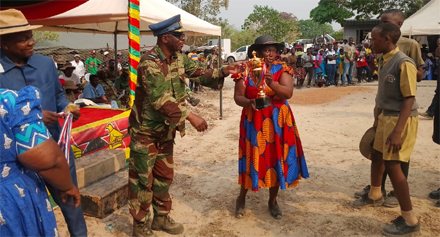
THE Bingaguru Cultural Festival, hosted by Chief Mutasa, provides a platform to celebrate and preserve the cultural heritage of the Mutasa Clan, uniting communities to honour their traditions, identity, and history.
The festival offers an opportunity to reconnect with roots through customs and values passed down through generations.
Amid modern lifestyles and shifting social trends, such gatherings ensure traditional practices remain relevant.
For the community, the festival is a celebration of belonging, reaffirmation of shared identity, and an avenue to transmit defining cultural values.
Chief Senator Mutasa said his clan possesses a centuries-old history, tracing back to Tanzania, noting that the dynasty has endured through bravery, territory defence, and orderly succession.
“The Mutasa dynasty originated from the Ngoro Ngoro region of Tanzania. We travelled through Mozambique and our first port of call was Sena. Our first headquarters in Mozambique was Gorongoza Mountains. During that time, we were under the leadership of Chikanga, who then led us into Zimbabwe through Honde Valley. Our first settlement in Zimbabwe was Mahwemasimike, which is one of our scared shrines.
“From there, we then came to Bingaguru Mountains, where the departed chiefs are buried. The houses that are rotating the chieftainship include Chimbadzwa, Chakanyuka, Chimuriwo, Kadzima, Ndorikanda, Mukukudzi, Chakaambeni, Mukanda and Pafiwa. I am currently the chief from the Ndorikanda house and the Chakaambeni house is next.
“We have our tradition and customs when installing a chief. The chief is carried on the back of a son-in-law. The Nyangani house is in charge of all spiritual aspects of the installation. Chief Mutasa has his brothers in Mozambique – Chiefs Chimoio, Katandika, Mukudu, Chadzuka, Murahwa, Timba, Sofala and Makore – who are all sons of the great Nyamubvambire Mutasa,” he said.
Addressing the festival, Chief Senator Mutasa said the event reminds older generations of their past, while teaching youths to embrace their identity, emphasising that technological advancement should not erode cultural values.
“We are hosting these commemorations annually to offer a platform to teach our young people the history of the Mutasa people. We want to maintain cultural values associated with the people of Mutasa. We do not want to mix cultures or allow alien beliefs to dominate. The locals should be at the forefront promoting their culture and be proud of them.
“Our language, dressing, food, songs, and dances must be jealously guarded. One of the ways to keep them alive is to host such festivals. A people proud and knowledgeable of their past and traditions will not perish. We want to instill the spirit of pride and confidence in our people. One must not be shy to be associated with their Mutasa background. If one moves out of the district to stay in other parts of the country or diaspora, they should always be proud of their background,” he said.
Discussions during the event addressed gender-based violence, child marriage, and substance abuse, with warnings against high-risk behaviours.
“We want learners from schools in the district to experience first-hand what they learn at school. This is the reason why we invited schools to take part in poetry, drama, dance and other cultural activities. There are rapid technological changes and our children are exposed to them, and we do not want them to be swayed by other cultures. We want to catch them young before they are polluted.
“We had the Gota/Nhanga sessions where young people were taught key life lessons. Topical issues which in the past used to be discussed by aunts and uncles were tackled. Young people benefited from that session as some parents do not have time to discuss certain topics with their children.
“Issues of drug and substance abuse were tackled in detail. We cannot raise a nation of drunkards, and as traditional leaders, we must take the lead to fight that scourge. It takes a community to raise a child, and it is everyone’s responsibility to protect young people from harmful acts. It is not part of our tradition to marry underage girls. Children must be accorded the opportunity to acquire education before entering into marriages.
“Gender-based violence is another topic we handled. No matter the circumstances, couples must not resort to physical confrontation. Families are meant for peace, not violence or murder, as is happening in some areas. There are many ways of solving domestic and marital disputes,” said Chief Mutasa.
Additionally, the Zimbabwe National Defence University toured the community court to examine traditional dispute resolution systems.
Participants included senior staff from China and Pakistan, alongside military officers from several African nations.
Head of delegation, Air Commodore Elisha Farai Masakadza noted the educational value of the visit.
“This visit is important because from our side, we are looking at the culture and traditional legal systems which is one area we are attending to during this study tour. We want to know from the national security point of view how chiefs and their village heads support us in the defence of the nation.
Bingaguru Festival: Mutasa heritage on show