Chronicle Editor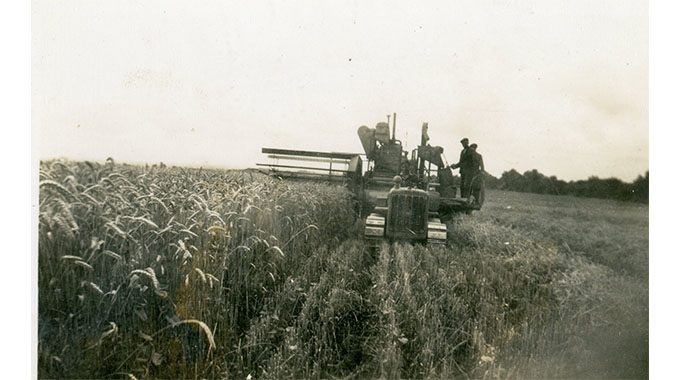
On 12 September 1890, Britain through the British South African Company-sponsored Pioneer Column colonised the territory between the Zambezi and Limpopo rivers which now constitutes Zimbabwe.
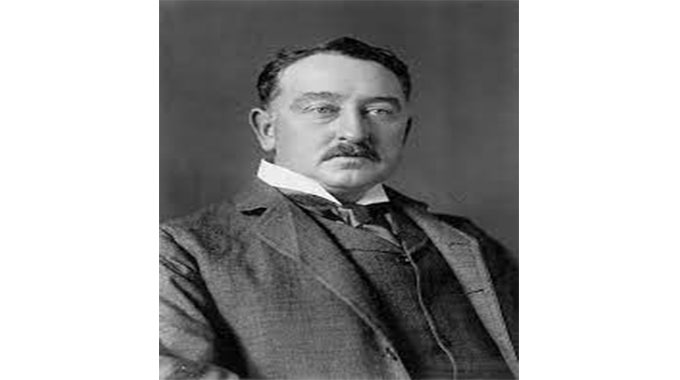
Cecil John Rhodes was the man behind the BSAC.
The prime motive was to exploit the territory’s mineral wealth.
Some years earlier, they had settled in what is now South Africa and were exploiting that territory’s astounding mineral wealth, chiefly gold.
But that was not enough to satiate their appetite for wealth.
So they thought there was a Second Eldorado north of Limpopo.
On 28 June 1890, the treasure-hunting corps, making up the Pioneer Column – a team that included soldiers and prospectors – set off northward.
After travelling for about three months establishing forts along the way, they arrived at the Kopje in present-day Harare on 12 September 1890.
A day or two later they hoisted the British flag at the place where Africa Unity Square stands now, marking the annexation of the surrounding territory.
They then went about searching the new land for the minerals they thought were just there for the picking.
They did not find as much as they thought.
Later they decided to shift their attention to farming.
They then launched themselves on a frenzied gobbling of prime farmland around present-day Harare, forcibly removing blacks who had been occupying those lands for centuries.
Those who dared resist the dispossession of their ancestral land were promptly brutalised or gunned down.
The settlers helped themselves to huge swathes of fertile lands, grew crops on a commercial scale and rearing cattle, using forced and poorly paid black labour.
The land grab continued for decades and soon the entire territory between the Zambezi and Limpopo Rivers had been parcelled out among the settlers.
Blacks, intensely bitter at their forced removal, were shunted into marginal soils and mountains where they were expected to eke a living.
This resulted in a racially skewed land ownership structure, which persisted for more than a century.
Blacks were brutalised, dispossessed, disenfranchised and oppressed in their land.
In the early years of occupation, blacks tried to mobilise against the heartless invaders in the War of Dispossession in 1893 and the First Chimurenga/Umvukela three years later.
Men and women of the soil tried to chase the invaders away, but their spears, bows and arrows were no match against the whites’ superior artillery and faster mobility on horseback.
The uprisings were thus ruthlessly suppressed, black military men arrested, some executed.
After the 1893 war, the BSAC formed a “Loot Committee” which determined that settlers who participated in the war would be rewarded with a free farm measuring 6 350 acres (more than 3 000 hectares) anywhere in Matabeleland, with no obligation to occupy the land.
Each man was also guaranteed 15 reef and 5 alluvial gold claims, while the Ndebele cattle was to be shared in half going to the BSAC – the remaining half being divided equally among the men and officers.
The plunder further angered blacks.
In both wars, they wanted their prime land back – that was the common grievance.
After the 1896 First Chimurenga/Umvukela the settlers went about consolidating their hold on stolen land through a combination of violence, draconian laws, racism and general subjugation of blacks.
However, the brutal suppression of the uprisings did not extinguish blacks’ clamour for their land.
During colonialism, blacks were not allowed to own land in whites-only farmland, to do certain jobs, walk in certain places, compete with whites, or vote.
The country was run on the basis of race. By 1914, white settles, numbering 23 730 owned 19 032 320 acres of land while an estimated 752 000 Africans occupied a total of 21 390 080 acres of land.
By 1930 land available for African use was now 28 591 606 acres or 29, 8 percent for a population estimated at 1 081 000 in 1930.
At the same time a European settler population of about 50 000 was allocated 51 percent of the best land.
It is no wonder that blacks were bitter at their being relegated to the ignoble status second-class citizens in their land while settlers enjoyed themselves.
They agitated for equality all the time, but their efforts were crushed.
It was until the 1950s that blacks intensified their demand not just for equality, but also for independence and democracy.
Black-led political parties started emerging, but were viciously put down.
Still, land was a key grievance.
Seeing that a softly approach could not bear fruit against a recalcitrant white colonial class, they decided to take up arms to liberate their land.
During the war and the many rounds of talks liberation cadres held with the colonisers, the matter of land was always prominent.
While blacks demanded it back, whites continued to resist.
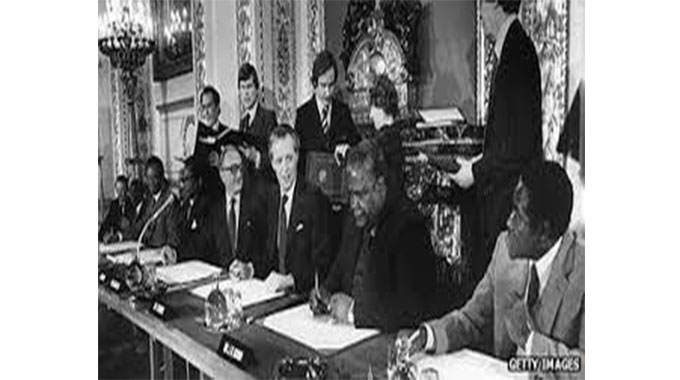
So important was our land to them that at the Lancaster House Talks in 1979, whites were prepared to let go of political control of the country as long as their stranglehold on our land remained intact.
Nationalists saw through the chicanery and would not budge on the crucial demand for land.
The Lancaster independence talks were at the point of collapse because of disagreement over land as whites refused to let it go with blacks obviously and rightfully demanding it back.
As this happened, nationalists readied themselves for a fresh military onslaught to actually drive whites off the land.
They decided a decisive military solution was the only option.
It was clear at that time that the Zanla and Zipra onslaught was headed for a crushing military breakthrough.
Britain and the US did not want that eventuality, knowing that their interests and kith and kin here would be extinguished and they would do nothing about that.
So they pledged to provide funding for the new black-led government to buy land from white farmers.
Still, they ensured that they inserted a more silent but equally effective encumbrance in the Lancaster House Constitution – that land transfer had to be done on a willing-buyer willing-seller basis even after political independence was granted.
Land, which was never bought in the first place, but was simply grabbed, was to be sold at market prices.
In the first 19 years of Independence, the land ownership structure remained largely intact – white land barons continued to accumulate wealth from stolen lands, whereas blacks continued scratching the barren lands for a morsel of food.
Indeed Britain and USA provided some funding in the first nine years of Independence to buy land on the basis of the willing buyer-willing seller basis, but the money was little as white farmers demanded extortionate prices for the land.
These frustrating tactics notwithstanding, the Government continued to take a conciliatory line.
In an attempt by blacks to reclaim their land in a more orderly fashion, the Government hosted the Land Donor Conference in
September 1998. It was meant to raise funds for use in buying back stolen land.
Still the owners of capital, who happened to be supportive of their white kith and kin, would not provide funding.
The matter of land was indeed a touchy one.
It dawned on the leadership of the country that any attempt to resolve it through negotiations would not yield any success.
Yet, it appeared there was no alternative – land would never return.
Any radical route appeared suicidal because Zimbabwe was always warned of “ghastly consequences” if whites lost the land.
Still the Government remained willing to implement an orderly land transfer from whites to blacks.
Thus during the 1999-2000 constitution-making exercise, a clause was included in the draft that sought to advance speedier land reform, but Britain funded some local elements to oppose the entire draft.
The draft was rejected in the referendum that followed, and with it the land reform clause.
But spontaneous occupations of white-held farms followed in some parts of the country.
War veterans, the same people who had fought for about 15 years to reclaim their land, Independence and democracy, took it upon themselves to take over land from whites.
It indeed needed a brave and committed leadership to take on them on a matter so emotive as the land.
The then President Robert Mugabe and Zanu-PF were equal to the task.
Despite the odds staked against him, his party and his people, he led his people in a revolution to take over their land.
Thus the Third Chimurenga was officially launched on 15 July 2000, five months after the first spontaneous land reclamations had started.
The land reform programme would forever be one of the ruling party’s greatest legacies.
At Independence, about 15 million hectares was held by large-scale white commercial farmers, numbering around 6 000 farmers.
The three phases of the land reform programme have benefited 238 989 formerly landless blacks who have been resettled on 14, 5 million hectares of land that used to be held by whites.
The first phase started in 1980 to 1998, followed by the one from 1998 to 2000 and then the revolutionary fast-track land reform and redistribution from 2000.
The first years of the revolutionary land reforms were very difficult.
Britain, the US and their Anglo-Saxon allies sought (and continue to seek) to reverse the programme by not only throttling the economy through illegal sanctions, but by creating political parties locally to fight the Government.
The western machinations hit the economy hard – inflation rose into quadrillion territory, industry collapsed, agriculture went down (as a result of sanctions and the inevitable impact of the transition during which blacks settled on newly repossessed lands), so did the health sector, causing deep social anger.
Now the new farmers are happy on their farms.
Production is increasing, with prospects that records made by the former farmers, on the land for more than 100 years, would be bettered within a few years of the land reforms.
Tobacco production, now dominated by blacks, has been rising sharply every season over the past five years or so, after an obvious decline soon after 2000.
For instance, farmers produced 123 million kilogrammes of the golden leaf in 2010.
The record came on 2019 when 252million kg of the leaf were produced.
Output reached 210 million kilogrammes last year, surging past official predictions, which had projected volumes to close at 195 million kg this season.
This year’s output is likely to be lower than last year due to a drought.
Similar growth is being seen in sugarcane, cotton and maize production.
Some would not admit in public that the land reform programme is a success.
The country produced 2,7 million tonnes of maize, in the 2020/21 cropping season, according to official statistics.
A 10-year study by a British Professor Ian Scoones demonstrated that blacks are outdoing the former farmers in a short period of their resettlement.

Prof Scoones published a book, Zimbabwe’s Land Reform: Myths and Realities in 2010 The book established phenomenal growth on the land.
“Zimbabwe’s land reform has had a bad press,” Prof Scoones writes.
“Images of chaos, destruction and violence have dominated the coverage (of the land reform programme).
Indeed, these have been part of the reality – but there have also been successes, which have thus far gone largely unrecorded.
The story is not simply one of collapse and catastrophe.
It is much more nuanced and complex.”
He conducted his decade-long study in Masvingo and his findings are sure to have angered opponents of the land reform programme.
“What we found was not what we expected,” Prof Scoones continued.
“It contradicted the overwhelmingly negative images of land reform presented in the media, and indeed in much academic and policy commentary.
Problems, failures and abuses were identified for sure, but the overarching story was much more positive: the realities on the ground did not match the myths so often perpetuated in wider debate.
– Aggregate production of small grains has exploded; increasing by 163 percent compared to 1990s averages.
Edible dry bean production has expanded even more, up 282 percent.
Cotton production has increased slightly, up 13 percent on average.
The agricultural sector has certainly been transformed, and there are major problems in certain areas, but it certainly has not collapsed.
“More recently, two white scholars corroborated Prof Scoones’ views of a successful, non-partisan land reform programme.
The two western scholars and a Zimbabwean wrote a book which says that the land reform programme has been successful with farm production restored to peak 1990s levels and land utilisation better than pre-reform benchmarks.
The 256-page book, Zimbabwe Takes Back Its Land is based on several in-depth, scholarly researches conducted in many parts of the country, explains the rationale of the land reforms and outlines the successes the programme has attained since 2000.
The broad findings of the research are contrary to popular western notions of political expedience and failure of the exercise.
The record maize output of last year was because of good rains, yes, but was also thanks to the Pfumvudza/Intwasa Programme under which farmers use moisture conservation techniques to work the land.
Rainfall was poor during the 2021/22 season, but the harvest for farmers on Pfumvudza/Intwasa will be good, experts have forecast.



 Online Reporter