Online Reporter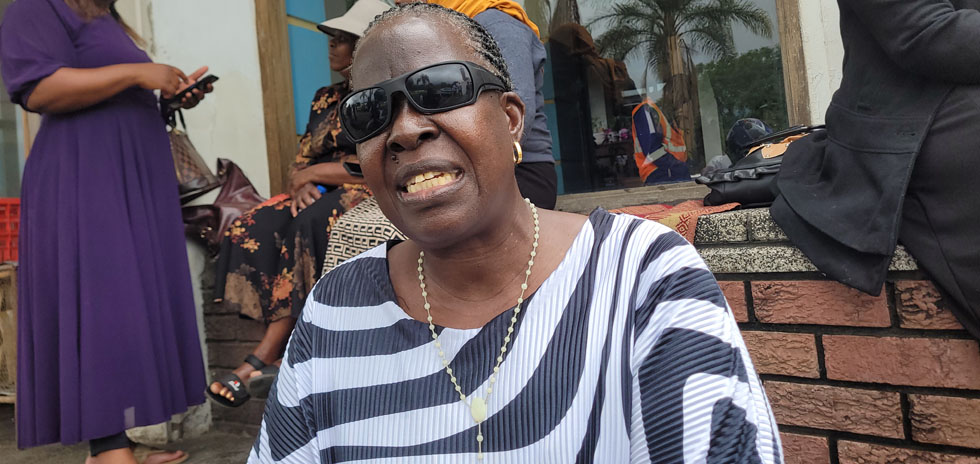
Tendai Gukutikwa
Post Reporter
TO the outside eye, the woolen animals lining the Penhalonga home’s shelves may simply look like playthings.
But to those who know 64-year-old Mrs Colleta Mbanga’s story, the woolen dolls are symbols of love, each one of them is a statement that life can still bloom even in darkness.
When The Manica Post caught up with her, Mrs Mbanga was turning skeins of coloured wool into magic.
Her hands worked with confidence and rhythm that almost appeared to be rehearsed.
However, upon enquiring, the news crew found that the story behind those hands was one of deep flexibility, unexpected discovery and a passion that only bloomed after darkness fell, literally.
To the toddlers from the nearby crèche, the Grade Ones who dash past her gate after school and the Sunday School children who mob her at church, she is simply Gogo Mbanga, the grandmother who makes wondrous dolls.
But to Mrs Mbanga, the craft that has made her a beloved figure began from one of the most difficult chapters of her life.
“Eight years ago, I suffered from glaucoma and lost my eyesight. I was a professional nurse for 26 years, and when I lost my sight, I had to stop everything. Being idle after working for so long was the hardest thing. For four years, I sat at home doing nothing,” she said.
The transition from dedicating her life to caring for patients to suddenly depending on others felt like a blow to her independence and spirit.
The struggle to accept her new reality pushed her to try various activities just to keep her hands and mind busy.
One such attempt nearly ended in tragedy.
“I even tried gardening, but was bitten by a snake. I told myself that was the end of gardening for me and farming too. That is when I swore off working outside while visually impaired,” she recalled with a small laugh.
Her turning point came from an unexpected gesture, her niece handing her a bundle of wool and offering to teach her how to knit.
At the time, Mrs Mbanga knew nothing about the craft.
“Before I became blind, I was never a wool person. I could not knit. My niece taught me, and that was only four years ago. Now I am a really professional,” she said, proudly running her fingers along the soft mane of a woolen lion she recently completed.
Like many who discover creativity after hardship, her first attempts were a mix of excitement and disbelief.
She remembers promising her husband and children that she would knit jerseys for them.
“They laughed at me saying it would be a shocking miracle. Remember, I had never done knitting before I became blind, but I persevered. When I knitted my first dolls, I sold them to a nearby creche. That was the beginning of everything,” she said, shaking her head fondly and smiling.
From that first sale, her small project blossomed into something she never planned for, but fully embraced.
Today, Mrs Mbanga can knit almost anything from animals, people, furniture, even woolen soccer balls. No patterns. No visual guidance. No sketches. Just imagination and touch.
“I make wild animals and domestic animals because I want our city children to know them. Most of them do not know these animals. I distribute them to schools, ECDs and creches. I sell to some, and at church, I also give out the dolls freely because I love children,” she explained.
Her creations, soft yet durable, washable and safe, have become cherished items in her community.
The children’s reactions fuel her passion the most.
“When they see me, they scream in excitement. Even at church, they surround me and beg for dolls. Their joy makes me feel good, that sometimes I end up giving them the dolls for free,” she said.
She said what began as a therapy to fight idleness evolved into a calling she never expected.
She believes she now has a calling to teach knitting.
“I visit schools teaching children how to knit. Before I lost my eyes, I never knew I had this passion for teaching. But now, teaching these children gives me so much happiness,” she said.
Her work has also become a bridge in breaking stereotypes around people with disabilities.
“There has always been this belief that children fear blind people or other PWDs. But that is not the case with me. The children love me so much. When they see me on the road, they surround me and shower me with hugs,” she noted.
The amplification of her work has caught the attention of the Ministry of Primary and Secondary Education.
Mrs Mbanga is currently working to formalise her role in schools so that she can freely move from one institution to another sharing her new found skill.
“Once I get the papers, my market will grow. Right now, the market is still small. The money I get from selling the dolls helps with food at home and I am grateful, but I hope to expand,” she said.
Despite losing her sight, she said she has never lacked the support of those closest to her.
“I have two children, a boy and a girl, and they have been very supportive. I face many challenges as a blind woman, but the support from my family has been the greatest motivation,” she said.
In an interview, her daughter, Ms Siya Mbanga, described her mother’s transformation as astonishing and inspiring.
“We were shocked when she started this venture, and when she promised to knit us some jerseys, we honestly laughed.
“We never thought she could make such beautiful things. Now she is selling them and teaching others. She has defied odds. Her blindness is not an inability,” Siya said.
The community agrees.
Mrs Tsitsi Munyebvu, the chairperson for People with Disabilities in Mutasa District, praised Mrs Mbanga’s work and grit.
“She has defied odds indeed. Many schools are now placing orders with her and she is making money with her hands. She also volunteers to teach children, and that is very commendable. We are receiving support as PWDs in Mutasa and Manicaland, and people like her show that disability does not mean one cannot contribute meaningfully,” she said.
Beyond admiration, Mrs Mbanga’s craft has brought tangible improvement to, not just her community, but her household as well.
Her home bears proof of her persistence and innovation. There is a humble space with shelves filled with neatly arranged wool, completed dolls, unfinished pieces waiting for limbs or tails, and threads in every colour imaginable.
Each piece is shaped by her touch and sustained by her determination to remain useful, creative and connected.
And for the hundreds of children who rush to her, calling her Gogo Mbanga, the dolls are tokens of love.
They are proof that creativity, kindness and patience can knit themselves into something bigger than one’s limitations.
As she puts it, gently tying off a stitch on a tiny woolen elephant: “I do this because I love these children. And they love me. That is what keeps me going.”