admin
adminPages: 192
ISBN: 978-07974-4029-6
By Chemist Mafuba
SOPHIE MUMBA was on a dangerous mission.
The heroine in Highway Queen had become a cross-border trader when her husband, Steve, lost his job and the package that he had received had run out.
Sophie had four children with Steve, and they were staying with his mother in the town where he had been working.
They had no rural home to go back to when he was not working as was customary with most men.
Their children had dropped out of school, and they had sold their house so as to get money with which to buy food and to meet other basic needs.
They went to live at a squatter camp which was some distance out of town.
Steve became so despondent that he had taken to drinking illicit beer (kachasu), thinking that his problems would go away, but they got worse instead.
Sophie took up selling rice which she repackaged and dried fish to keep the fire burning in their home.
Virginia Phiri recounts vividly what Sophie went through each time men took advantage of her when she sought help, especially from drivers of trucks.
However, other vendors were always at hand to cheer her up when she was under the weather.
Sophie was determined to keep up the honour of her family, though she could not see the light at the end of the tunnel.
She brings respect to the trade of the tuck-shop, which has since become the marketplace and the supermarket rolled into one for the multitude who are living by the skin of their teeth.
She started off running her business under a tree until she graduated to the dizzy heights of supplying batiks to the lucrative market in the tourism industry.
Once she got the hang of running her business, she wouldn’t allow the machinations of evil men to derail her from the path that would lead her to success.
The worst enemy which was always lurking in her enterprise was the danger of scoundrels who could infect her with the HIV virus when they raped her.
When experts say that the pandemic travels on wheels, they mean to say that the drivers of trans-border trucks are the carriers of the incurable infection.
She had gone on a trip hoping that when she had sold her batiks she would be able to send their children back to school and they would be able to look for decent accommodation in town.
Attack
Sophie says that when she rang the bell at Mrs Kennedy’s, Julius, the gardener, came to open the gate. He was not in his blue work-suit. He was wearing a safari suit.
That, I thought, was unusual as it was during the week.
“Yes? What can I do for you?”
“I want to see Mrs Kennedy, as usual.”
“Not today.”
“What do you mean not today?”
“She isn’t here. Gone to England for Christmas.”
“When is she back?”
“End of January.”
I had never seen Julius so rude and so arrogant. All my hopes were shattered. I was tempted to ask him if he knew of others who could buy the batiks, but decided against it. Elsie, the maid, was the best person to ask.
“Can I see Elsie, then?”
“She is on leave. It’s just me here. I’m in charge.”
I got the message. I could see that he wanted me to worship him. I was not prepared to do that.
“Can I help you find other buyers, if you’re interested?”
“I would be grateful.”
“Come in, have tea with me, so we can talk.”
I had a bad feeling about this. I followed him into the lounge of the main house. We had tea with biscuits. “I can help you find buyers, if you’re nice to me.”
He got up from his chair and tried to kiss me. I picked up my bag and went out. When I was at the gate, Julius called the dogs.
“Ranger! Danger! Sa!”
I knew that the two dogs were so vicious that they would shred me.
I always feared them when I stayed at Mrs Kennedy’s.
I swung the gate open and ran. Julius had set the dogs loose. I ran like a cheetah, holding my bag.
A delivery van which was approaching from the opposite direction hooted several times. I was scared and confused. The van stopped in time as I ran past it.
“Stop! Stop! The dogs have gone back!” the driver shouted at me. I fell. The excited people who had heard the dogs barking had gathered round me.
“What has she stolen?” voices asked.
“Who has said she has stolen anything?” asked the driver of the van. The rabble recognised me and drifted away. They must have guessed what had happened at Mrs Kennedy’s.
“What happened?” asked the driver.
“I had come to sell batiks to Mrs Kennedy,” I said.
“She is away. Her gardener set dogs on me when I rejected him.”
“This is typical of Julius,” said the driver, getting too close to me for my liking.
“He won’t change.”
“Those dogs could have killed me,” I said.
I was up and dusting my knees with my bare hands.
“I know. Come; let me give you a lift.”
“No, thank you, I’ll walk.”
After what had happened, I couldn’t take chances. I was afraid that this man could also rape me.
Virginia Phiri grew up in Bulawayo when she was born in 1954. She is an accountant by profession and puts her heart in any job that she would be doing. She does it with passion. She has no time for idle gossip and is always worrying that other people should get a better deal in life. She can spend hours telling you how good you are at what she knows you to be good at, but you won’t hear talking about herself. She leaves other people to judge her. Virginia Phiri might wear you down by sticking to her principles, but you admire her for being forthright when she has something worth saying.
She has the gift of writing in a simple style which you find easy to read.
She writes like Maupassant and like the people who wrote the Bible. You won’t need the dictionary when you read Highway Queen.
She is like Lilian Masitera in taking the trouble to research the material that goes into a book. You feel as though you are in the shoes of Sophie and her ill-mannered seducers.
The memorable book that Virginia Phiri has read is Lady Chatterley’s Lover by DH Lawrence. She had to hide it because her teacher thought that it was not suitable for her tender age.
Reading through Highway Queen, you can tell that she is a good reporter with a long memory. She must have spent long hours listening to harrowing true-life experiences which are frightening. All of them have the ring of the truth.
On another occasion when she went to the border on business, police raided the waiting room at the bus stop where she had sought the company of an old woman who lived by begging together with her daughter.
Raid
Sophie says that it must have been around eleven when she heard a man shouting: “Run…run! It’s a raid!” The people ran in all directions. Children were screaming.
I had to run. If I had been caught, I would have been loaded into a truck and locked up in cells for screening. I couldn’t afford that when I had a family to look after.
I picked up my bag with batiks and ran. The bag slipped out of my hand when I was jostling to push through the gate. There was no way I could have picked it up. I lost my batiks, a dress, a purse which had money and my ID. I had slept with my tackies on fearing that they could be stolen.
I was one of the lucky ones who had not been caught.
I spent the night huddled up with women and children in our hideout – the basement of a restaurant which had reached through the sewerage drain.
The raid was meant to flush out thieves and prostitutes.
I was still in shock when I tried to work out in the morning how I would get back home.
One of the truck drivers offered to take me when his friend had finished processing his papers.
At nightfall he said that his friend had failed to get the papers processed. We would leave the following morning after the two of us had spent the night alone together in the caboose.
The driver didn’t use a condom which he had with him when he raped me. Sophie didn’t have time to rest.
She was always in anguish every second of her life.
She felt as if she were living during the days of the war of liberation. The things which were happening around her haunted her.
At home she worried about what children would eat and when there would be enough money for them to go back to school. At the same time she was thinking of how she would get to the border. The fear that she could be raped was always on her mind.
She was always thinking of how she would sell her batiks and she had to arrange with other vendors who would remain selling her rice and dried fish. She couldn’t rely on Steve to do that as he would use the money that he would have got to buy kachasu.
She became so scared of police raids that on one occasioned she opted to be raped rather than go and sleep in the waiting room at the bus stop.
Excuse
Sophie says that when she turned to see where the whisper was coming from, she was surprised to find out that it was from one of the golfers who looked like he meant well.
“If it’s no a bother, I’ll join you.” “Would you like a drink?” “Yes, thank you, a Coke will do.”
Stan ordered dinner. When we had finished eating, we moved to the bar for more drinks. We waited. I had said to staff at the hotel and to Stan that my brother would be coming as an excuse to stay there. He ordered double gin and I had a Coke.
“They will throw you out,” he said. “Let’s go to my room. We can continue drinking there while waiting for your brother.”
I was relieved to see that his room had two beds. Half way through my cider, I felt a bit funny. Stan had assured me that it as a harmless drink.
After that drink we said our good nights and went into separate beds to sleep. I considered myself lucky.
In the morning I was surprised to find Stan lying beside me. The cider must have relaxed me so much that I lost myself. He could have used the condom which he had on him when he raped me.
These days, when people are talking a lot about empowerment, the young people who want to make it in the world of business would do well to spend sleepless nights reading Highway Queen.
That book will show them how to survive should they come across what seems like insurmountable hurdles in the same way that Sophie Mumba did.
Virginia Phiri is the author of Desperate and Destiny.
She has contributed to the anthologies that members of the Women Writers Association have compiled.
She was writer-in-residence at Le Chateau de Lavigny in Switzerland and at Villa Waldberta in Germany.
[email protected]


Online Reporter
- Chronicle , SundayNews
- July 22, 2026
- 3 views
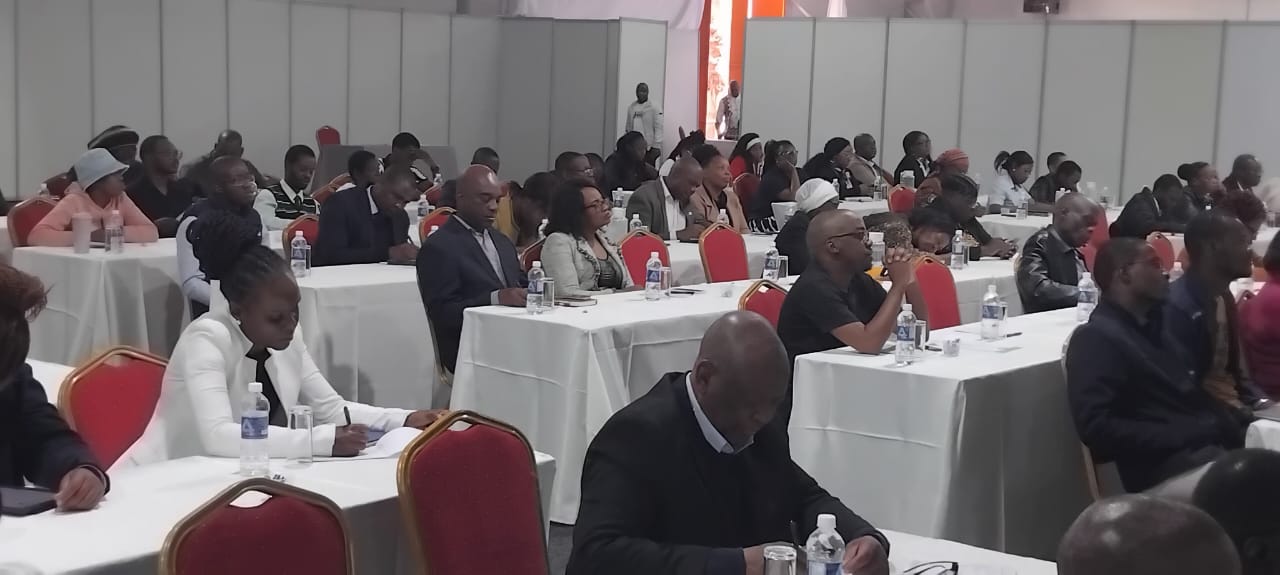
Tourism stakeholders meet in Bulawayo to shape national strategy
Nqobile.bhebhe [email protected] Tourism stakeholders from across Bulawayo Metropolitan Province are today meeting for a consultative workshop aimed at contributing to the development of Zimbabwe’s National Tourism Sector Strategy (NTSS) 2026-2030.…