


 admin
admin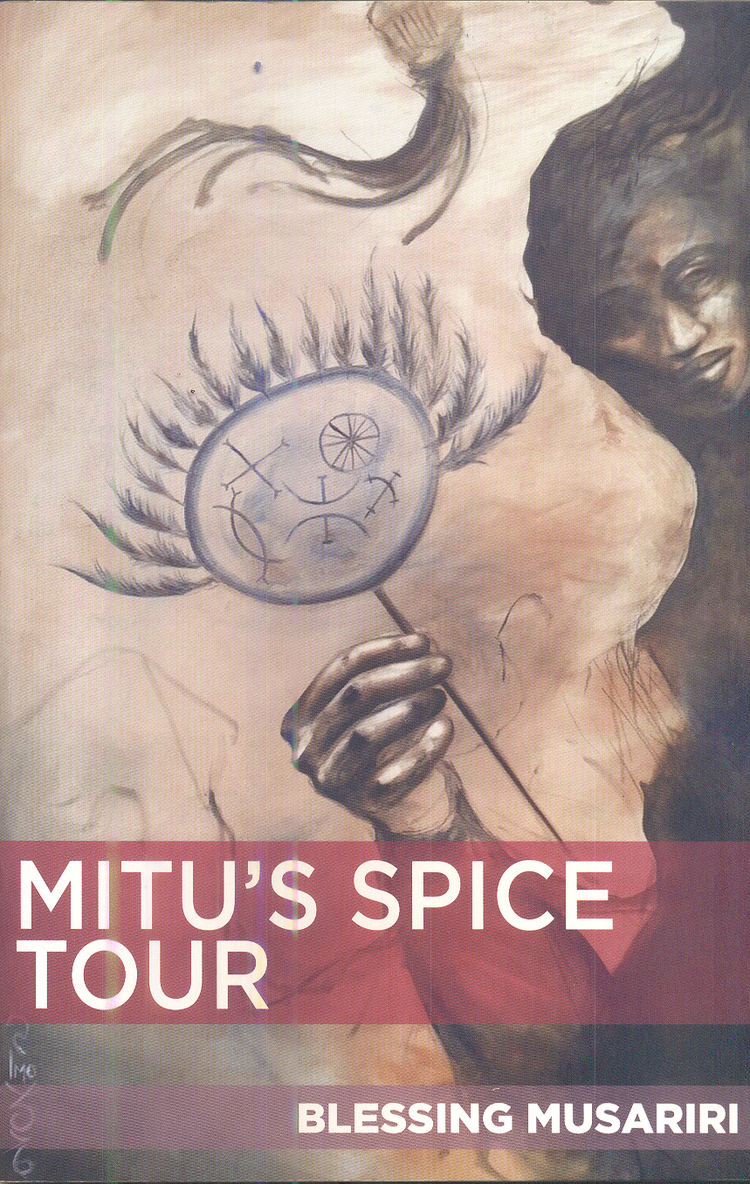
 Andrew Moyo
“THEY find bodies here from time to time, buried when people didn’t sleep waiting, willing police to bring them news. It’s not that they have forgotten, rather, learned to let it go until a break in the now cold case; someone stumbled upon it on the common, or in a locked freezer, not buried at all, not simply dead, but waiting,” goes a verse in “Random Acts of Violence”.
The poem, which epitomises various violent and homicidal scenarios from across the globe, is part of “Mitu’s Spice Tour”, the anthology by Blessing Musariri.
I stumbled upon this collection by accident and was, admittedly, a bit reluctant to explore its contents, probably because of the title.
I should know by now never to judge a book by its cover.
The is not centred around a specific theme, instead cutting across various issues.
Without categorical limitations, the poems are also not localised to particular settings and embrace landscapes transcending boundaries.
From childhood memories to spice tours in faraway lands, the well-travelled poet shares various life experiences in this phenomenal piece of literature.
In “P.S.”, the poet illustrates the hard work one has to put in to earn a living and then goes on to talk about journeys by plane to faraway lands while enjoying the rewards of her labour.
“Clouds are beneath me at last, I am never higher than I have been underground 43 thousand feet in search of gold, not found on London’s sooty streets,” says the poet while on an airplane, reflecting on the distance she had to go in search of wealth.
The Caribbean Islands are a very popular holiday destination and in “Shuffler’s Beach”, Musariri makes use of imagery and wordplay to describe a holiday in St John’s, Antigua.
“We swim away, fresh water mixing with salt, gazing into the convergence of the sea and sky, drenched picnic basket abandoned on the beach.”
Images of Antigua are also depicted in “She, on The Way to Monk’s Hill”, where paying for mangoes seems like a crime as they grow everywhere.
Musariri is like a landscape artist, but instead of a paintbrush and canvass, she uses words to reproduce vivid pictures.
Besides capturing colourful beaches of the Caribbean and the scenery along the road to Polokwane, she also burrows into social issues such as loss of family and friends in “Familial Ties”.
“The old neighbourhood has not stood well the malignancy of careless tenants and owners who have died and left their children to fight amongst themselves as paint peels and walls collapse.
“Families are all gone and the houses are full of people whose trees fall into neighbours’ yards no apology or retrieval.”
The poem makes use of childhood memories as a comparison to the present neighbourhood, as she remembers swinging on a black iron grill that has now been swallowed by grass, while strangers now occupy the house her friend once lived in.
There are, however, a few poems I found a little dry. But this in no way diminishes the grandeur scale of her project.



 Online Reporter