Online Reporter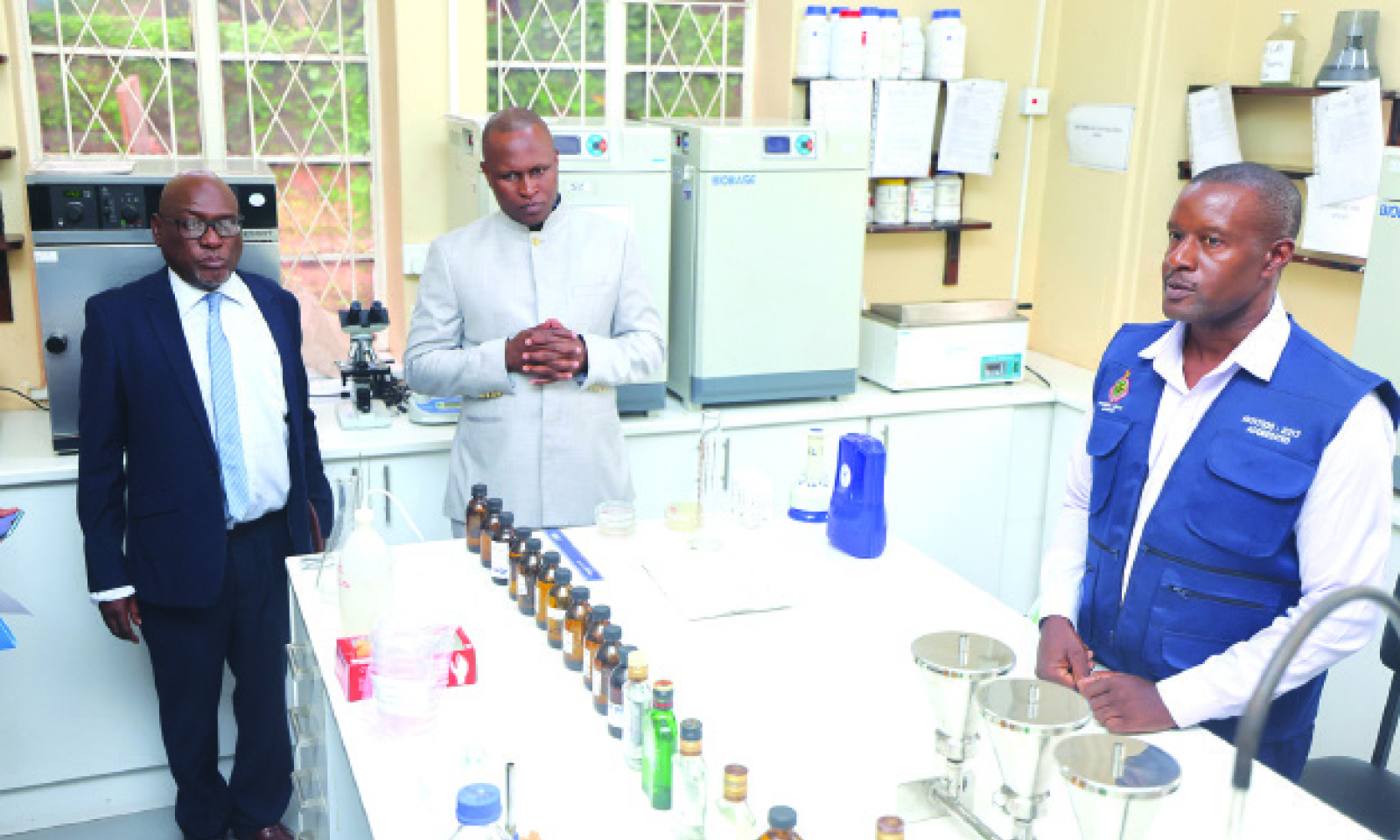
Rumbidzayi Zinyuke
Senior Health Reporter
Zimbabwe’s efforts to curb the drug and substance abuse scourge has received a major boost following the receipt of drug testing equipment worth US$60 000 by the National Reference Laboratory.
The equipment, from the Abused Substances and Diagnostics Management (ASDM) project, is expected to have a significant impact on drug and alcohol induced road traffic accidents as test samples can be taken across the country to screen public transport drivers among others.
The ASDM Project is a substance intervention being implemented through a coalition that includes the University of Zimbabwe’s Chemical Pathology Unit in the Department of Laboratory Diagnostic and Investigative Sciences, the Zimbabwe College of Pathology (Chitungwiza Central Hospital) and FaStep Zimbabwe.
The partners and stakeholders on the ASDM project seek to provide all Zimbabweans with a comprehensive, coordinated, quality programme that addresses the impact of alcohol, drugs and substance abuse and is integrated into Zimbabwe’s general medical system with the aim of improving the health of the Zimbabwean nation.
Speaking during the handover ceremony of the equipment to the Government Analyst Laboratory yesterday, Health and Child Care Deputy Minister Sleiman Kwidini said the equipment would play a pivotal role in enhancing the country’s capacity to address the drug and substance abuse issue urgency and precision.
“This donation will significantly strengthen our ongoing efforts to detect and monitor drug use, which is essential for both prevention and treatment. Accurate and timely testing enables us to intervene early, guide rehabilitation efforts, and provide the necessary care to those affected. It will also empower our law enforcement and health professionals to more effectively identify harmful substances circulating in our communities, ensuring that we respond to the evolving nature of drug abuse in an evidence-based manner,” he said.
The availability of testing equipment is expected to provide key data that will inform national policy.
Deputy Minister Kwidini said the testing program would begin with targeted sector testing, after which it would be expanded to other sectors.
“In an effort to curb road carnage resulting from drug and substance abuse, we propose opening testing to the transport sector. Testing will initially be offered free of charge for a limited period, after which a nominal fee will be required to cover expenses. The testing will be available to public transport drivers, public service drivers, government school drivers, haulage truck drivers, among others,” he said.
He reiterated the Government’s commitment to using the equipment effectively, efficiently, and transparently ensuring that it is deployed where it is most needed.
Statistics show that over 1,3 million people in Zimbabwe suffer from mental disorders, with nearly 80 percent of these linked to the exponential rise in substance abuse.
“Substance abuse is a growing challenge that threatens not only the health of individuals but also the very fabric of our communities. This issue has particularly devastating consequences for our youth at first but now it cuts across all age groups who are productive and the future of this nation. We cannot afford to ignore this crisis nor can we face it alone.
The equipment we are receiving today will play a pivotal role in enhancing our capacity to address this problem with the urgency and precision it requires,” said the Deputy Minister.
Principal investigator for the ADSM project, Professor Hilda Matarira, said the donation of testing equipment was a step that reaffirmed commitment to supporting national efforts in combating drug and substance abuse.
The testing would also be available for CMED drivers and VIP drivers, in schools and tertiary institutions as well as in workplaces and industries and eventually be cascaded down to community and home testing.
“No single entity can combat substance abuse alone. This fight requires the concerted efforts of government agencies, private institutions, law enforcement, civil society, and community leaders. We stand ready to collaborate further, not only by providing testing equipment but also by offering training, awareness programs, and technical support to ensure these resources are effectively used.
We also continue to engage other like-minded organisations in Zimbabwe in order to walk the talk on the war against substance abuse,” she said.
ADSM management partner Mr Methamore Nyamande said it was important to identify the root cause of intoxication.
“We don’t just want to look at the punitive or punishing element. We also want to look at supporting and the treatment element. So there will be a pilot that is going to be running and people who have tested positive (to drugs and substances) will be referred for treatment and therapy which we are going to be providing for free for the duration of this pilot.
“We want to get to the bottom of the issue and address these effectively because the idea of just arresting people and putting them into prison in itself is not going to be helpful,” he said.