Online Reporter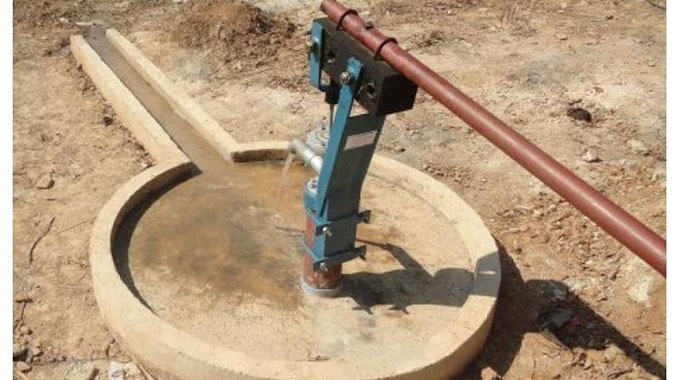
Patrick Chitumba, [email protected]
GOVERNMENT’S release of Constituency Development Funds (CDF) has enabled the establishment of reliable water sources for Gweru urban residents, bringing relief to communities that have long faced water shortages.
Nationally, the CDF is driving a fresh wave of tangible development under the Second Republic, with projects being rolled out across the country.
The CDF is a Government initiative allocating funds to all elected Members of Parliament to support developmental projects that uplift livelihoods.
The 2026 allocation is expected to continue fuelling local infrastructure improvements, including schools, clinics and water points, with a strong focus on strengthening community development.
Recently, Gweru residents welcomed the commissioning of five solar-powered boreholes drilled by their Member of Parliament, Josiah Makombe.
The boreholes, located in Nashville, Windsor Park, Ivene, Senga and Shamrock suburbs, are intended to ease the chronic water access challenges affecting many households in Gweru.
A resident of Riverside, Mrs Lorraine Zivai, said the development had brought significant relief to her and others who had endured long periods without adequate water.
“We are facing water challenges due to water rationing introduced by the local authority. The daily task of collecting water had proved arduous and time-consuming for many, but this initiative promises to ease their burden,” she said.
Mrs Zivai said residents were now celebrating the introduction of the five solar-powered boreholes, which were easing daily pressures brought about by water shortages.
Mrs Marie Cohen said the community was no longer forced to wake up before dawn in search of water, as the new boreholes had brought the resource closer to home.
“Gone will be the days of waking up very early and walking to fetch water. Sometimes we had to queue in long lines or wait for a council bowser because there was not a single borehole in Shamrock. Now we can access clean water near our homes. This has changed our lives,” she said.
Makombe said the boreholes were expected to reduce pressure on both households and local schools.
“A dependable water supply is a fundamental necessity. These boreholes will help our families and schools manage, particularly during periods of drought,” he said.
The legislator revealed that the project was funded with ZWG1,3 million (approximately US$50 000) from the CDF released by the Zanu-PF-led Government.
“While the budget was limited, as the CDF committee, we made sure that the funds were strategically used for maximum impact. The total funding amounted to ZWG1,3 million, which was equivalent to US$50 000 at the bank rate,” he stated.
Makombe said five percent of the funds covered administrative requirements, including phone calls and programme management, while 20 percent was allocated to security to prevent theft — a cost he felt could have been better directed towards project enhancement.
“At the end of the day, the solar-powered boreholes are expected to provide sustainable water access and reduce reliance on ageing infrastructure. We all have a role to play in safeguarding our community’s assets. Let us protect and cherish these boreholes as lifelines for our families,” he said.
The legislator thanked the Treasury and Parliament, emphasising that collaboration between Government institutions had been crucial to the project’s success.
“This initiative demonstrates what can be achieved when Government bodies work collaboratively towards common goals,” he said.
Ward 18 Councillor, William Mazango, welcomed the new borehole, recalling the difficulties residents once experienced while relying on a reservoir and fetching water from the Mambo location.
“This initiative marks a significant step towards combating water shortages while fostering community responsibility and co-operation,” he said.