admin
admin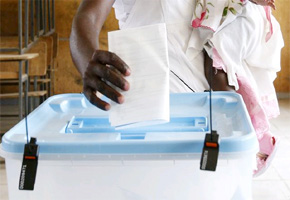
In terms of the Global Political Agreement (GPA) signed by President Mugabe, Prime Minister Morgan Tsvangirai and Deputy Prime Minister Professor Arthur Mutambara on 15 September 2008, the three leaders committed themselves to the restoration of economic stability and growth, endorsement of Sadc resolutions on illegal western sanctions on Zimbabwe, promotion of equality, national healing and cohesion. They also recognised that the current constitution of Zimbabwe made at the Lancaster House Conference in 1979 was primarily designed to transfer power from a colonial authority to black people of Zimbabwe who were agitating for self-rule and independence.
On the new constitution, the three principals agreed to set up a Constitution Select Committee of Parliament composed of representatives of the three parties. This provision gave rise to the appointment of three co-chairpersons of Copac namely Cde Munyaradzi Paul Mangwana of Zanu-PF, Mr Edward Mkhosi of the smaller MDC led by Professor Welshman Ncube and Mr Douglas Mwonzora of MDC-T.
As a mechanism of engaging and soliciting the people’s views, the parties agreed to conduct public hearings and public consultations and convening an all- stakeholders conference aimed at consulting key political and non-political stakeholders such as civil society before tabling the draft document to a second all-stakeholders conference. The parties agreed to later table the report to Parliament on its recommendations over the content of a new Constitution of Zimbabwe. The draft Constitution shall then be subjected to a referendum in which Zimbabweans would vote to decide its fate.
The Constitution, if adopted by the people, shall set itself as a framework of laying out minimum conditions for free and fair elections. For the first time Zimbabweans are expected to go to the polls under a new constitution for Zimbabwe by Zimbabweans.
Tentatively the election has been set for March 2013 and all principals have made a clarion call that their supporters shun violence and exercise tolerance to promote national healing, unity and national cohesion in a country that went through a spell of over five years of political violence.
Most peace loving Zimbabweans have lauded the three principals for choosing peace not war during the watershed elections that President Mugabe has declared his party Zanu-PF would win resoundingly. Mr Tsvangirai has also expressed his optimism.
Ahead of this crucial election, the Zimbabwe Electoral Commission (Zec), the electoral body charged with the responsibility to run all elections and referenda in the country, has said it has enhanced its preparedness for the election in which over a dozen political parties are likely to participate.
As all systems gain momentum for the 2013 elections, some people have expressed mixed reactions following recent civil servants unions’ threats that they would boycott the elections if their grievances over salaries are not met by Finance Minister Tendai Biti.
Some civil servants unions are threatening they would refuse to be engaged to work during the referendum unless the Government awards them meaningful salary increments in January 2013.
Most civil servants strongly feel that the budget unveiled by Minister Biti in November falls far short of addressing their expectations. Soon after Minister Biti presented the budget, most civil servants expressed displeasure at the small margins by which their salaries are likely to increase.
Progressive Teachers Union of Zimbabwe (PTUZ) is one of the unions that threatened to boycott the 2013 election and referendum.
The union’s secretary general Mr Raymond Majongwe said:
“They draw labour from us, but this time when elections come, civil servants will not participate until we get an increment.”
While acknowledging that PTUZ and other unions have a right to express themselves including through choosing not to participate in the 2013 elections, some people view it as harsh and grossly radical that Mr Majongwe fathoms election boycott as an effective bargaining tool.
Commenting on the declared boycott, Mr Ndodana Dube, a civil servant, said boycotting elections because Minister Biti fails to effect salary increments is like setting a whole house ablaze because there is a nagging mosquito in it.
“Of course Mr Majongwe and other Zimbabweans are free to choose to participate or boycott the election because Mr Biti has not done a review of our salaries. However, an election of this magnitude may not be used for salary bargaining purposes.
It would be grossly radical and tantamount to razing down the whole house because there is a mosquito in it,” said Mr Dube.
He said, instead, all the disgruntled people must use this opportunity to vote for an authority that will listen to their grievances. Further, Mr Dube said there is little or no wisdom in boycotting elections.
However, others feel that civil servants unions’ threats to boycott the elections are justified arguing that in negotiating for a salary there should be a strong negotiating point. They said the election boycott threat is one of the best alternatives for civil servants.
A public relations officer who preferred to remain anonymous for professional reasons, said power in negotiation rests on the “best alternative to a negotiated agreement” (Batna) philosophy. She said civil servants are using election boycott principally as an alternative to coerce their employer to award them meaningful salaries in 2013.
“Principally, unions are using the Batna principle to their advantage. The election boycott is an alternative if the Government fails to award their salaries in January. That is a common strategy in negotiation and civil servants may win the battle at the end of the day,” she said.
She added that shrewd negotiators often grab any opportunity that strengthens their Batna to arm twist their employer.
Since 1980, electoral bodies have engaged civil servants, especially teachers to conduct elections. Zec relies on civil servants who serve as polling and presiding officers during elections.
It is hoped a solution to the civil servants plight will be found so that their grievances do not derail the whole election process.


 derick.khumalo