Online Reporter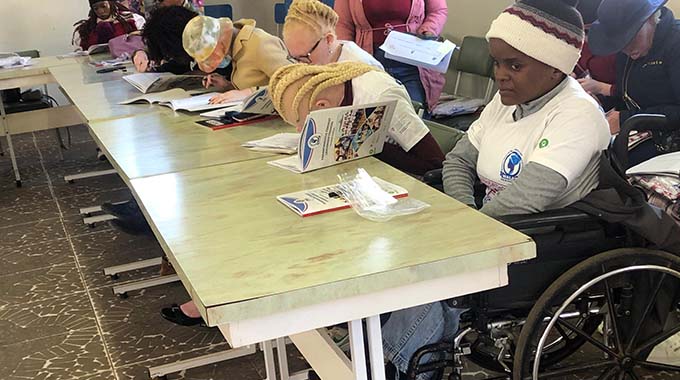
Trish Mukwazo, [email protected]
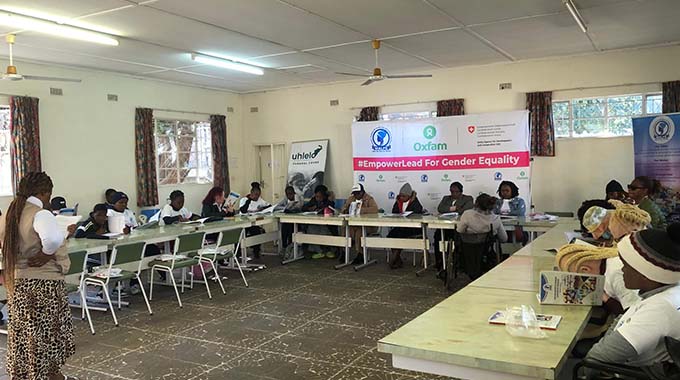
WOMEN’S Academy for leadership in partnership with Bulawayo Progressive Residents Association, last Thursday held a transformative feminist training session to equip women with disabilities with necessary skills to enable them to take on leadership roles in communities and in politics.
The training, led by the programmes manager Ms Jessie Chihota, has been developed for women with disabilities who intend to run for elected or appointed leadership positions in their communities.
Ms Chihota said through research, they have identified that women with disabilities are severely underrepresented.
“In the country’s population, women make up 52 percent but women hold less than 50 percent of leadership positions.
“That’s why we have had to implement quotas for women’s representation and women with disabilities, as they are even less represented,” she said.
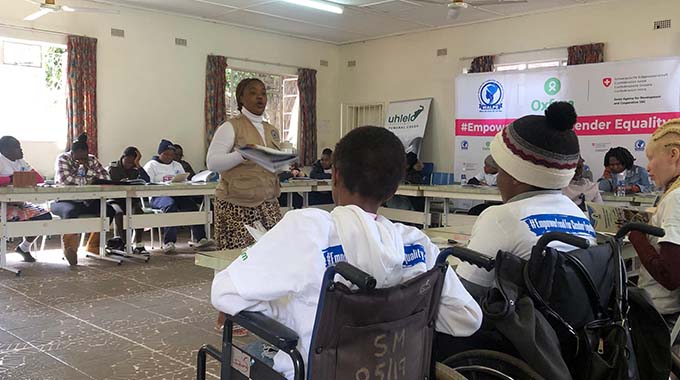
She noted that with the training WALPE aims to spotlight women with disabilities by equipping them with necessary skills for leadership and increase their representation considering that they make a significant part of the country’s population.
Ms Chihota expressed concern that women with disabilities are often excluded from empowerment programs hence the training comes about as a way of tailoring them to be included, represented and visible.
“Unique challenges that women with disabilities face in leadership roles include exclusion. The workshop seeks to address this by teaching them to be discerning, covering topics like artificial intelligence and digital media. This way they can research about various organisations and determine if they are beneficial to them,” said Ms Chihota.
She said another challenge is stereotyping saying people often perceive individuals with disabilities as mentally unfit or incapable of leading and this workshop seeks to counter this perception through our training,” she said.
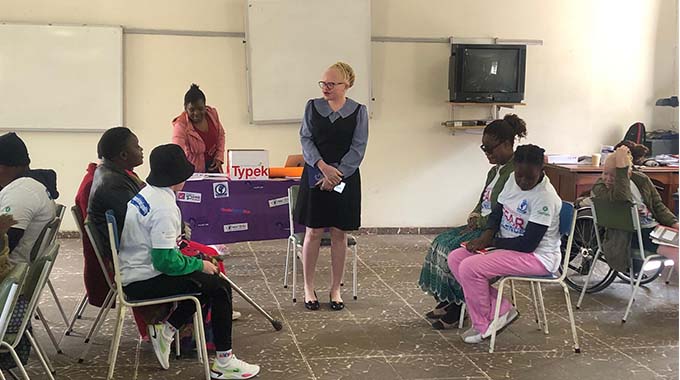
During the training women with disabilities were lively, engaging and voicing out their opinions.
“We are trying to do away with stereotypes and make their voices louder by giving them skills and know-how to take up space and represent themselves,
“It’s essential for Zimbabwe to hear about their experiences from their own voice,” she added.
Ms Chihota said young boys and girls with disabilities must see leaders like them in leadership positions so that they don’t grow up with a mentality that they are less capable.
BPRA’s secretary for environment Ms Khethiwe Tshuma said the feminist leadership training is meant to capacitate women with disabilities.
“We aim to conscientise them to take up leadership roles in society, the community or in politics. As for the leadership skills being covered, we are looking at a wide range of topics including accountability and socialisation,” she said.
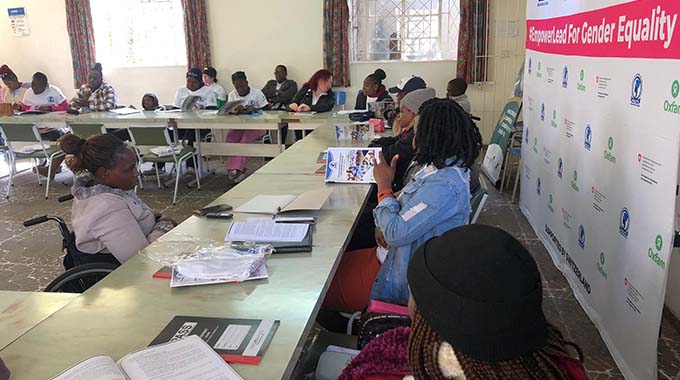
One of the participants who has a disability Ms Tariro Gurure expressed gratitude towards the initiative that honors and empowers people with disabilities particularly women.
“Historically we have seen very little representation of women with disabilities in parliament, council and senate,” she said.
She said the training is a step towards transforming society by breaking down barriers and enabling individuals with disabilities to drive change within their political parties and beyond.
“In Local Government, for example, we currently have limited representation, the numbers are also low. I believe that through initiatives like this training we can work towards increasing the representation of persons with disabilities in leadership positions,” said Ms Gurure.
Ms Gurure said people with disabilities face a challenge of lack of clear policies within political parties to support the participation of persons with disabilities.
“We need more resources and support to level the playing field. When we are empowered with the right resources and backing we can make meaningful contributions,” she said.
She said the workshop has made her gain understanding that persons with disabilities are not a homogeneous group.
“We are diverse and our needs and aspirations vary, it is crucial for us to support each other and work together to achieve our goals. If we can empower more women with disabilities through this training it would be a significant step forward in terms of representation and support,” she said.


 Blessing Chizhande