Online Reporter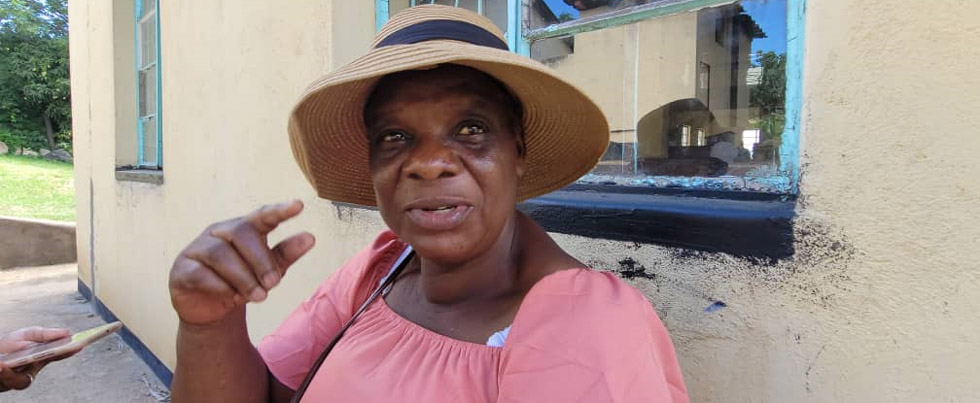
Tendai Gukutikwa
Health Reporter
FOR years, it has become an unspoken routine among many people on Anti-Retroviral Therapy (ART) in Zimbabwe that, when travelling, attending church conferences, funerals, weddings or overnight gatherings, medication is either skipped, delayed or hidden away.
The small plastic ART bottles are the problem. They rattle, announcing themselves.
In crowded buses, shared bedrooms and silent church halls, that sound is enough to expose what many are not ready to explain.
To avoid questions, some wrap the bottles in clothes or blankets.
Others do not take the pills at all.
Defaulting, especially during trips and social gatherings, has become common, not because people do not understand the importance of treatment adherence, but because stigma remains associated with the virus.
In Mutare, however, one woman decided she would no longer participate in that silence.
Long before she became recognised as a community advocate for People Living with HIV, Ms Loveness Kumbula (59), was living with the virus herself, quietly at first, and later, openly.
She was diagnosed in 1991, when HIV was poorly understood, and deeply feared.
The diagnosis came shortly after childbirth at the former Mutare General Hospital.
“My baby died soon afterwards, and both my husband and I tested positive. Two years later, he passed away, leaving me a widow at 27 – with two young sons still in early primary school,” she narrated her story when The Manica Post caught up with her on Tuesday.
Survival, she says, did not allow space for self-pity.
“I had no luxury to sit down and feel sorry for myself. I had two boys looking at me, depending on me for everything. I told myself that whatever this virus was, it would not raise my children for me. I had to wake up every day, go to work and make sure there was food, school fees and future for them,” she said.
She worked, focused on raising her children, and built a career as an accountant. HIV, though always present, was pushed into the background of a life driven by responsibility. For years, she lived without fully confronting the reality of her status. That changed in 2007, when illness forced her to re-engage with treatment.
“I knew I was HIV positive, but honestly, I did not embrace it. I was busy, I was working, and I convinced myself that as long as I was strong, it was not an issue. Looking back, I realise I was running away from acceptance because it was too painful at that time,” she said.
Antiretroviral drugs were available, but stigma was still strong, stronger than it is now. Many patients preferred collecting medication discreetly, away from public hospitals.
Ms Kumbula initially did the same, using medical aid to collect her medication privately.
However, her nurse friend, Sister Fortunate Sigauke, challenged her thinking, warning that avoiding public systems would eventually lead to treatment interruption once she retired from work.
“I was collecting my medication privately because it felt safer and more private. People were afraid then. But my friend, who is a nurse, told me something that shook me, that one day I would retire and fail to buy these medicines on my own. She told me, ‘You must be where everyone else is.’ That advice saved me,” she said.
Ms Kumbula moved to public facilities, first Mutare General Hospital, then Sakubva, and later Dangamvura Polyclinic. That transition marked more than a change in collection point – marked an attitude paradigm shift.
“That is when my mindset changed. I realised I could not live my whole life hiding. Going to public health facilities taught me that I was not alone, that there were many of us, and that there was nothing shameful about taking medicine that keeps you alive like society had taught me,” she said as she stopped hiding and defied both self and external stigmatisation.
While others wrapped medication bottles to silence the rattle, she carried hers openly. When it was time to take pills during gatherings, she took them.
If others hesitated, she spoke.
“I made a decision that I would never again hide my medication like what I did with my HIV status. If it was time to take my pills, I would take them whether people were watching or not. I still do up to today. I have told myself that shame was more dangerous than HIV,” said Ms Kumbula.
At church conferences, where people often share accommodation and fear being identified, she makes no attempt to conceal her treatment.
Instead, she now encourages others to take theirs as well, reminding them that delaying medication is more dangerous than any whispered judgement.
“At church people often hide their pills under blankets, waiting for others to sleep. I just take out my bottle. I even remind others to take theirs.
“At first, some would panic, but later they would thank me because they too were tired of living in fear,” she said.
In buses travelling long distances, she alerts fellow passengers when it is time to take medication, an act that startles some, but reassures others, who would have been struggling with the same fear.
“Even in buses, when time is up, I take my pills. Some people look at me, shocked, but others quietly follow.
“Many people default when travelling, not because they want to, but because they are scared to be seen. That is the menace if stigmatisation,” she said.
What began as personal courage slowly turned into informal counselling.
People started approaching her quietly after gatherings.
As long as medication is taken correctly, she said, life continues. Her openness has kept many on treatment, particularly those who were close to defaulting due to stigma.
In Mutare’s HIV support circles, her name is now familiar.
Ms Kumbula now works closely with HIV support groups, supporting people newly initiated on ART and those struggling with disclosure.
She also assists with basic treatment literacy, including nutrition and consistency in medication.
Ms Kumbula raised her two sons to adulthood, retired from formal employment, and now enjoys life with her grandchildren.
Her health is stable, routine disciplined, and confidence unshaken.
She believes her refusal to conceal who she was protected against being stigmatised.
In an interview, Sister Barbra Mtisi, of Windows of Hope said Ms Kumbula’s approach was practical than theoretical.
“When people meet her, adherence improves. They see someone healthy, confident and open. That changes how they see themselves,” she said.
The National Aids Council acknowledged that, not only external stigma, but self- stigmatisation remains a major driver of treatment interruption, particularly during social events and travel.
NAC provincial manager, Mr Artwel Shiridzinomwa said while Zimbabwe has made progress in expanding access to ART, behaviour shaped by fear still undermines outcomes.
He said despite improvements in testing and treatment coverage, Manicaland still faces challenges linked to long-standing stigma. NAC estimates from 2024 indicates that about 137 117 people are living with HIV.
“People default not because drugs are unavailable, but because of social pressures. Community voices are key in changing that,” he said.
In Manicaland the prevalence rate stands below the national rate at nine percent, making such community voices critical.
Mr Shiridzinomwa said the work of community advocates like Ms Kumbula is unfolding at a time when Zimbabwe is being recognised internationally for progress in the fight against HIV.
Health and Child Care Minister, Dr Douglas Mombeshora said the country’s results are now evident, following the achievement of the global 95-95-95 targets, which measures how many people living with HIV know their status, how many are on treatment, and how many have achieved viral suppression.
The milestone reflected years of coordinated effort between Government, development partners, civil society and community-based organisations.
“These results show that Zimbabwe is on the right path. We have demonstrated that with strong systems, committed health workers and community support, it is possible to control HIV as a public health threat,” he said.
He stressed that reaching the targets did not mean the work was finished, warning that stigma, treatment interruption and new infections remained challenges, particularly at community level.