

 admin
admin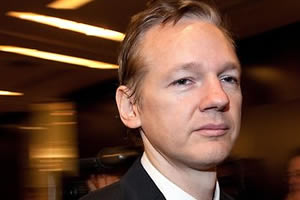
“Ecuador feels . . . that he could be the victim of political persecution because of his decisive defence of the freedom of expression and the freedomof the Press,” he said.
Assange, who entered the London embassy on June 19 seeking political asylum, said the offer by Ecuador, was a “significant victory.”
Immediately after the announcement of the asylum offer, a spokeswoman with Britain’s Foreign Office said Britain would continue to pursue its “obligation” to extradite Assange to Sweden despite Ecuador’s decision.
“Under our law, with Mr Assange having exhausted all options of appeal, the British authorities are under a binding obligation to extradite him to Sweden,” the spokeswoman said.
“We remain committed to a negotiated solution that allows us to carry out our obligations under the Extradition Act,” she said.
Almost simultaneously, Sweden rejected Ecuador’s claim that Assange would not face a fair trial.
“Our firm legal and constitutional system guarantees the rights of each and everyone. We firmly reject any accusations to the contrary,” Sweden’s Foreign Minister Carl Bildt posted on his Twitter account.
Assange’s WikiLeaks website has enraged the US by releasing tens of thousands of secret documents about the US wars in Iraq and Afghanistan.
He was arrested in London in December 2010 on a warrant from Sweden and then released on a bail.
Before seeking refuge in Ecuador’s London embassy, he stayed in a house close to the British capital.
In Harare, diplomatic sources said Britain would be breaking international law by violating the territorial integrity of Ecuador.
‘‘The British threat exposes the double standards of western powers that portray themselves as custodians of international law. Storming the Ecuadorian embassy will be akin to a declaration of war. It’s ironic that the same countries that cried foul after Iranian students stormed the US embassy during the Iran Hostage Crisis of 1979 are silent when London announces its intent to trash international law,’’ said one African diplomat.
Another diplomat said the British threat was hardly surprising.
‘‘A bird always sings the same song. The new Labour government of Tony Blair wantonly broke the international law of succession by refusing to be bound by obligations entered into by the Tory administration of Margaret Thatcher in 1979 to fund land reforms in Zimbabwe.
“And, instead of the westerners holding their own to account, they ganged up against Zimbabwe through unjustified, illegal sanctions regime that were again ultra vires international law by being imposed outside the purview of the United Nations system.’’
In another development, the US embassy yesterday issued a statement condemning what it called ‘‘the heavy-handed raid by Zimbabwe Republic Police officers on a private event hosted by Gays and Lesbians of Zimbabwe on the evening of August 11’’.
However, Zimbabwean laws do not recognise homosexuality or same-sex unions.
Attempts to smuggle gay rights in the draft Constitution were resisted by Zimbabweans.
A statement from the US embassy accused the police of harassment and arbitrary arrest of GALZ members.
But, the US was censured by two UN Humanitarian envoys, Frank La Rue; the special rapporteur for the protection of free expression and Maina Kiai; the special rapporteur for freedom of peaceful assembly, earlier this year after violently setting upon peaceful protesters.
In a letter to Secretary of State Hillary Clinton, the two envoys called on US officials to “explain the behaviour of police departments that violently disbanded some Occupy protests last fall” and expressed concern that excessive use of force “could have been related to [the protesters’] dissenting views, criticisms of economic policies, and their legitimate work in the defence of human rights and fundamental freedoms”.
Political analysts condemned the US for interferring in Zimbabwe’s internal affairs through advocating homosexuality.
They said the statement by the US shows its double standards when it comes to dealing with the rule of law.
As long as Zimbabwean laws outlawed homosexuality, the analysts said, the police would be empowered to take action against those who engage in such acts.
“We believe in the rule of law and until our laws are changed, the police will do their work without any fear or favour,” said political analyst Mr Goodson Nguni.
“We are an African country and we have our African values. We hope that the Americans appreciate that we do not support homosexuality. It is anti-Christ and anti-African.”
Another political analyst said the US was one of the countries not observing the rule of law.
“People are beaten up once they demonstrate in the US,” said the political analyst.
“We have seen this during the recent protests by the poor at Wall Street. Demonstrators were beaten up with the full support of the government.”
The analyst also cited the US invasion of Iraq and Afghanistan as examples of that country’s disregard of international law. — Xinhua-HR.



 Online Reporter