Online Reporter
Nqobile Bhebhe, Zimpapers Business Hub
BRITISH companies have lined up nearly US$1 billion worth of investments in Zimbabwe, spanning key sectors such as dairy, mining, and renewable energy, as the United Kingdom deepens economic ties with Harare.
Under the Second Republic led by President Mnangagwa, Zimbabwe has actively pursued an engagement and re-engagement policy, steadily reshaping its diplomatic and economic ties.
The President has consistently emphasised that “Zimbabwe is open for business”, positioning the nation as a friend to all and enemy to none.
Britain, once distant, is now showing strong interest in doing normal business with Zimbabwe, a significant shift after years of strained relations.
The UK’s deepening economic engagement is widely seen as a key endorsement of Zimbabwe’s ongoing economic reforms and a vote of confidence in the country’s investment climate.
The British Embassy reaffirmed this commitment to boosting economic ties with Zimbabwe at the just-ended Zimbabwe International Trade Fair (ZITF) in Bulawayo, where it exhibited under the theme “Partnerships for Growth.”

This marked the British embassy’s third appearance at ZITF since its return in 2022 after a 20-year absence, a clear sign of warming relations.
The UK Pavilion showcased several initiatives aimed at strengthening Zimbabwe’s economic resilience, including support for horticultural exports such as sugar, snap peas and blueberries through the Horticulture Development Council (HDC), and the provision of US$10 million in agribusiness loans through NMB Bank in collaboration with British International Investment (BII).
Renewable energy also took centre stage, with Africa GreenCo showcasing UK-backed investments in sustainable power projects.
Speaking to Zimpapers Business Hub during the just-ended Zimbabwe International Trade Fair exhibition in Bulawayo, Mr Martin Alsop, a representative of the British Embassy in Harare, said trade and investment ties between the two countries were being strengthened.
“On the investment side, we have a pipeline of investments from British companies worth close to a billion dollars, we are working on covering the dairy sector, mining and renewable energy,” Mr Alsop said.
He said increasing energy generation will be good for Zimbabwe as that will support economic growth and business activities.
“We are therefore working closely together to improve trade and investment,” said Mr Alsop.
Zimbabwe’s demand for electricity has surged in recent years, outpacing its generation capacity due to growth in sectors such as mining, agriculture, manufacturing and infrastructure development.
As part of its strategy to bridge the energy gap, the Government is promoting solar energy projects and implementing policies to attract investment in renewable energy infrastructure.
Recently, at the Spring Meetings, Energy and Power Development Minister July Moyo and Finance, Economic Development and Investment Promotion Minister Professor Mthuli Ncube, presented a comprehensive overview of Zimbabwe’s energy landscape to potential investors.
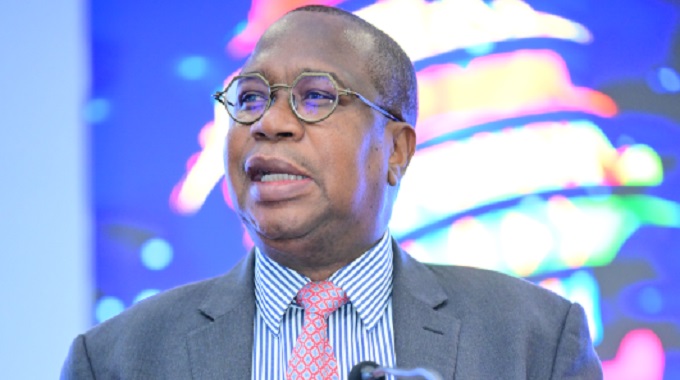
They stressed the pivotal role of private sector investment in addressing the country’s pressing energy challenges, highlighting opportunities in generation, infrastructure modernisation and renewable energy.
The presentations served as a strategic call to American investors, positioning Zimbabwe’s energy sector as a high-potential destination for capital and innovation.
Minister Moyo underscored the country’s urgent need to upgrade outdated energy systems and expand infrastructure, particularly in light of climate change impacts on hydroelectric generation.
He appealed for innovative, private-led solutions to drive a transition toward a more sustainable and resilient energy future
Added Mr Alsop, “Dairy investments are good for Zimbabwe for both consumption and exports. We heard that there is a net deficit of about 20 million litres of milk for local consumption. We want to work together to meet domestic needs and even export to regional countries.
“These are deals that we, as the British Embassy, are supporting to ensure they are completed and operational in Zimbabwe. It’s a win-win situation. It’s good for the UK and good for Zimbabwe.
Mr Alsop also noted the encouraging trend in bilateral trade.
“The latest data we have shows total trade between the UK and Zimbabwe is more than half a billion dollars, that is two-way trade, exports from here to the UK and vice versa. That figure has been growing slightly over the past five years. We want to take it even further.
“ That’s why working with the Horticulture Development Council is so important because the conditions for horticulture are very strong,” he said.
Mr Alsop pointed out that British International Investment’s US$10 million commitment to NMB Bank in 2023 was a key step towards boosting Zimbabwe’s horticulture sector.
“We are working to increase exports from Zimbabwe’s horticulture farmers, not only to the UK but also to Europe and other markets,” he said.
The strengthening economic partnership between Zimbabwe and Britain signals new opportunities for investment, trade expansion and sustainable development as the two countries chart a new chapter of co-operation.