Chronicle Editor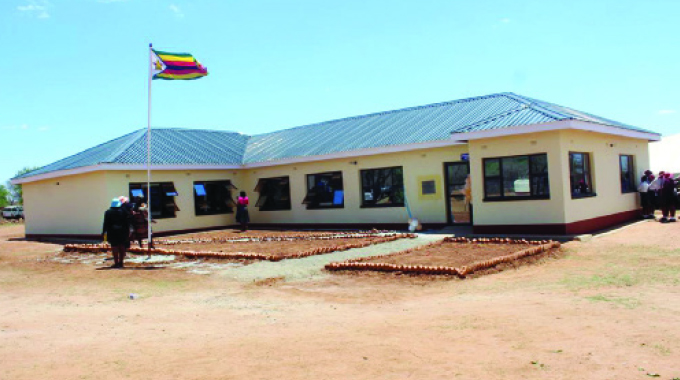
Raymond Jaravaza , [email protected]
SITUATED in the remote resettlement area of Ward 14, Bubi District, Esiphikeni Secondary School has transformed from virgin land into a beacon of educational hope over the past decade.
The school, which began with an enrolment of just 72 learners in 2013, now caters to 125 students from Form One to Form Four. Last week, a milestone was achieved with the unveiling of a modern administration block that rivals facilities in well-established urban schools.
The new administration block, a towering structure in the farming community, includes a boardroom, a strong room for securing public examination materials, four offices, a kitchen and ablution facilities.
“The strong room is one of the most important features of the new administration block because as per Zimsec (Zimbabwe School Examinations Council) guidelines, we now have a secure place to store public examinations materials, so going forward, our learners will now sit for Zimsec exams right here at Esiphikeni Secondary School,” said the headmaster, Mr Tawanda Nhidza.
The learners have been using neighbouring Somvubu Secondary School, some 45km away, to sit for their examinations.
“Our learners used to write their exams at Somvubu Secondary School and because of the long distance between the two schools, parents were forced to find accommodation in close by villages so that their children would be on time for exams every day.
“That arrangement resulted in our learners spending two months away from home during the exam period,” said Mr Nhidza.
The story of Esiphikeni Secondary School is one of perseverance by the school authorities and a unity of purpose between the local community and school leaders to bring a long-held dream to fruition.

Established in 2013, the school initially operated from a farmhouse. The first classroom block was built in 2015, laying the foundation for steady growth.
Using contributions from the community and devolution funds from the Government, the school has gradually expanded. In 2022, a steering committee comprising community members, school authorities, the Bubi Rural District Council and representatives from the Ministry of Primary and Secondary Education spearheaded the construction of the administration block.
After two years of meticulous planning and resource mobilisation, the building now stands as a symbol of hope for the local community.
“We used to be housed at a farmhouse, a few kilometres from the school site. In 2015, the foundation for the first classroom block was dug and from there, we have never looked back,” said Mr Nhidza.
The school is now focused on building teachers’ cottages to attract qualified educators and improve pass rates.
Matabeleland North Provincial Affairs and Devolution Minister, Richard Moyo, praised the community’s efforts.
“The Government reaffirms its pledge to providing a better learning environment and fostering academic excellence for every child nationwide. I’m reliably informed that Esiphikeni Secondary School has been producing impressive O-Level results despite learners having to sit for their exams away from the school,” he said.
“I hope that this new structure will be the beginning of greater achievements for the learners and the community.”
Chief Mtshane Khumalo, president of the National Chiefs Council, commended the community for its unity and vision.
“Communities in resettled areas often struggle to come together for such projects. Ward 14 is a shining example of what is possible when people work collectively,” he said.


 Online Reporter