Chronicle Editor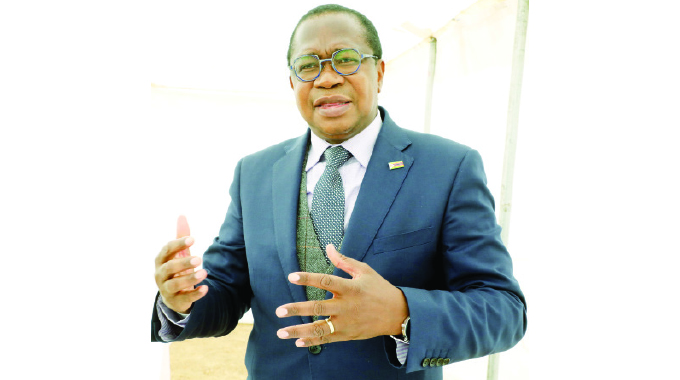
Nqobile Bhebhe, Senior Business Reporter
GOVERNMENT’S National Development Strategy 1 (NDS1) posted tremendous strides in the fourth quarter of 2022 with budget deficit levels declining below set targets of 1,65 percent to 0,9 percent while the extractive sector registered a 10 percent growth.
NDS1 is a five-year economic blueprint initiated by the Second Republic led by President Mnangagwa that seeks to drive transformation of the country towards the attainment of a national vision of a prosperous upper middle-income economy by 2030.
It succeeded the two-year Transitional Stabilisation Programme (TSP) implemented from October 2018 to December 2020 to set the economy on a recovery trajectory after years of stagnation.
The success of NDS1 (2021-2025) is expected to build the momentum towards NDS2 (2026-2030), which will take Zimbabwe to the desired realisation of upper middle-income economy status by 2030.
Outlining (NDS1) performance report for the fourth quarter of 2022 at yesterday’s Cabinet meeting in Harare, Finance and Economic Development Minister, Professor Mthuli Ncube said during the period under review, the Government implemented several economic measures that helped stabilise the economy.
For instance, he said the Government tightened the monetary and fiscal policy stance, maintained Central Bank accommodation rates at 200 percent, and ordered a review of the public procurement process to ensure value for money payments to contractors.
“Cabinet is reminding the nation that following the launch of the NDS1 in October 2020, implementation commenced in 2021, under the 14 Thematic Working Groups (TWG) that were created to drive the programme and achieve set targets,” he said.
“Under the Economic Growth and Stability TWG, the nation is being informed that the NDS1 target for inflation in the Fourth Quarter of 2022 was 26,3 percent. The budget deficit declined from an NDS1 target of 1,65 percent to 0,9 percent, reflecting conformity with the Sadc Macro-economic Convergence Criterion of fiscal deficits below three percent.”
Last year, Zimbabwe ended the year with a month-on-month inflation rate of 2,4 percent in line with the authorities’ prognosis of below three percent at the end of 2022.
Supportive monetary and fiscal policies, as well as co-ordinated interventions by the authorities, have been central in sustaining the current inflation deceleration and exchange rate convergence path.
The Government has set a month-on-month inflation target range of between one to three percent and a fiscal budget deficit of not more than 1,5 percent of GDP during 2023.
Presenting a $4,5 trillion 2023 national budget last year, Professor Mthuli Ncube vowed to strictly control Government expenditure this year to keep the budget deficit in check, and in accordance with acceptable international benchmarks. He noted that the deficit would be financed through bond and Treasury Bill issuance, external loan disbursements, and Special Drawing Rights drawdowns.
Prof Ncube said at the centre of inclusive growth during the fourth quarter, the mining sector grew by 10 percent in 2022, driven by higher international mineral prices, the resuscitation of closed mines, and expansion and opening of new mines.
Gold production improved to 36 tonnes, from 31,5 tonnes in 2021, and significant progress in the construction of Gold Service Centres was also noted.
In recognition of the region’s contribution to national gold output, Government has opened several gold buying centres in places such as Bubi and Gwanda with Central Bank subsidiary, Fidelity Printers and Refiners opening the latest branch in Maphisa last month to cater for miners in Matobo and Mangwe districts.
Under the US$12 billion mining roadmap, gold is expected to contribute US$4 billion, platinum US$3 billion while chrome, iron, steel diamonds, and coal will contribute US$1 billion.
Lithium is expected to contribute US$500 million while other minerals will contribute US$1,5 billion. The Government expects that by 2030, the mining industry will be generating upwards of US$20 billion.



 Online Reporter