

 admin
admin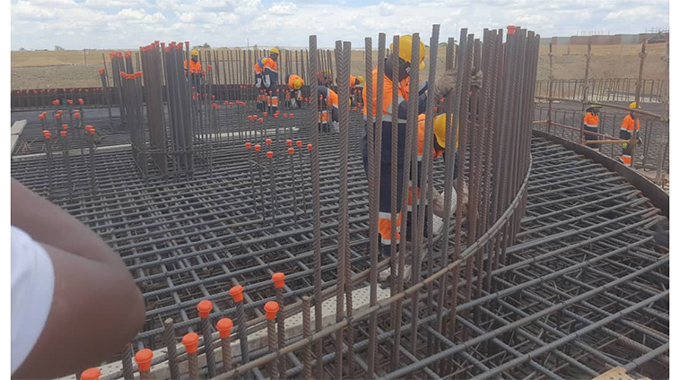
Ruth Butaumocho-African Agenda
When Zimbabwe embarked on the Murambatsvina clean-up campaign in 2005, the exercise was unjustifiably condemned, particularly by the West.
The West sought to vilify the exercise, without necessarily looking at Government’s long term goal, which was to rid cities of slums, while working on decent accommodation for its people.
In an attempt to vilify the Government’s broad clean-up campaign, the then United Nations Special Envoy and executive director of UN-HABITAT, Mrs Anna Tibaijuka — at the invitation and goodwill of Zimbabwe — which had nothing to hide — presented a damning and untruthful report to the then Secretary General, Kofi Annan.
Like any sovereign country, mandated to decide what is good for its people, Zimbabwe defended its decision and position and lashed out at critics of the broad clean-up campaign, calling them “hypocrites” and “long-distance philanthropists who romanticise shacks”.
For Zimbabwe, the clean-up exercise was not meant to cause harm and suffering to its people, but the achieved end was to accommodate displaced persons by providing them with better shelter, which is what is happening now.
Nearly two decades after the Murambatsvina clean-up campaign, Zimbabwe is witnessing a wave of new cities being built across the county that hope to relieve the pressure on existing urban centres.
The building frenzy to improve people and ease accommodation crisis in fulfilment of Zimbabwe’s Vision 2030 of turning the country into an upper middle-income economy is not happening in the country alone, but it is being mirrored across the African continent.
Countries like Nigeria, Tanzania, Kenya, Ghana, Equatorial Guinea Sierra Leone, Namibia and Zambia are also currently working on massive housing projects to cater for their people.
With African population predicted to leap from 1,34 billion in 2020 to nearly 2.5 billion by 2050, new infrastructural developments have become imperative to accommodate growing populations, while improving standard of living for millions of people.
Zimbabwe has not been left out in providing accommodation for its people and the Government has since embarked on a massive housing project that is set to deliver 220 000 housing units by 2021, and 1,2 million units by 2030.
To achieve this, the Government will leverage the projects on the partnerships with the private sector and new technology in human settlement, such as the walk-up flats that are already being constructed in the resort town of Victoria Falls.
As part of the Government’s efforts to improve living conditions of multitudes of people, flats that are unfit for human habitation will be rebuilt and informal settlements revamped as part of a raft of measures to overhaul Zimbabwe’s housing sector.
Urban regeneration of degraded colonially established suburbs such as Mbare, Makokoba, Sakubva and Mtapa, among others, is also being pursued in line with modern and emerging housing trends across the country and the continent.
This dovetails the country’s vision to become an upper middle-income economy by 2030, which is being ably supported by the Zimbabwe National Human Settlement policy launched by President Mnangagwa last year.
The policy document that calls for the provision of housing through a litany of measures, including settlement financing will be used as the policy document to ensure that affordable and quality settlements are built.
Providing affordable and quality housing is one of the important benchmarks for development that needs to be supported to be successful.
The transformation of the housing sector is a development that many had been hoping for, after years of losing money to bogus housing co-operatives, schemes and to land barons who had become a menace across the country.
In a bid to acquire a residential stand or a property, desperate home seekers were being swindled of their hard-earned savings by land barons and bogus dealers who would then sell them non-existent stands and even allocate them State land.
The launch of the policy, the subsequent declaration by the Government to build more than 220 000 units and the commencement of the actual construction of some of the units, renew hopes of ordinary Zimbabweans of owning a house in the near future.
If successfully implemented, the construction of the housing units will chop off a substantial figure from the country housing backlog that currently sits at 1,5 million units.
Speaking at the launch of the Zimbabwe National Human Settlements Policy (ZNHSP) and the commissioning of the Marimba Flats project in Harare late last year, President Mnangagwa said Government, through the Ministry of National Housing and Social Amenities, was spearheading the development of modern and affordable urban and rural human settlements and social amenities in a co-ordinated and sustainable manner.
With a policy document in place and affirmation from the highest office in the land, the country has begun to witness a boon in construction of several housing projects across cities.
Interestingly, seeing an avalanche of opportunity, the private sector has also taken a keen interest in accommodation provision, as attested by emerging housing projects that include cluster houses, apartments and houses to cater for the middle income earners.
The involvement of the private sector is a welcome development, which gives the Government an opportunity to focus on low income housing schemes and rehabilitation of existing infrastructure.
Rather than regard the situation as clash of competing interest, the involvement of both the Government and the private sector, complements each other and would need to be supported.
The involvement of the private sector, which has reasonable terms and finances, should be supported and would be critical in the long terms, because it gives alternatives for home seekers who may not want to wait long for the implementation of Government projects, which are usually massively rolled out and for the benefit of everyone.
From where it stands, the private sector has already recorded a boon in the industry judging by the number of projects that private players are working on.
They know there is more, where this is coming from.
The continued country’s changing demographics following the latest pronouncement from ZimStat also presents an appealing commercial and national opportunities to help build the urban infrastructure to cater for the boon. Outside housing provision, hundreds of jobs would be created, because the construction sector is viewed as a large contributor to economic activity and job creation.
The sector contributes direct jobs and has large multiplier effects for both jobs and a litany of economic activities in supply chains of construction materials, housing financing institutions and even civil works aesthetics.
While the goal to provide affordable housing may have taken longer than expected, what is clear is that the dream is now achievable.
Feedback: [email protected]



 Online Reporter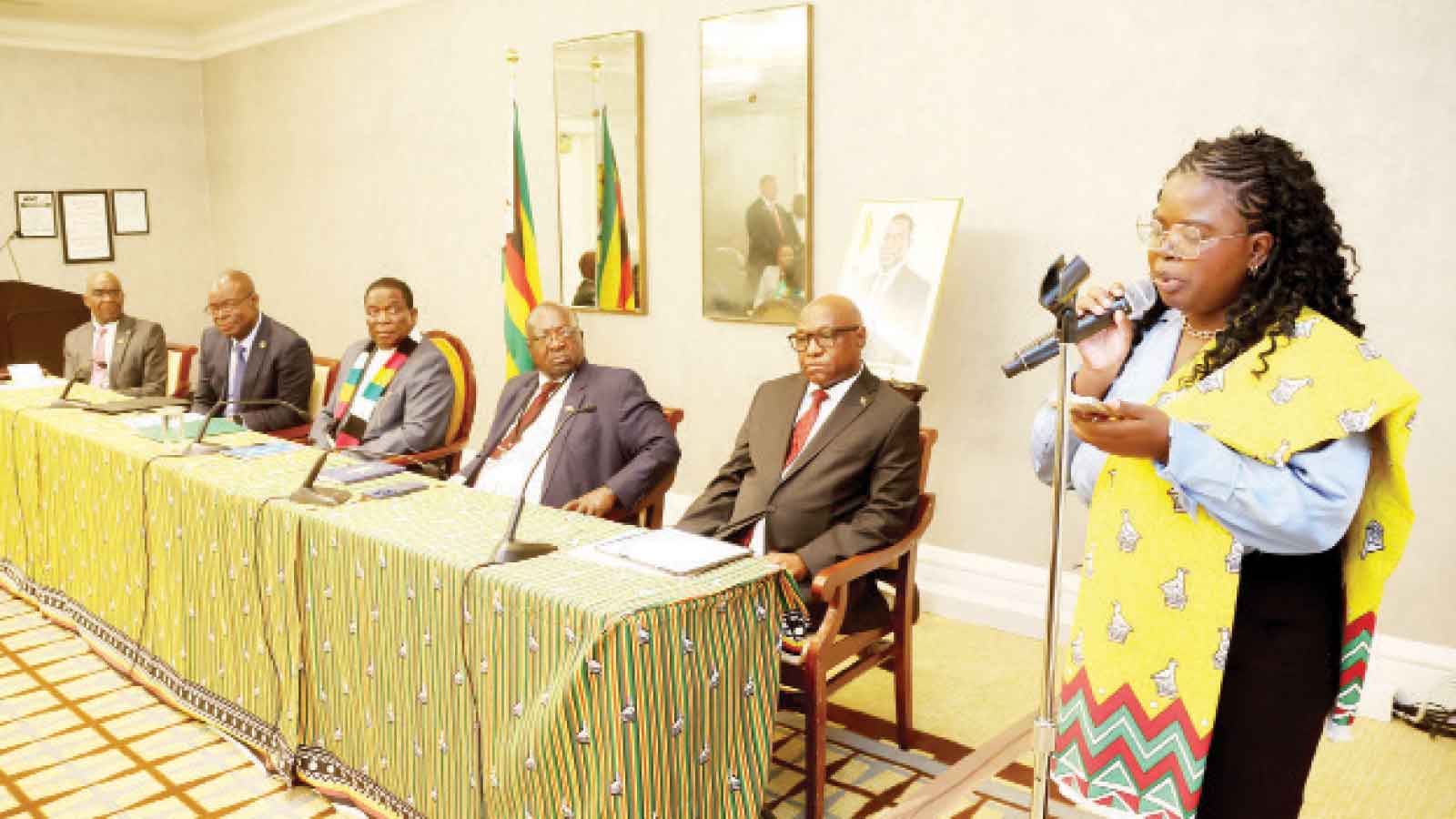
 dyton mupawaenda