Online Reporter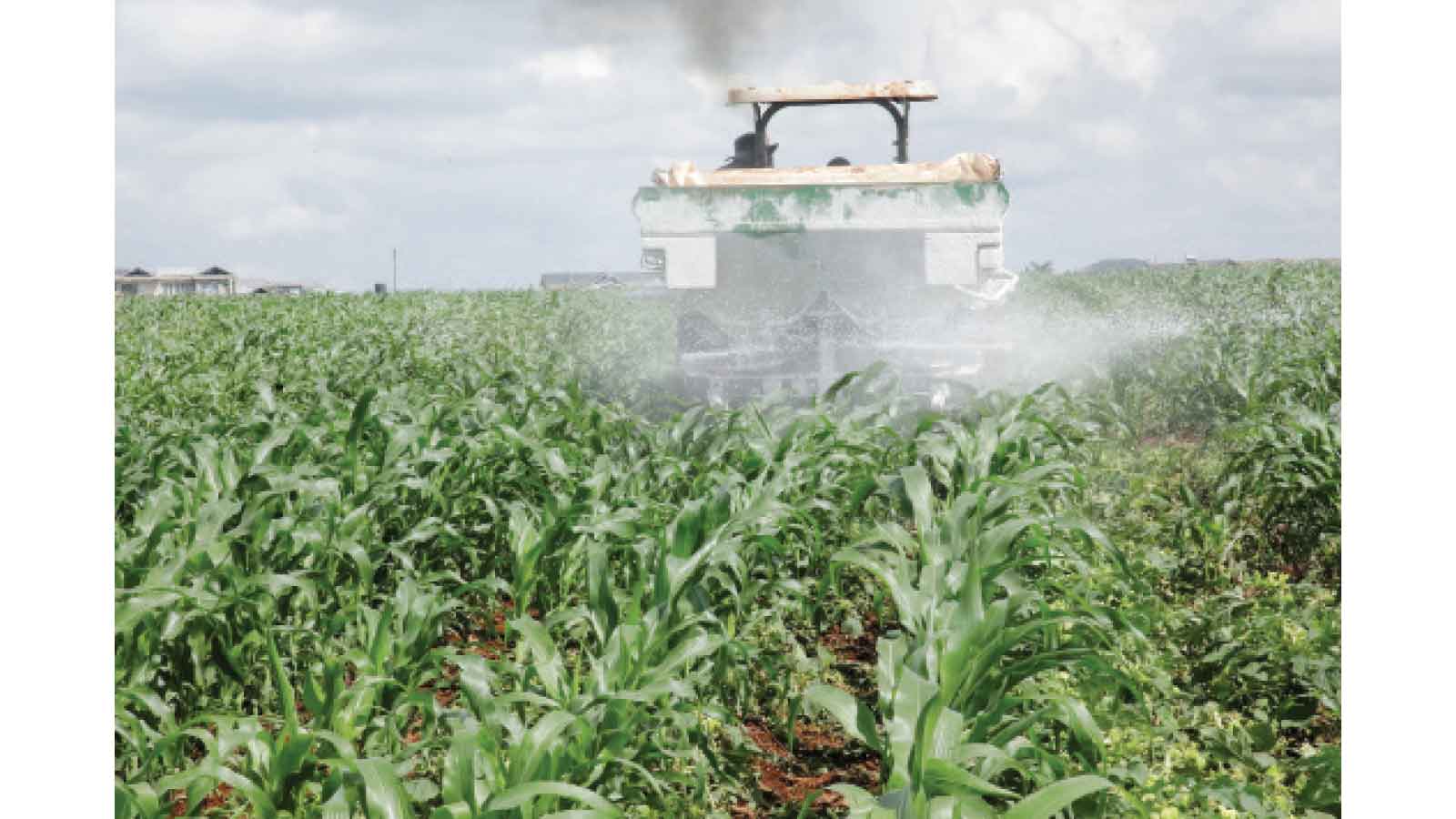
In today’s interconnected world, what happens beyond our borders increasingly shapes what takes place within our countries.
Global conflicts, shifting trade dynamics and supply chain disruptions are no longer distant events; they are realities that directly affect our farmers, our markets and our food systems.
For Zimbabwe, this moment calls for a deliberate shift in thinking. Agriculture remains the backbone of the economy, supporting millions of livelihoods and driving rural development.
But the sector is still significantly exposed to external shocks.
The growing instability in global supply chains, especially around critical inputs such as fertiliser, has made one thing clear: Zimbabwe must accelerate the adoption of homegrown solutions if it is to safeguard its agricultural future.
When global instability reaches the farm gate
Recent geopolitical tensions have disrupted global trade routes and supply systems, particularly those linked to energy, grain and fertiliser.
For countries like Zimbabwe, which depend heavily on imports for agricultural inputs, the impact is immediate.
Fertiliser prices have been highly sensitive to global events, often rising sharply when supply chains are strained.
For the ordinary farmer, this translates to difficult decisions: apply less fertiliser and risk lower yields, or stretch already limited resources to maintain productivity.
The ripple effects are felt across the entire value chain.
Lower production leads to reduced market supply, increased food prices and pressure on household incomes.
In this way, global shocks quickly become local challenges.
Agriculture: A sector too important to be vulnerable
Agriculture is not just another sector in Zimbabwe. It is the foundation upon which many other sectors depend.
From agro-processing to transport, retail and exports, the performance of agriculture has a multiplier effect across the economy.
More importantly, it is the primary source of livelihood for a large proportion of the population, particularly in rural areas.
When agriculture is stable and productive, communities thrive.
When it is disrupted, the consequences are widespread.
This is why resilience in agriculture must be treated as a national priority.
Looking beyond inputs: Building strong value chains
While inputs are critical, resilience must extend across the entire agricultural value chain.
1. Production systems that withstand shocks
Farmers need support to adopt climate-smart and efficient farming practices. With changing rainfall patterns and increasing climate variability, building adaptive capacity is essential for sustaining yields.
2. Local processing and value addition
Zimbabwe continues to export many raw agricultural commodities while importing finished products.
This limits the value captured within the country.
By investing in agro-processing, the country can retain more value, create jobs and reduce dependency on imports.
3. Strengthening market systems
A resilient agriculture sector must be supported by organised and efficient markets. This includes improving storage facilities, transport logistics and structured trading systems. When markets function well, farmers are more confident to invest in production.
4. Reducing post-harvest losses
A significant portion of agricultural produce is lost after harvest due to poor handling, storage and transport systems. Addressing these inefficiencies can effectively increase available supply without expanding production.
5. Expanding regional trade
Strengthening trade within the region can reduce dependence on distant global markets. Regional markets are often more accessible and less volatile, providing opportunities for stable growth.
The role of institutions and coordination
Building resilience is not the responsibility of farmers alone. It requires coordinated action across multiple stakeholders.
The Agricultural Marketing Authority (AMA) plays a critical role in organising markets, coordinating value chains and ensuring that production aligns with demand.
Through structured marketing systems, policy development and stakeholder engagement, AMA continues to contribute to building a more stable and predictable agricultural environment.
At the same time, collaboration between the Government, the private sector, financial institutions and development partners is essential. Investment in infrastructure, research and market systems must be aligned and sustained.
Turning challenges into opportunities
While global disruptions present real challenges, they also offer an opportunity for Zimbabwe to rethink its approach to agriculture.
There is significant potential to develop local industries around inputs, processing and logistics.
By doing so, the country can create jobs, strengthen rural economies and reduce exposure to external shocks.
In many ways, the current global environment is a reminder that self-reliance is not about isolation; it is about building internal strength while remaining strategically connected to global markets.
What this means for farmers
For farmers, the shift towards homegrown solutions is both a challenge and an opportunity.
It calls for:
Greater focus on efficiency and productivity
Adoption of improved farming practices
Engagement in organised marketing systems
Willingness to collaborate and share resources
Farmers who position themselves within structured value chains are more likely to benefit from stable markets, better pricing, and support services.
A collective responsibility
Ultimately, building a resilient agriculture sector is a collective effort.
Policymakers must create enabling conditions.
Private sector players must invest and innovate.
Institutions must coordinate and guide. Farmers must adapt and embrace new approaches.
Each part of the system has a role to play.
Zimbabwe cannot control global events. However, it can control how it prepares for them.
By investing in homegrown solutions, strengthening value chains and reducing dependency on external systems, the country can build an agriculture sector that is not only productive but also resilient.
When agriculture is strong, livelihoods are protected, markets are stable and the nation is better equipped to face uncertainty.
In a world where shocks are becoming the norm, resilience is no longer optional; it is the foundation for sustainable growth.
Tina Nleya is AMA’s marketing and public relations manager. She can be contacted on email: [email protected]. Word From The Market is a column produced by AMA to promote market-driven production.