Bruce Ndlovu and Mashudu Netsianda, [email protected]/[email protected]
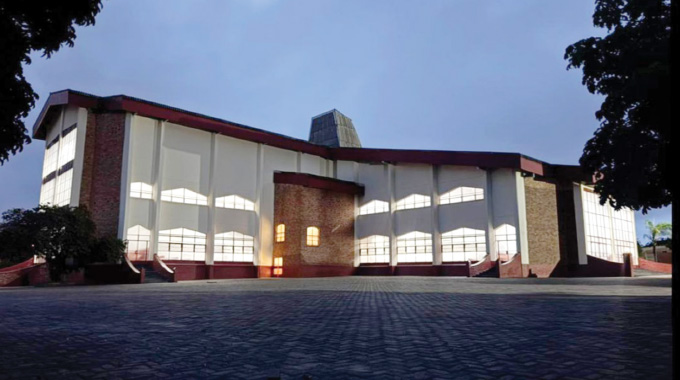
AT night, a soft but commanding glow rises above Lobengula Extension suburb in Bulawayo.
From afar, the illuminated headquarters of the Apostolic Faith Mission of Africa (AFMA) looks almost otherworldly — its countless windows and the roof of its vast main auditorium casting light into the darkened skyline, as if calling the faithful home.
By day, the spectacle gives way to song. Hymns and choruses drift through open windows as worshippers gather.
Spread across expansive grounds, the AFMA complex is far more than a sanctuary.
There is a hall where weddings are hosted free of charge for church members, administration offices and accommodation facilities.
With its northern, southern, eastern and western wings, the headquarters towers above modest surrounding homes — a spiritual citadel rising above modest homes.
Once defined by colonial-era civic buildings and low-rise suburbs, Bulawayo’s skyline is being quietly but unmistakably reshaped by churches whose ambitions stretch far beyond Sunday worship.
The AFMA’s magnificent building is one of several churches that have grown beyond places of worship to become architectural landmarks, reshaping Bulawayo’s skyline and adding an unexpected layer of beauty to the City of Kings and Queens.
Their significance is also being recognised at national level. As Zimbabwe, through the Ministry of Tourism and Hospitality Industry and the Zimbabwe Tourism Authority (ZTA), embraces religious tourism as a growing niche, such structures are drawing attention not only for their spiritual pull but also for their architectural, cultural and historical value.
In December alone, AFMA hosted close to 20 000 congregants during its annual convention, attracting worshippers from across the SADC region and the diaspora.
“Why such a huge temple?” asks AFMA Overseer and president, Reverend Rosewell Zulu, anticipating the question many visitors pose on first sight.
“This is our headquarters, and as a church, we hold three major conventions every year. As the Bible teaches, the Lord wants to meet with us thrice,” he said.
The church gathers for the Passover, Crusaders’ meeting in August and its annual general camp from December 12 to January 2 — all hosted at the Bulawayo headquarters.
“We wanted a place of worship befitting the faith of those who make pilgrimages here. A place that can receive everyone,” said Reverend Zulu.
What many see today as a monumental structure began humbly. Construction started in 1986, but the first completed structure on the site was a simple toilet. The actual temple work began on July 1, 1987.
“I am proud to say this is 100 percent Zimbabwean. We had no donors or sponsors. This is the work of our own hands, just like what President Mnangagwa always says, ‘Nyika inovakwa nevene vayo/Ilizwe lakhiwa ngabanikazi balo,” said Reverend Zulu.
Inspired by the church’s founder, the late Rev Morgan Sengwayo, members pooled resources, skills and labour. Builders, artisans and tradespeople within the congregation moulded the structure brick by brick. Even the benches were made on site.
“The excavation was done manually. We used hoes and simple tools until the ground was level. This became a national project for us,” Rev Zulu recalled.
While VJ Silobela Construction Company served as the main contractor, much of the steelwork was overseen by Reverend Elliot Ncube and his team, who trained church members in fabrication and installation.
Across the city, other churches tell similar stories of sacrifice, craftsmanship and faith etched into stone.
In 2021, President Mnangagwa toured Bulawayo’s Urban Heritage Corridor and paid a visit to St Mary’s Basilica of the Immaculate Conception — the only basilica of its kind in southern Africa. Built 123 years ago, its granite blocks were hand-cut from the Matopos in an era without machinery. Today, those stones still stand, crowned by a 300-tonne copper concrete roof.
Architecturally, the basilica shares lineage with the Anglican Cathedral of St John the Baptist, a quarter-hectare sandstone giant near City Hall. With pointed arches, ribbed vaults and stained glass, St John reflects the Gothic style of European cathedrals such as Westminster Abbey.
Designed by FE Masey and built by George Nicholson, who quarried sandstone from Ntabazinduna, the cathedral cost £17 000 — a fortune at the time — and reportedly brought little profit to its builder, a testament to the scale of the undertaking.
The Right Reverend Cleophas Lunga of the Anglican Church in Bulawayo said the cathedral’s location near City Hall was symbolic.
“In those days, churches were built close to the seat of power. It symbolised the relationship between church and state. Even in Harare, the church stood next to parliament, and Bibles used for swearing in legislators came from there,” said Rt Rev Lunga.
While these cathedrals reflect timeless craftsmanship, Bulawayo’s newest religious giant speaks the language of modern ambition.
Harvest House International’s multi-million-dollar auditorium in Selbourne Brooke — a sleek, multi-purpose conference centre seating up to 10 500 people — stands as the city’s youngest architectural statement of faith.
For Harvest House, the building marks the fulfilment of a vision born in October 1995, when the founder, Bishop Dr Collin Nyathi and his wife, Bishop Dr Sarah Nyathi, held their first service in their Sunninghill home.
At the commissioning of the auditorium in 2021, President Mnangagwa described its rise as a testament to discipline and perseverance.
“The completion of this building stands as towering evidence of determination, hard work and resilience. You have demonstrated faith that moves mountains,” he said.
From a tourism development perspective, National Museums and Monuments of Zimbabwe (NMMZ) marketing manager Mr Phineas Chauke said such church structures present an opportunity to integrate religious gatherings into the national tourism calendar.
“Christian faith is a powerful aspect of our contemporary culture and therefore, without commercialising faith, we want to professionally and respectfully celebrate it, curate faith and heritage trails, train local guides and create employment,” he said.
“Granting these mega-church structures official recognition as tourism facilities also allows us to diversify our tourism offer beyond wildlife and other traditional products.”
From hand-cut stone and manual excavation to steel frameworks and glowing skylines, Bulawayo’s churches tell stories far deeper than their walls. They are monuments of belief, community and endurance — built with concrete faith and steel resolve and forever redefining the city’s horizon.
In a landscape increasingly dominated by commercial structures and informal developments, church architecture offers visual balance and a sense of permanence. Their presence softens the cityscape, creating focal points that draw the eye upwards and invite reflection.
Churches also play a quiet but powerful role in community life. Beyond Sunday services, they host weddings, funerals, youth programmes, charity drives and moments of collective prayer during national crises.