Online Reporter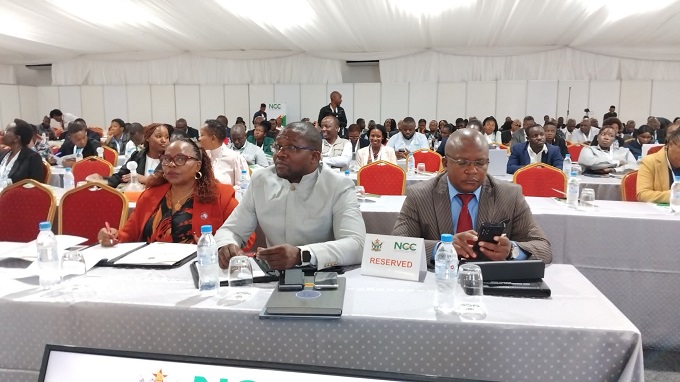
Nqobile Bhebhe
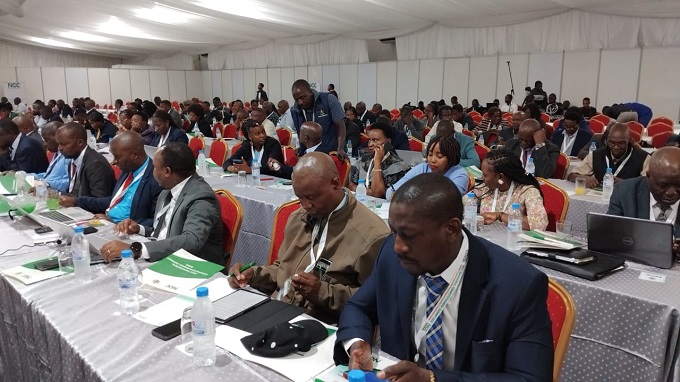
DELEGATES to the inaugural two-day National Competitiveness Commission (NCC) Competitiveness Summit are trickling in at the Zimbabwe International Exhibition Centre in Bulawayo.
The high-level summit is held under the theme “Building Sustainability Towards Enhanced Productivity and Competitiveness in Zimbabwe.”
President Mnangagwa is expected to officially open the summit on Thursday.
Several captains of industry, top government officials and the representatives from the academia are already in the venue.
National Competitiveness refers to a country’s ability to create a competitive and conducive business environment through development and implementation of key policy improvements to achieve economic growth and development.
This supports business viability and innovation, production of quality and affordable products, thereby allowing it to compete effectively in the global market.
The ultimate objective is creation of a supportive business environment that encourages innovation and investments, enhanced productivity, efficient markets, economic growth and improved living standards of the population.
According to rhe programme, some of the key presentations today would be by Finance, Economic Development, and Investment Minister Professor Mthuli Ncube who is scheduled to present on Fiscal Policy Measures to Promote Competitiveness and Ease of Doing Business in Zimbabwe while Reserve Bank of Zimbabwe governor Dr John Mushayavanhu will tackle Monetary Policy Measures in Enhancing Competitiveness in Zimbabwe.
Captains of industry are also expected to share their perspectives on competitiveness.
Infrastructure development, a cornerstone of competitiveness, will be addressed by the Infrastructure Development Bank of Zimbabwe (IDBZ).
Its presentation focusing on “Infrastructure Development and Competitiveness” will be followed by a panel discussion involving both public and private sector players.
The summit will also examine the crucial link between labour productivity and competitiveness.
Established under Chapter 14:36, the NCC operates under the Ministry of Industry and Commerce, driving policy reforms to enhance Zimbabwe’s domestic, regional, and global competitiveness, aligning with Vision 2030.
The summit provides a platform for policymakers, industry leaders, and experts to shape a more competitive and business-friendly Zimbabwe.
Th resolutions are expected to anchor competitiveness policy interventions by Government towards transforming our economy against global shocks.
Competitiveness key to business viability, says NCC board chair
National Competitiveness Commission (NCC) board chair, Mrs Patiance Chimuka has emphasised that competitiveness is crucial for business viability, driving innovation, and ensuring the production of high-quality, affordable products.
This, she said, enables industries to compete effectively on both local and global markets.
Speaking at the inaugural Competitiveness Summit in Bulawayo, Mrs Chimuka noted that the commission organised the summit as a platform for in-depth discussions on addressing barriers that hinder Zimbabwe’s global competitiveness.
The summit, themed “Building Sustainability Towards Enhanced Productivity and Competitiveness in Zimbabwe,” aims to align industry strategies with national economic goals.
She said President Mnangagwa’s scheduled attendance tomorrow underscores the significance of competitiveness in the country’s economic development.
“Competitiveness is a key pillar in sustaining business viability, fostering innovation, and ensuring the production of quality, affordable products. This allows our industries to compete more effectively,” she said.
Mrs Chimuka further noted that the summit’s objectives align with the Zimbabwe Industrial Reconstruction and Growth Plan and the National Development Strategy 1 (NDS1), both of which focus on enhancing productivity and competitiveness.
“As NDS1 concludes in December 2025, the outcomes of this summit will provide crucial input for shaping NDS-2,” she explained.
The Ministry of Industry and Commerce recently unveiled the Zimbabwe Industrial Reconstruction and Growth Plan for the period 2024-2025.
This initiative aims to enhance the domestic economy by promoting the procurement of locally produced goods.
She added that the discussions will help refine government strategies for improving competitiveness, identify policy gaps that hinder industrial growth, and provide insights from a private-sector perspective.
“The summit will also serve as a benchmarking platform, allowing Zimbabwe to assess its performance against other countries and formulate recommendations for a more competitive business environment,” Mrs Chimuka.
CZI proposes Presidential decree to slash business costs
Rutendo Nyeve, Sunday News Reporter
THE Confederation of Zimbabwe Industries (CZI) has proposed a Presidential Decree to temporarily reduce all business costs by 50 to 70 percent to address the high cost of doing business in the country and encourage regional and global competitiveness.
Speaking during the National Competitiveness Commission’s inaugural Competitiveness Summit, which is underway at the Zimbabwe International Exhibition Centre (ZIEC), CZI Chief Economist, Dr Cornelius Dube proposed this radical solution while highlighting some of the challenges facing Zimbabwean businesses, particularly in the manufacturing sector.
Dr Sibanda said the country’s low ranking in the Competitive Industrial Performance (CIP) index among Southern African Development Community (SADC) countries, is due to high labour costs, low economies of scale, and a heavy regulatory burden, which he noted as key barriers to competitiveness.
One of the most striking revelations was the extent to which regulatory costs are crippling businesses.
According to Dr Dube, regulatory costs account for 17.8 percent of total overhead costs for manufacturing firms, with companies required to interact with at least nine regulatory bodies.
On average, firms spend 10 days a month pursuing regulatory compliance issues, with at least three employees dedicated solely to compliance tasks. This bureaucratic red tape, combined with high taxes and logistical inefficiencies, has left Zimbabwean businesses struggling to compete both regionally and globally.
“A radical shift is needed. A temporal reduction in all costs by 50 to 70 percent would give businesses the breathing space they need to regain their footing and improve their competitiveness,” said Dr Sibanda.
The proposed decree would target a wide range of costs, including regulatory fees, taxes, and logistics expenses.
By slashing these costs, businesses could reinvest in their operations, expand production, and potentially increase exports.
Dr Dube emphasised that such a measure would not only benefit large corporations but also provide critical support to small and medium-sized enterprises (SMEs), which are often hit hardest by high operating costs.
Follow on X @nyeve14



 Bongani Ndlovu