Online Reporter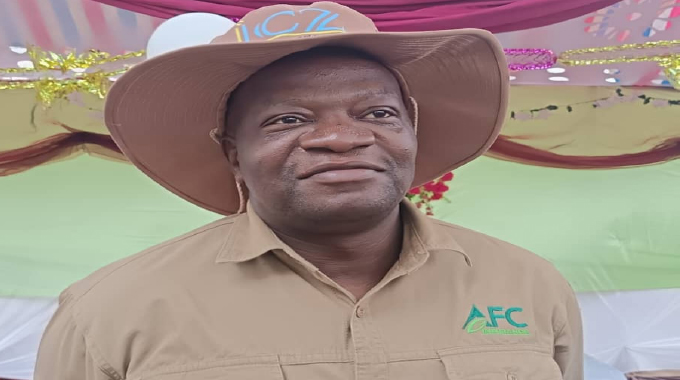
Patrick Chitumba, Zimpapers Reporter
A new era has dawned for communal farmers in Bulilima District, Matabeleland South Province, as the Government and its partners introduce a pilot livestock insurance scheme to enhance protection against potential risks. Spearheaded by the Insurance Council of Zimbabwe (ICZ), the initiative aims to provide financial protection to farmers.
The simple insurance product, designed to protect livestock from drought, follows the successful launch of the Farmers Basket Agricultural Insurance initiative, which has provided a critical safety net for smallholder farmers grappling with the effects of climate change.
The programme is designed to cushion vulnerable farmers against climate-induced risks and recently delivered claim payouts to over 100 farmers in Gokwe South District, Midlands Province, validating the importance of crop insurance.
The farmers received a payout comprising US$50 in cash and a 5kg bag of maize seed — enough to cover two Pfumvudza/Intwasa plots.
The payout was made by the ICZ through AFC Insurance, the lead underwriters of the programme under the Agropool Scheme, following a determination of yield reduction for the maize crop.
In an interview, AFC Insurance managing director Mr Cuthbert Masukume said that following the success of the Farmers Basket initiative, a new product was now being launched, starting with farmers in Bulilima District.
He noted that for many smallholder farmers and pastoralists across Africa — including those in Zimbabwe’s arid regions — traditional livestock insurance is ineffective.
“Traditional livestock insurance is often slow, complicated and requires costly visits from assessors, meaning any payout arrives long after your animals have already died from drought,” he said.
Mr Masukume said a modern and efficient solution, Parametric Livestock Insurance — also known as Index-Based Livestock Insurance (IBLI) — is being introduced.
“It uses satellite data to create a fast, transparent safety net specifically designed for drought-prone areas like Matabeleland South and Masvingo. The key to this system is the Normalised Difference Vegetation Index (NDVI). Imagine the NDVI as a doctor checking the health of your communal grazing land from space,” he said.
Mr Masukume said that the satellite-derived measurement shows exactly how much healthy, green grass is available for livestock, and the process is simple and fully transparent. The model replaces slow human checks with fast, objective data.
“First, the baseline and threshold are set. Insurers analyse years of historical satellite data for your exact area — your ‘insurance unit’ — to determine the normal, healthy level of pasture for each season,” he said.
A specific, low trigger threshold is then established — the critical point at which pasture greenness is so low that animals are at high risk of starvation or illness. Once the satellite reading drops below this trigger line, an automatic payout is activated.
Mr Masukume said the payment is calculated based on the severity of the pasture shortage.
“Crucially, the satellite data itself is the proof of loss — no assessor is needed! This means money is disbursed quickly, often within days or weeks,” he said.
He emphasised that speed is vital, as it allows farmers to act proactively — using the funds to buy supplementary feed, hire transport to move herds, or purchase emergency water before animals perish.
“This system provides speed and transparency by directly addressing the root cause of catastrophic loss — drought,” he said.
Mr Masukume said the model is particularly well-suited to the challenges faced by Zimbabwean smallholders, especially those reliant on rain-fed agriculture and communal grazing.
“To prove its effectiveness, this insurance will be launched as a pilot programme in high drought-risk areas such as Bulilima District in Matabeleland South and Mwenezi District in Masvingo Province,” he said. “These regions offer the ideal test environment to customise the NDVI triggers to local rainfall patterns and grazing dynamics.”
He noted that Zimbabwe is increasingly exposed to recurrent droughts, and for farmers in semi-arid districts, IBLI offers predictable financial relief when satellite data confirms severe pasture loss — enabling them to purchase critical inputs.
“Livestock, particularly cattle, are a primary form of savings and wealth for rural families. A fast payout from IBLI allows farmers to protect these key assets, preventing the distress sale of livestock at extremely low prices just to buy feed,” he said.
Mr Masukume said that while satellite cover protects against pasture loss, the most reliable products also include a simpler mortality cover.
“This part of the insurance acts as a safety net against other major threats, such as a severe outbreak of January Disease (Theileriosis), which may not be linked to drought. It keeps costs low by only paying out for losses that exceed the normal, expected death rate — making true catastrophe protection affordable,” he said.
He said Africa is leading the world in making this technology work for smallholder farmers.
“The most famous success story is the Index-Based Livestock Insurance (IBLI) programme, which began in Kenya and Ethiopia. It uses NDVI as its main gauge. When satellite data shows that grass has dropped to extremely low levels — for instance, below the lowest 20 percent ever recorded — payments are triggered automatically,” he said.
Mr Masukume said the money arrives early, allowing pastoralists to buy feed and veterinary services to save their animals during drought, rather than replacing them afterwards.
He noted that in Ethiopia, IBLI has provided crucial financial stability to thousands of pastoralists.
“In Kenya, the programme has scaled up and is often supported by Government, helping families maintain income and invest in better herd health. In short, Parametric Insurance changes everything. Instead of paying a premium for a slow, uncertain process, smallholder farmers in Zimbabwe are investing in a transparent, predictable system that provides fast financial relief exactly when severe, climate-related events threaten their family’s livelihood,” said Mr Masukume.